
Reishi (Ganoderma lucidum) takes 60-90 days from a colonized hardwood block to a harvestable conk, which is roughly three times longer than oyster. It is one of the slowest gourmet/functional species I run, but it is also one of the most forgiving once the block is fully myceliated. The trick is heat: reishi wants 75-85°F to fruit well, warmer than almost everything else on my fruiting shelf.
I have fruited reishi on supplemented hardwood blocks for several seasons now, and the single biggest lesson is that reishi growth form is a CO2 decision, not a genetics decision. Run it in a high-CO2 bottle or jar and it grows the photogenic stacked-antler form. Open it up to fresh air and it caps into the flat conk. This guide covers the substrate, the colonization window, the fruiting environment, and how I dial each in.
What Substrate Does Reishi Need?
Reishi fruits best on supplemented hardwood sawdust — a Masters Mix-style block of 50/50 hardwood sawdust and soy hull, or hardwood fuel pellets supplemented with about 10-20% wheat bran by dry weight, hydrated to field capacity. It is a wood-lover, so straw and coir alone will not give you a strong block.
I run reishi on the same supplemented sawdust blocks I use for shiitake and king oyster, sterilized in the pressure canner rather than pasteurized — the long colonization time means a pasteurized block invites contamination before reishi finishes claiming it. After hydrating, I squeeze-test the substrate to field capacity: a hard squeeze should release a few drops, not a stream. Pack 3-5 lb fruiting blocks in filter-patch bags, sterilize at 15 PSI for 2.5 hours, and cool fully before inoculating with grain spawn at roughly 10-20% spawn rate.
How Long Does Reishi Take to Colonize?
Reishi colonizes a supplemented hardwood block in 2-4 weeks at 75-80°F, then needs a further 1-2 weeks of consolidation before it will pin. Total bench time from inoculation to first harvest runs 60-90 days — budget for it.
Keep colonizing blocks dark and warm on the heat mat. Reishi mycelium often forms a thick, leathery white skin and may start throwing tiny yellow-tipped knots while still inside the bag — that is normal pre-fruiting behavior and a sign the block is consolidating well. I do not rush it. A block that looks fully white but has only been colonized two weeks usually fruits weak, slow primordia; giving it the extra consolidation window almost always pays back in a denser, faster conk. This patience is the same discipline that runs my salami chamber and sourdough starter — clean process and a willingness to wait.
How Do You Trigger Reishi to Fruit?
Trigger reishi fruiting by moving the fully colonized block to 75-85°F with high humidity (90-95%) and introducing fresh-air exchange. The temperature jump and FAE together are the signal; reishi is the rare species where you want it warm to fruit, not cooled like oyster.
I cut a small X or fully open the top of the bag depending on which form I want, then set the block in the Martha tent with the ultrasonic humidifier on the humidistat at 92%. The biggest mistake home growers make here is treating reishi like every other species and dropping the temperature — that stalls it. Watch the hygrometer obsessively for the first week of pinning; reishi pins are slow and a dry spell early will abort them. For the science of why these triggers work, my guide to FAE and CO2 in mushroom fruiting walks through the gas-exchange mechanics in detail.
Antler Form vs Conk Form: Which Should You Grow?
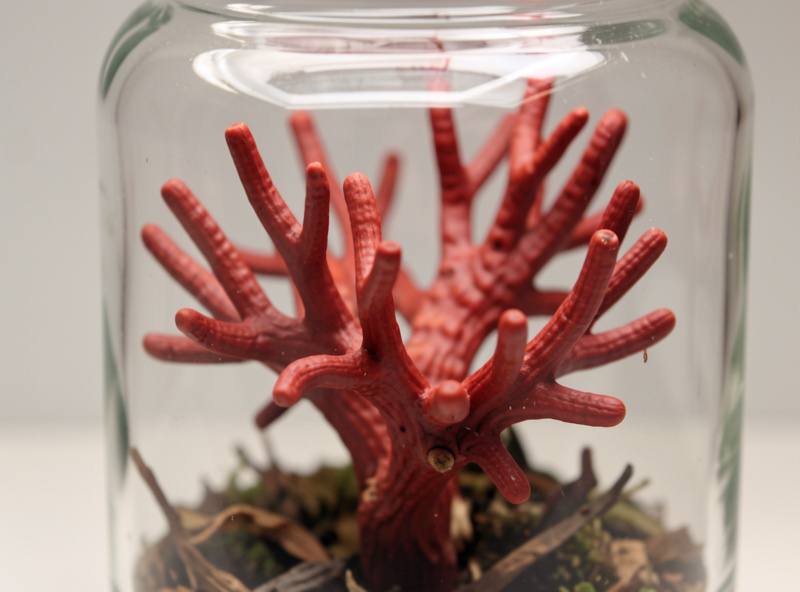
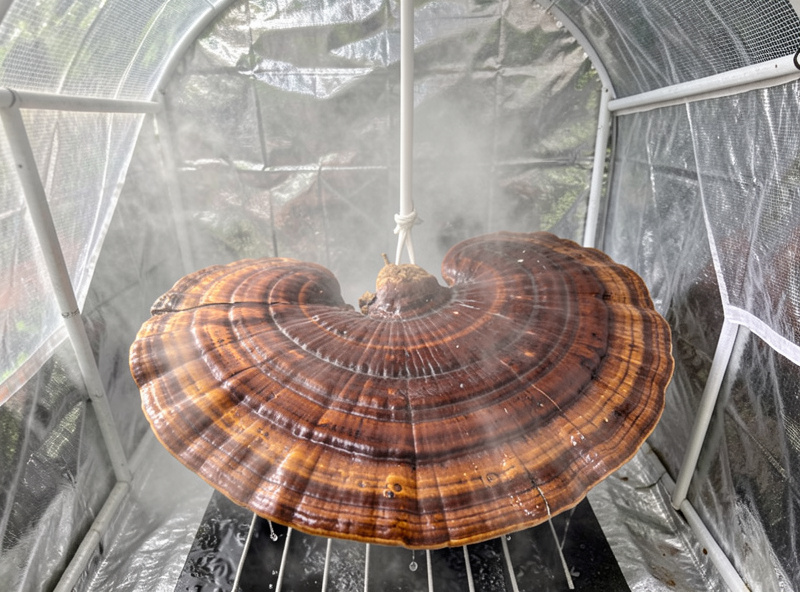
The antler form comes from high CO2 (low fresh-air exchange); the flat conk form comes from low CO2 (high FAE). Same strain, same block — the morphology is entirely an environmental choice you make at fruiting. Antler form is faster and more visually striking; conk form yields more total mass.
To grow antlers, I fruit reishi inside a closed jar or a barely-vented bag so CO2 stacks up, which tells the fruiting body to keep elongating instead of capping. To grow conks, I open the block to full FAE in the tent and let it flatten and lacquer into the classic kidney-shaped bracket. I usually run a few of each — antlers colonize the windowsill jar shelf nicely, conks go in the tent. The morphology fork is the single most interesting thing about reishi, and it is worth deciding which form you want before you fruit the block, because the CO2 environment you build determines it from the first pin.
When and How Do You Harvest Reishi?
Harvest reishi when the white growing margin on the conk edge stops advancing and turns the same red-brown lacquered color as the rest of the cap — usually 4-8 weeks after pinning. A still-white margin means it is still actively growing; cut too early and you leave yield on the block.
I cut conks at the base with a clean blade once that margin colors over. The fruiting body is tough and woody, not tender like oyster, so it is never eaten fresh — it is sliced and dried for tea or tincture. For the drying side of that, my walkthrough on drying and storing medicinal mushrooms covers slice thickness and moisture targets. Reishi research is studied in the literature for various compounds, but I keep this site strictly on cultivation and preparation — what the studies report is a question for a clinician, not a grow guide.
Reishi will usually give a second flush if you leave the block in the tent after that first harvest. Once I have cut the conk, I let the block rest a week, rehydrate it by dunking it in cool water for a few hours if it has lost weight, and put it back under 90-95% humidity. The second flush is smaller — often a single conk or a cluster of antlers off the old wound site rather than a full bracket — but on a 3-5 lb block I will still pull a worthwhile harvest before the wood is spent. I rarely chase a third; by then contamination risk climbs and the block has given up most of its hardwood. Realistically I plan on two flushes per reishi block across roughly four to five months of bench time, which is a long commitment for the yield, and exactly why I run reishi a few blocks at a time alongside faster oyster rather than as a standalone crop.
Common Reishi Growing Problems
The two failures I see most are stalled pinning from too-cool temperatures and aborted antlers from a humidity crash. Reishi’s long colonization also makes it the species most likely to show green Trichoderma late, after weeks of investment — sterilization, not pasteurization, is the defense.
If your block sits fully colonized but refuses to pin, check the temperature first: below 70°F reishi simply waits. If antlers go brown and crusty at the tips and stop growing, the humidity dropped — I have lost early pins this way when the humidifier reservoir ran dry overnight. And because the block is on the bench so long, treat contamination seriously from day one; my contamination control guide covers the green-mold triage that has saved more than one reishi block for me. Start from a clean sterilized block and a properly run pressure canner, the way my grain spawn sterilization guide lays out, and the long timeline stops being scary.
Reishi Growing Parameters at a Glance
| Stage | Temperature | Humidity | FAE / CO2 | Duration |
|---|---|---|---|---|
| Colonization | 75-80°F | n/a (sealed bag) | Low FAE | 2-4 weeks |
| Consolidation | 75-80°F | n/a (sealed bag) | Low FAE | 1-2 weeks |
| Antler fruiting | 75-85°F | 90-95% | High CO2 (low FAE) | 4-8 weeks |
| Conk fruiting | 75-85°F | 90-95% | Low CO2 (high FAE) | 6-10 weeks |
Frequently Asked Questions
How long does reishi take to grow?
Reishi takes 60-90 days from inoculation to harvest. Colonization runs 2-4 weeks at 75-80F, consolidation another 1-2 weeks, and fruiting 4-10 weeks depending on whether you grow the antler or conk form.
What temperature does reishi need to fruit?
Reishi fruits at 75-85F, warmer than most gourmet species. It is the rare mushroom you keep warm rather than cool to trigger pinning. Below 70F it stalls and will not pin reliably.
Why is my reishi growing antlers instead of a flat cap?
Antler form is caused by high CO2 and low fresh-air exchange. To get the flat lacquered conk instead, open the block to more FAE in your fruiting chamber. The morphology is purely environmental, not genetic.
Can you eat reishi mushroom fresh?
No. Reishi is tough and woody rather than tender, so it is never eaten fresh like oyster. It is sliced and dried, then used for tea or tincture. Drying to a snap-dry moisture level is essential before storage.
What substrate is best for growing reishi?
Reishi fruits best on supplemented hardwood sawdust, such as a 50/50 hardwood-and-soy-hull Masters Mix or hardwood pellets supplemented with 10-20% wheat bran. It is a wood-lover, so straw or coir alone gives a weak block.