
Fresh-air exchange (FAE) is the act of swapping the CO2-rich air around fruiting mushrooms for fresh, lower-CO2 air. It is the single environmental control that turns a fully colonized tub into pins and well-formed mushrooms instead of an overlaid, never-fruiting mat. Colonizing mycelium wants high CO2; fruiting mushrooms want it low — and managing that drop is what FAE is all about.
Most home-grow failures at the fruiting stage trace back to FAE: too little and the tub never pins or throws long leggy stems with tiny caps; too much and the surface dries out and pins abort. Getting it right is a balance against humidity, because every exchange of air also carries moisture away. This guide covers what CO2 does to fruiting, how much fresh air each species wants, and how to balance FAE against humidity in a real grow.
This article contains affiliate links. As an Amazon Associate I may earn from qualifying purchases, at no extra cost to you.
What FAE and CO2 Do to Fruiting
CO2 concentration is the signal mushrooms use to know where they are. Deep inside a log or substrate, CO2 is high, so the mycelium keeps growing vegetatively. Near the open surface, CO2 falls and oxygen rises, telling the mycelium it has reached the air and can fruit. Fresh-air exchange recreates that “I’m at the surface” signal by lowering CO2 around the colonized substrate, which triggers primordia — the first pins — and then drives healthy cap-and-stem development.
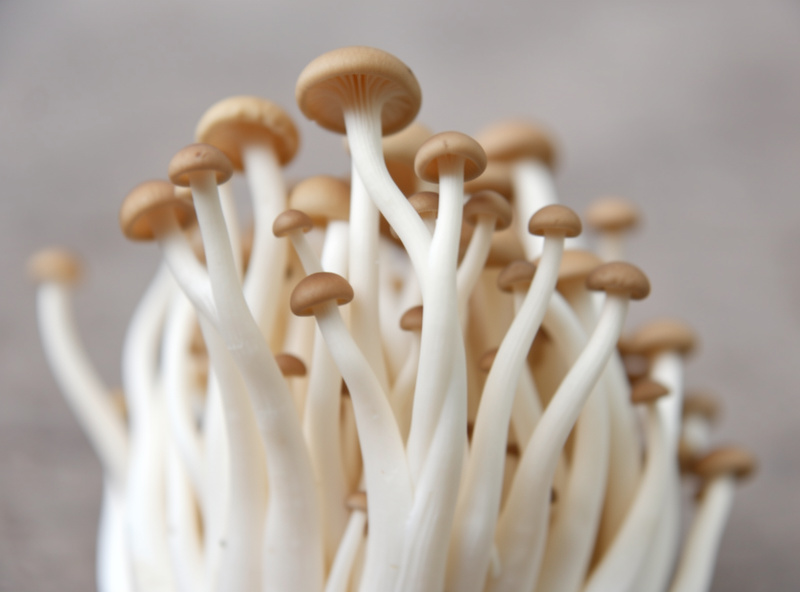
Without enough FAE, fruiting mushrooms grow toward whatever oxygen they can find: long, thin, pale stems reaching up with undersized caps, the classic “leggy” CO2-stress morphology. With good FAE, the same mushrooms grow short, stout stems and broad, well-formed caps. This is why a sealed, colonized tub will sit and overlay forever until you give it air — the whole transition from the colonization phase described in the bulk growing guide hinges on dropping CO2.
How Much Fresh Air Each Species Wants
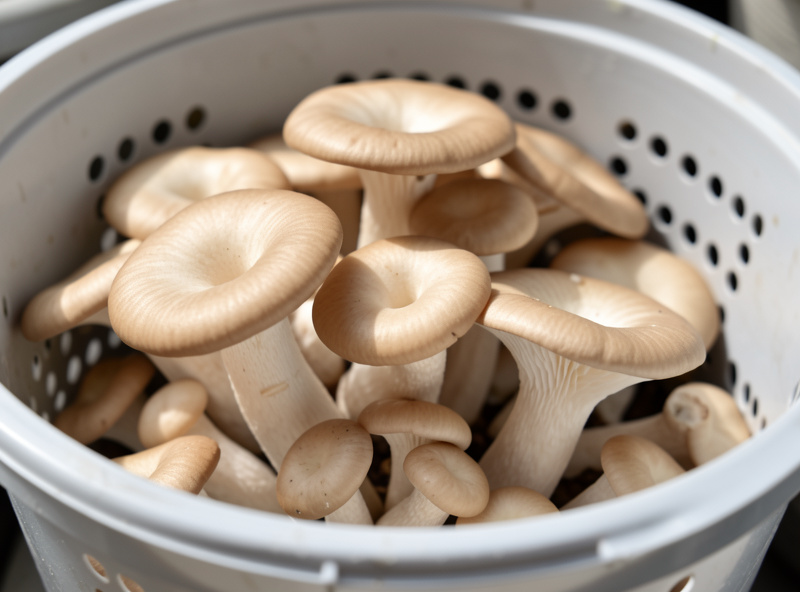
FAE demand varies a lot by species. Oyster is the hungriest — it wants aggressive fresh air and shows leggy, trumpet-stemmed clusters the moment CO2 creeps up, so oyster tubs need generous holes and active exchange. Wine cap and Agaricus are gentler, fruiting fine with moderate exchange. King oyster, interestingly, is grown at higher CO2 on purpose to encourage the thick stems people prize, then given a burst of FAE to cap it off.
Because demand differs, there is no single FAE recipe. The reliable approach is to read the mushrooms: leggy stems and tiny caps mean too much CO2, so increase exchange; aborting pins and a drying surface mean too much exchange relative to humidity, so dial it back. A CO2 meter takes the guesswork out for growers who want numbers, though experienced growers tune by morphology alone. The species-by-species pinning triggers are detailed in the pinning conditions guide.
Balancing FAE Against Humidity
Every exchange of air carries moisture out with it, so FAE and humidity work against each other — the central balancing act of fruiting. Push lots of fresh air without replacing humidity and the surface dries, pins abort, and caps crack. Hold humidity high with no fresh air and you get bacterial issues and CO2-stressed leggy growth. The skill is supplying both: enough exchange to keep CO2 down, enough humidity to keep the surface from drying.
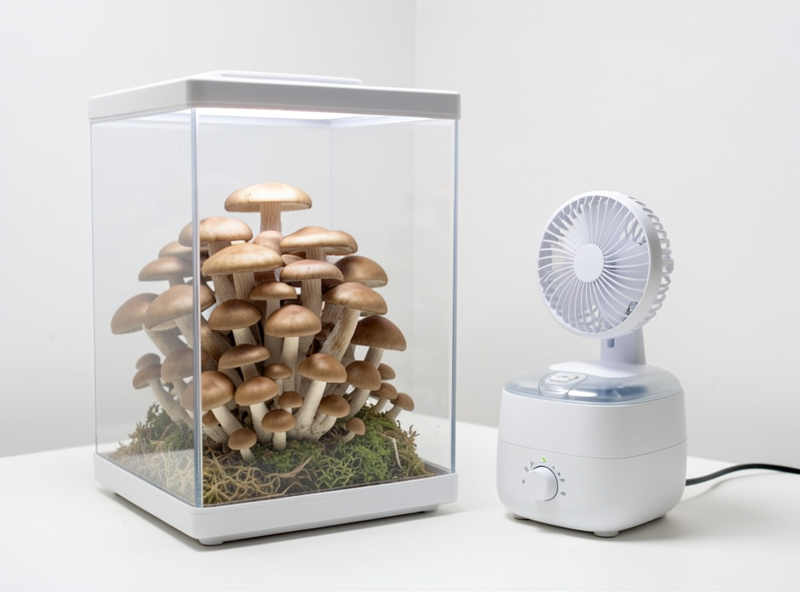
In a passive monotub, the moisture in the substrate itself provides much of the humidity, which is why tubs work without a humidifier — but heavy fanning still dries the surface. In a Martha tent or larger chamber, an ultrasonic humidifier on a humidistat replaces the moisture that active fresh air removes. A small circulation fan helps distribute fresh air evenly without blasting the surface dry. Watch the hygrometer and the mushrooms together.
| Symptom | Cause | Fix |
|---|---|---|
| Long thin stems, tiny caps | Too much CO2 (too little FAE) | Increase fresh-air exchange |
| No pins on colonized tub | CO2 never dropped | Start FAE + light |
| Pins aborting, dry surface | Too much FAE vs humidity | Raise humidity, reduce fanning |
| Wet, slimy surface | Too little FAE, too wet | More exchange, less misting |
| Cracked, dry caps | Low humidity during fruiting | Raise humidity, gentle FAE |
Passive vs Active Fresh-Air Exchange
Passive FAE relies on holes in the tub and natural air movement — warm, CO2-heavy air rising out and fresh air drawn in. For a monotub this is often enough, especially for the less air-hungry species, and it is the lowest-effort approach. The number and placement of holes set how much passive exchange you get, which is why hole design is part of the tub build rather than an afterthought.
Active FAE adds fanning — either manually waving the lid a few times a day or running a fan on a timer in a larger chamber. Oyster especially benefits from active exchange. The trade is that active FAE dries the surface faster, so it must be paired with humidity. Many growers run a hybrid: passive holes for baseline exchange plus a brief daily fanning to clear accumulated CO2. Whatever the method, consistency beats intensity — steady moderate exchange grows better mushrooms than alternating between sealed and blasted. Once the grow is running well, knowing when and how to harvest each flush is the next skill; the mushroom flushes and harvest guide covers harvest timing, rehydration between flushes, and how many flushes to expect per tub.
Common FAE Mistakes
The biggest mistake is starting FAE too late — leaving a fully colonized tub sealed so it overlays into a tough hydrophobic mat that resists pinning. Begin fresh air as soon as the surface has consolidated white. The opposite mistake is opening the lid constantly to “give it air,” which dries the surface and exchanges humidity away in uncontrolled bursts; steady moderate FAE beats frequent dramatic openings.
The third is chasing one variable while ignoring the other. Growers crank FAE to fix leggy stems and then watch their pins abort from dryness, or pile on humidity to stop drying and get leggy CO2-stressed growth. FAE and humidity are a pair — adjust them together, read the mushrooms, and converge on the balance for your species and your space. Once dialed, a fruiting chamber runs itself with only minor daily tweaks.
Related Guides
- Monotub and Bulk Growing: The Complete Guide
- Pinning Conditions: Triggering Your First Pins
- Bulk Substrate Prep for Monotubs
- Casing Layers: When and How to Use One
- Spawn-to-Bulk Ratio: Getting the Mix Right
Frequently Asked Questions
What is FAE in mushroom growing?
FAE stands for fresh-air exchange, swapping CO2-rich air around fruiting mushrooms for fresh, lower-CO2 air. It triggers pinning and drives well-formed caps, because falling CO2 signals the mycelium to fruit rather than grow.
Why does my mushroom have long stems and tiny caps?
Long thin stems with small caps are classic CO2 stress from too little fresh-air exchange. The mushroom is reaching for oxygen. Increase FAE by opening holes or fanning more often to fix the morphology.
How often should I fan a monotub?
There is no fixed number; read the mushrooms. Many growers fan a tub two or three times a day, but oyster wants more and gentler species want less. Increase if stems go leggy, decrease if pins dry and abort.
Why are my pins aborting?
Aborting pins usually mean too much fresh air relative to humidity, drying the surface. Raise humidity and reduce aggressive fanning. Pins need both low CO2 and a moist surface to develop into mushrooms.
Do I need a CO2 meter to grow mushrooms?
No. Experienced growers tune fresh-air exchange by reading mushroom morphology alone. A CO2 meter is a helpful tool that removes guesswork, especially in larger chambers, but it is not required for a basic monotub.
Can a monotub fruit without a humidifier?
Yes. A passive monotub gets most of its humidity from the moisture in the substrate itself, which is why tubs work without a humidifier. Larger chambers with active fresh air usually need one to replace lost moisture.