
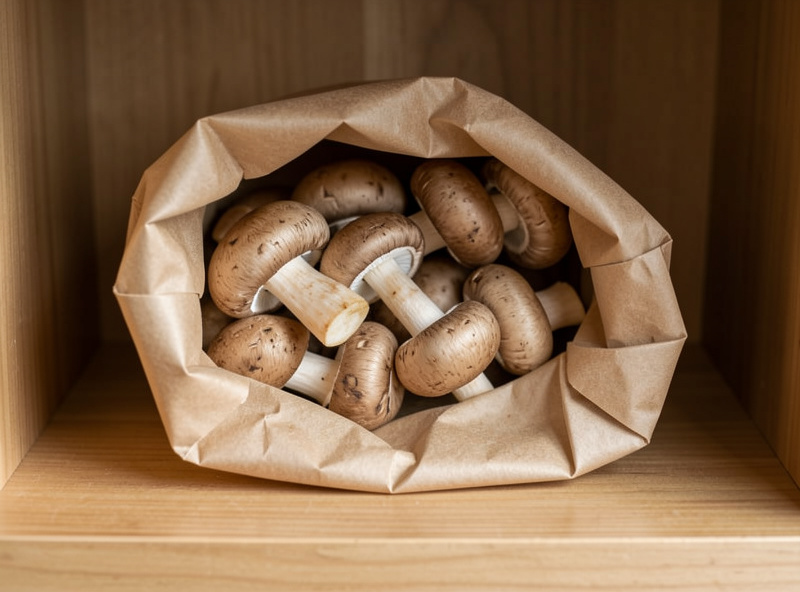
Fresh gourmet mushrooms keep five to ten days in the fridge if you store them unwashed, in a paper bag, on a main shelf rather than sealed in the crisper drawer. The enemy is trapped moisture: a mushroom is 90% water and starts sweating the moment it’s picked, and a sealed plastic clamshell turns that sweat into slime within three days. Paper breathes; plastic suffocates.
I harvest more oyster and lion’s mane most weeks than I can cook in a day, so the fridge is my holding pen while I decide what gets eaten fresh and what goes on the dehydrator that evening. Over years of doing this I’ve watched exactly how each species fails in cold storage, and the difference between a cap that’s still firm on day seven and one that’s gone slick on day three comes down to a few small habits. This is the front end of the whole preservation chain — the few days you buy before you commit a flush to long-term storage.
How Long Do Fresh Mushrooms Last in the Fridge?
Five to ten days for most cultivated gourmet species, stored properly. Denser mushrooms like king oyster and shiitake sit at the long end; delicate ones like oyster and enoki at the short end. Store them wrong — washed, or sealed in plastic — and you can lose that same batch in two or three days.
The number that matters underneath all this is water. Fresh mushrooms sit around 90% moisture and a very high water activity, which is exactly why they spoil fast: there’s abundant free water for bacteria and mold, and the mushroom’s own enzymes keep breaking down its tissue after harvest. Cold slows all of that but doesn’t stop it. The USDA’s food-storage guidance puts fresh mushrooms in the short-shelf-life category alongside soft berries for this reason. The National Center for Home Food Preservation frames the same high-water-activity spoilage risk for fresh produce generally. Your job in the fridge is simply to slow the sweating and the enzyme activity long enough to either eat them or preserve them — not to make them last forever, which only drying, freezing, or a freeze dryer can do.
Why Do Paper Bags Beat Plastic Clamshells?
Paper wicks away the surface moisture mushrooms constantly release; sealed plastic traps it against the caps, where it breeds the bacteria that cause slime and bacterial blotch. A folded paper bag on the fridge shelf is the single best fresh-storage container there is, and it costs nothing.
Here’s the mechanism I’ve watched play out dozens of times. A mushroom keeps respiring and sweating after harvest. In a paper bag, that moisture passes through the paper and evaporates, keeping the cap surface dry and firm. In a sealed clamshell or a zip-top plastic bag, the moisture has nowhere to go — it condenses on the plastic, drips back onto the mushrooms, and within days you’ve got the slick, wet surface and sour smell of bacterial blotch. I fold the top of the bag over loosely rather than sealing it, so there’s airflow but not a wind tunnel drying them to leather. If you buy mushrooms in a plastic clamshell, take them out and re-bag them in paper the moment you get home — leaving them in the plastic is the most common way people waste good mushrooms. I made this mistake myself the first year, leaving a punnet of oyster sealed in its store clamshell for four days because I was busy; by the time I opened it the caps had gone slick and sour. A sealed produce container like a Rubbermaid FreshWorks does wonders for berries and greens, but it’s exactly the wrong environment for a mushroom — the humidity it holds is the enemy here, not the friend. Now I keep a stack of plain kraft paper bags, the same ones the ICA grocery near me hands out for loose produce, folded in a drawer for exactly this. A cloth or waxed-paper bag works the same way; the principle is breathable, not airtight.
Should You Wash Mushrooms Before Storing Them?
No. Never wash mushrooms before storing them. They’re sponges — rinsing loads water into and onto the caps, which then accelerates exactly the spoilage you’re trying to slow. Store them dry and dirty; clean them right before you cook.
This is the mistake I see most often, and it’s counterintuitive because we wash most produce before fridging it. Mushrooms are the exception. Their tissue absorbs water readily, so a pre-storage rinse leaves them wetter and shortens their life by days. Because I grow my own on clean substrate, there’s rarely much to remove anyway — a soft OXO Good Grips brush or a dry cloth handles it at cooking time. If a foraged or store mushroom genuinely needs cleaning before storage, wipe it with a barely-damp cloth and let it air-dry completely before it goes in the bag. The same logic runs straight into drying, by the way: whether you’re prepping caps for the fridge or for the dehydrator, a wet mushroom is a slower, riskier mushroom. Keep them dry from harvest to pan.
Where in the Fridge Should Mushrooms Go?
On a main shelf, not sealed in the high-humidity crisper drawer. Mushrooms want cool, dry, and breathing — roughly 34–40°F with air movement — and the crisper drawer is designed to trap humidity for leafy greens, which is the opposite of what a mushroom needs.
Most people default to the crisper drawer because that’s where produce goes, but for mushrooms it’s a trap: the sealed, humid environment that keeps lettuce crisp keeps mushrooms damp, and damp is slime. I keep my paper bag of mushrooms on a regular shelf toward the back, where the temperature is most stable and coldest, away from the door where every opening swings the temperature. Keep them away from strong-smelling foods too — mushrooms readily pick up odors, and nobody wants oyster caps that taste of last night’s curry. If your fridge runs a humidity-control slider on the drawer, and you insist on using it, set it to low humidity; but honestly the open shelf in a paper bag beats the drawer every time.
Which Gourmet Species Keep Longest in the Fridge?
Density is the predictor: firm, dense mushrooms outlast delicate, thin-fleshed ones. King oyster and shiitake are the fridge champions; oyster, enoki, and lion’s mane are the ones to cook or preserve first. Here’s how the species I grow actually hold up in cold storage.
| Species | Fridge life (proper storage) | Fails by | My move |
|---|---|---|---|
| King oyster | 7–10 days | Softening, dry cracks | Keep fresh longest |
| Shiitake | 7–10 days | Wrinkling, drying out | Fresh or dry, both fine |
| Chestnut / pioppino | 5–7 days | Softening caps | Cook within the week |
| Oyster (pearl, blue, pink) | 4–6 days | Slime, sour smell | Cook or dry fast |
| Lion’s mane | 4–6 days | Yellowing, sliming | Preserve early |
| Enoki | 3–5 days | Sliminess | Use quickly |
The pattern tracks exactly with what I harvest weekly. My king oyster holds a week-plus and stays firm; the delicate oyster flushes get eaten or dried within a few days because they’re the first to turn. Lion’s mane yellows at the edges as its first warning — when I see that, it goes on the dehydrator that day.
How Can You Tell When a Fresh Mushroom Has Gone Bad?
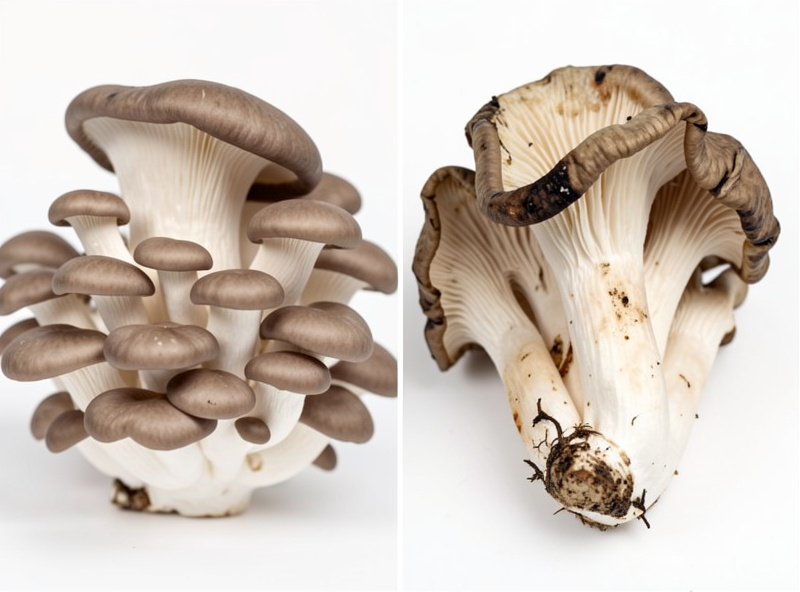
Slime, a sour or ammonia smell, and dark wet spots are the three reliable signs. A slippery film on the surface means bacterial spoilage has started; a sour or off smell confirms it; and soft, darkened, weeping patches are past the point of rescue. Trust your nose and fingers over the calendar.
A fresh mushroom feels dry-firm and smells clean and earthy. The first failure sign is usually a faint tackiness on the cap that becomes an obvious slick film — that’s the bacterial blotch I know all too well from watching over-humid batches, and once it’s slimy the mushroom is done. Dry wrinkling and a bit of surface spotting, on the other hand, is just moisture loss; those mushrooms are still perfectly good to cook, just past their prime for a dish where texture matters. When in doubt, the smell is the honest arbiter: clean and mushroomy is fine, sour or ammonia-like is compost. I’d rather toss a questionable handful than serve it, the same caution I apply to any batch across my microbial hobbies — when a smell tells you something’s off, believe it.
What If You Can’t Use Them in Time?
Preserve them before they turn, don’t push the fridge past its limit. The fridge buys you days; drying, freezing, or freeze-drying buys you months to years. The moment a batch hits its species’ fridge-life window, or shows the first yellowing or softening, it goes into long-term storage instead of the compost.
My routine: what I’ll cook in the next few days stays in the paper bag; everything else gets sliced and dried the same evening, then jarred and sealed. Drying is my default because it concentrates flavor and stores for a year or more — the full workflow lives in my storage and preservation gear guide, and the sealing side is covered in vacuum sealing dried mushrooms. If I want to keep a meaty species closer to fresh for a few weeks, I saute it first and freeze it — freezing raw turns mushrooms to mush, but cooked they hold texture. Think of the fridge as a decision window, not a destination: it gives you a few days to move each harvest into the storage method that actually fits it. Manage that window well and almost nothing you grow ever goes to waste.
Whole or Sliced: Does It Change How Long They Keep?
Whole mushrooms keep noticeably longer than sliced ones. Every cut is an open wound that exposes moist interior tissue to air and bacteria, so a sliced mushroom oxidizes, darkens, and slimes faster than an intact one. Store them whole and cut only when you’re ready to cook.
I never pre-slice mushrooms for storage. A whole king oyster holds for a week-plus; the same mushroom sliced starts browning at the cut faces within a day or two. The exception is prep for the dehydrator, where I slice and load immediately — the point there is to dry fast, not store fresh. If you’ve already cut more than you can use, don’t leave the surplus loose in the fridge; either cook it, or slice it evenly and dry it that day. Cut mushrooms also weep, so if you must hold sliced ones overnight, lay them in a single layer on a paper-towel-lined plate rather than piling them in a bag where the cut faces stew in their own moisture. The general rule holds across everything I store: the less you break the surface, the slower it spoils.
A Few Fridge Tricks That Actually Extend Freshness
Three habits reliably stretch fresh mushroom life: line the paper bag with a dry paper towel, don’t overcrowd, and keep them in the coldest stable spot. None of these are magic, but together they add days to a batch that would otherwise turn on schedule.
The paper-towel liner is my favorite because it’s so cheap: a folded dry towel inside the paper bag gives the released moisture somewhere extra to go, and swapping it out if it dampens resets the clock. Overcrowding is a quiet killer — mushrooms packed tight press against each other, trap moisture at the contact points, and bruise, and bruised tissue spoils first, so I keep the bag loose and single-ish layered. Temperature stability matters more than people think: the back of a lower shelf holds a steadier cold than the door or the top shelf, and every degree of swing shortens shelf life. One trick I don’t recommend despite seeing it online — submerging or misting mushrooms to “keep them fresh.” That just reintroduces the water you’re trying to keep off them. Dry, cold, loose, and dark is the whole formula, and it’s the same discipline — keep moisture away from where you don’t want it — that protects every batch from the grow tent to the curing chamber.