
Green mold in a mushroom grow is usually Trichoderma, but it can also be Penicillium or Aspergillus — three species with very different colors, textures, and danger levels. Trichoderma is vivid emerald green and aggressive, Penicillium is dusty blue-green and slow, Aspergillus is yellow-green and a genuine health hazard. The visual ID determines whether to bag the jar carefully or trash it casually.
Trichoderma is just one of the five home contaminants — the others (cobweb, pin mold, wet spot, aspergillus) are covered side-by-side in my mushroom contamination guide.
Most beginner posts that say “I have green mold!” are diagnosed instantly as Trichoderma in cultivation forums — and most of the time that diagnosis is correct. But “green” covers a 5-color range from teal to lime, and confusing the three species sends growers down the wrong recovery path. This guide shows the visual signatures, the speed of each, and the disposal protocol each one needs.
The Three Green Molds That Show Up in Mushroom Grows
Trichoderma viride, Penicillium species, and Aspergillus species are the three green molds I see most often in home cultivation, and the same three cultivators report in the growing forums. They differ in color saturation, growth speed, surface texture, and the actual risk they pose to the grower. Confirm the species before deciding whether to discard or quarantine.
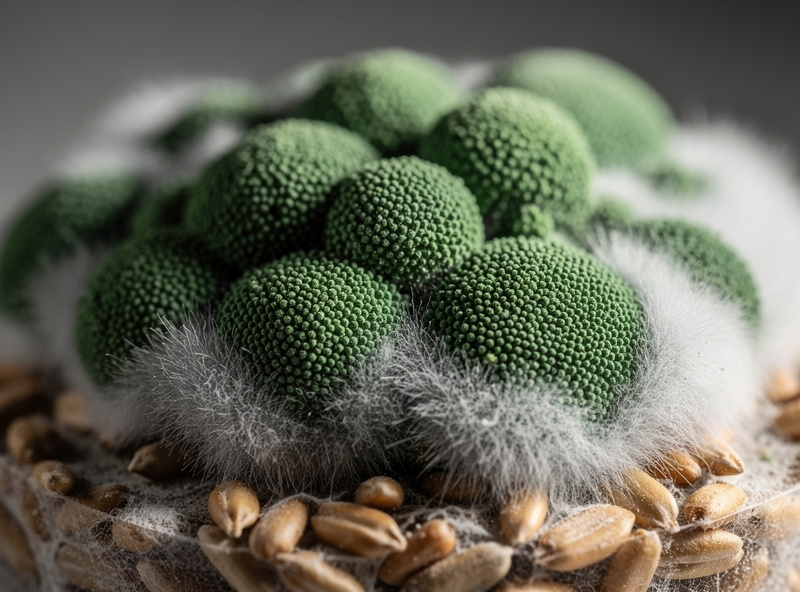
Quick reference for visual ID:
- Trichoderma viride: Vivid emerald to lime green. Starts white and dense, then changes color during sporulation to dark green — the same white-to-green progression documented in peer-reviewed Trichoderma detection research (Trichoderma green mold review, PMC). Spreads visibly between morning and evening checks.
- Penicillium (multiple species): Dusty blue-green to gray-green. Powdery, almost velvet texture. Spreads slowly over 4-7 days. Smells of damp basement.
- Aspergillus (multiple species): Yellow-green to khaki. Granular or fuzzy texture. Aggressive but slower than Trichoderma. A genuine respiratory hazard, not just a spoiled batch — indoor Aspergillus exposure is documented in the occupational and public-health literature to cause respiratory illness and allergic disease (Aspergillus indoor health hazards review, PMC) — never agitate without a mask.
- Cladosporium: Olive-green to dark green-black. Rare in mushroom grows but seen on damp substrate. Usually outcompeted by mycelium if caught early.
Color is the cleanest single signal. Texture is the second-best. Smell helps separate Penicillium (musty basement) from Aspergillus (sharp, almost fermented) when color is ambiguous. For broader mycelium-vs-contamination ID, see our guide on what does mycelium look like.
How to Tell Trichoderma From Other Green Molds
Trichoderma stands out by speed and saturation: it goes from invisible to bright emerald-green patches the size of a quarter within 36 hours, while Penicillium and Aspergillus take days to spread the same area. The growth front of Trichoderma stays bright white for 24-48 hours before the spores mature, which is why some growers mistake early Trichoderma for healthy mycelium.
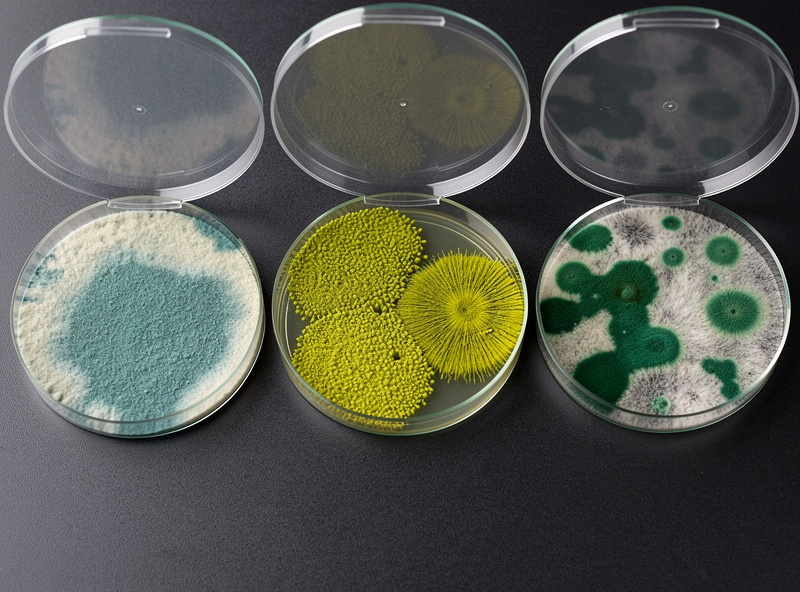
Distinguishing features that confirm species:
- Trichoderma vs Penicillium: Trichoderma is vivid and saturated; Penicillium is muted and dusty. Trichoderma doubles overnight; Penicillium takes 4-5 days.
- Trichoderma vs Aspergillus: Trichoderma is true green; Aspergillus has a yellow tint. Trichoderma colonies are flat; Aspergillus is fuzzy or granular.
- Penicillium vs Aspergillus: Penicillium colonies have a clear green-blue zone with a white outer ring; Aspergillus is uniform yellow-green throughout.
- Healthy mycelium turning yellow: Yellowing alone is metabolite buildup, NOT contamination. Yellowing combined with sour smell is bacterial wet spot — different problem entirely.
The 24-48 hour wait rule applies to white circles only. If a colony already shows visible green color, do not wait — you have lost the colony, and waiting risks airborne spore release into clean spawn nearby. The window between “white circle” and “trash decision” is the speed of color change, not the size of the patch.
What to Do When You See Green Mold (By Species)
For Trichoderma: bag and trash immediately, but carefully. For Penicillium: trash unceremoniously, mild risk. For Aspergillus: full respirator protocol, double-bag, dispose in outdoor sealed bin. Never open a contaminated jar inside the same room as healthy spawn.
The disposal protocol per species:
- Trichoderma: Spores release explosively when agitated. Place jar in a sealable plastic bag inside the grow space without opening it. Tie the bag, transport outside, dispose in the trash.
- Penicillium: Lower spore release rate. A standard kitchen trash bag and routine disposal are fine. Wash hands and the disposal area afterward.
- Aspergillus: Wear an N95 or P100 respirator before approaching. Some Aspergillus species produce mycotoxins. Double-bag the jar in a contractor bag and dispose in an outdoor sealed bin.
- Unknown green: Treat as Aspergillus until proven otherwise. The marginal effort of full PPE protects you against the worst-case identification error.
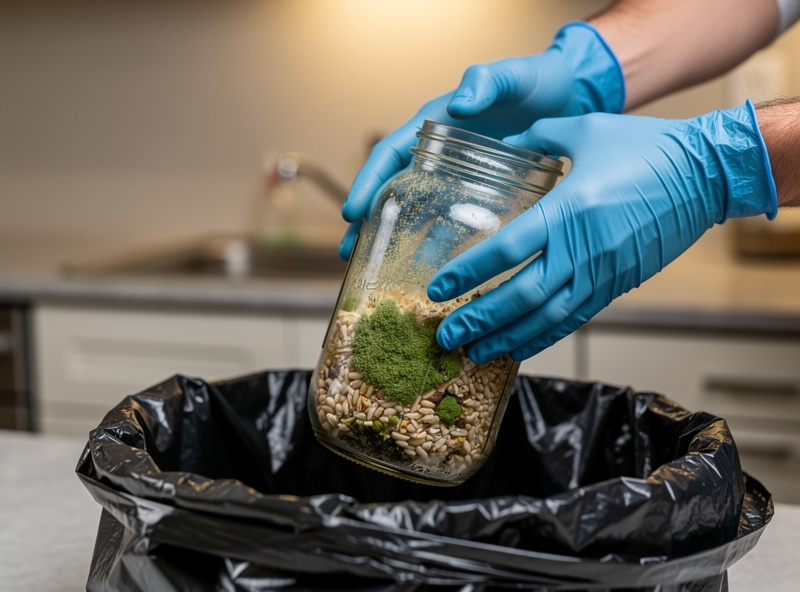
The room-level decontamination step matters when contamination repeats. If two of three jars from a recent inoculation showed Trichoderma, the spawn source or the still-air-box is the leak. Wipe all surfaces with 10% bleach or 70% isopropyl alcohol, replace SAB filters, and run a HEPA cycle for 30 minutes before re-using the space. Read about clean-environment setups in our still air box vs flow hood comparison.
Why Trichoderma Is the Most Common Green Mold
Trichoderma viride is everywhere — in soil, on fallen leaves, in compost piles, drifting in indoor air. It germinates on grain spawn 6-8 hours after spore landing under typical mushroom-grow conditions, faster than any other common contaminant. It also produces antifungal compounds that actively kill the mycelium it competes against, so it appears to “explode” through colonies that were healthy a day earlier.
Common entry points for Trichoderma spores:
- Spawn source: Pre-made grain spawn from a vendor sometimes ships with low-level Trichoderma load that overgrows in transit warmth.
- Pasteurization gap: Coir hydrated below 180°F leaves heat-resistant Trichoderma spores intact in the substrate.
- Inoculation environment: Open-air or low-clean-room inoculation lets airborne spores land on the grain surface.
- Contaminated tools: Reused syringes, scalpels, or scoops carry spores between batches if not flame-sterilized.
- Overhead clothing: Sweater fibers and dust shed from clothing during inoculation deliver thousands of spores.
Trichoderma resistance comes from clean technique, not from finding a magic substrate. The single highest-leverage habit, in my own experience running dozens of jars, is flame-sterilizing the inoculation point on every jar lid before piercing — it’s the one step I never skip, and my contamination rate dropped noticeably once I made it non-negotiable. When the contamination is bacterial rather than fungal — wet spot pooling at the jar bottom, sour or sulphurous smell — my bacterial contamination guide covers the specific diagnosis, causes, and whether the grow space itself needs decontamination.
Can a Contaminated Tub Be Saved?
A monotub with isolated Trichoderma patches in less than 5% of the surface can sometimes be partially salvaged by removing the contaminated section and a 2-inch buffer around it, then top-dressing with fresh CVG. Larger contamination spreads, multiple patches, or any visible green at the substrate surface mean the tub is gone — toss it.
The decision tree:
- Less than 5% of surface, single patch: Carefully scoop out the contaminated section with a 2-inch buffer using a sterilized stainless steel spoon. Top-dress with fresh hydrated CVG. Watch for 7 days — in my experience this saves the tub less often than it fails, so treat it as a long-shot attempt, not a reliable fix.
- Multiple separate patches: The spore load is throughout the substrate. Salvage attempts almost always fail. Trash the tub.
- Trichoderma at the substrate-grain interface: The grain spawn is contaminated. No surface intervention helps. Trash and replace.
- Tub with mature fruits already harvested: First flush is yours; do not attempt second flush. Trash the substrate after harvest.
The math usually favors trashing. CVG and a fresh grain inoculation cost about $5-10 in materials and recover the grow in 14 days. Salvage attempts that fail cost the same materials plus another 21 days of waiting and fighting. Read about beginner contamination patterns in our guide on cobweb mold vs mycelium. If your grow room also has a pest problem rather than a mold problem, the most common culprit is Sciaridae — see the fungus gnats mushroom control guide for identification, prevention, and organic controls.
Frequently Asked Questions
Is green mold in mushroom grows dangerous to humans?
Trichoderma is generally low-risk for healthy adults but releases massive spore loads that can trigger respiratory irritation. Aspergillus is genuinely dangerous and produces mycotoxins. Always wear an N95 or P100 mask when handling any green-mold-contaminated jar regardless of the suspected species.
How fast does green mold spread in a mushroom grow?
Trichoderma can double in size every 18-24 hours at room temperature, going from invisible to fully colonizing a quart jar in 4-6 days. Penicillium spreads about a third as fast. Aspergillus runs at the speed of Trichoderma but with more visible texture changes.
Can I scrape green mold off and save the grow?
Almost never. Scraping releases millions of airborne spores that recontaminate adjacent jars within hours. The only exception is a single isolated Trichoderma patch under 5 percent of a monotub surface, scooped out with a 2-inch buffer of healthy substrate and top-dressed with fresh CVG.
Will hydrogen peroxide kill green mold in mushroom substrate?
Surface peroxide kills exposed Trichoderma spores but does not penetrate substrate or grain. The mycelium living in those layers will rebound from the surviving spore reservoir within 48-72 hours. Peroxide is useful for surface decontamination of containers, not infected substrate rescue.
Why does my fresh substrate already have green mold?
Either the coir was under-pasteurized when hydrated (water below 180 degrees does not kill Trichoderma spores), the storage container was contaminated, or the substrate sat hydrated for more than 24 hours before inoculation. All three failure modes need different fixes.
Can I prevent green mold without a flow hood?
Yes. Most home grows succeed with a still-air-box and rigorous flame-sterilization of every jar lid at inoculation. The dominant cause of contamination at the home scale is technique, not equipment. Flow hoods help but do not substitute for clean habits.