
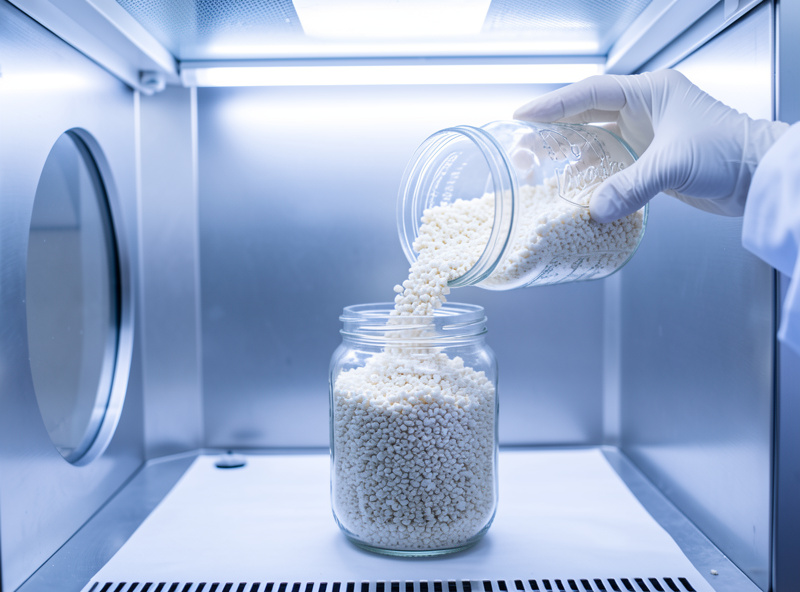
Grain-to-grain transfer (G2G) is the move that turns one fully colonized jar of spawn into eight or ten fresh ones: under sterile conditions you pour or spoon a portion of running mycelium-grain into jars of sterilized, uncolonized grain, and each one races to full colonization in a fraction of the time a liquid-culture or spore start would take. It is the cheapest way to multiply genetics you already trust.
I lean on G2G constantly because it is fast, it costs almost nothing, and it carries forward a strain I have already proven clean and vigorous. But it is also one of the two riskiest moments in the whole lab — you are opening fully cooked, nutrient-dense grain to the air, twice — so the technique has to be tight. This guide is a spoke of the larger grain spawn and culture lab guide; if you have not prepped and sterilized your receiving jars yet, start with grain spawn preparation and grain sterilization first.
What G2G is and why it is so fast
A grain-to-grain transfer works because you are not starting from a single point of growth — you are seeding the new jar with thousands of already-active mycelial fronts at once. Where a liquid-culture or spore-syringe start has to recover and spread from a few injection sites, transferred grain hits the ground running, which is why a G2G jar can colonize in roughly half the time of a fresh injection.
That speed is the entire point. The faster a jar colonizes, the less window any stray contaminant has to establish before the mycelium owns the grain. G2G also preserves a known quantity: the source jar already proved itself clean and vigorous, so you are propagating winners rather than gambling on fresh genetics. The tradeoff is that you are also faithfully copying whatever is in that jar — including contamination you cannot see yet — which is why source selection matters as much as technique.
Expansion ratios — how far one jar goes
The standard transfer ratio is conservative: use about 10-20% colonized grain to seed each new jar, which lets a single fully colonized quart expand into roughly five to ten new quarts. Push the ratio higher (more spawn per jar) and colonization is faster but you multiply less; go leaner and you stretch further at the cost of speed.
In practice I aim for the middle. A heaping spoonful or a shallow pour into each fresh jar gives enough growth fronts for a fast, even colonize without wasting source spawn. A few working numbers:
- 1 colonized quart → 5-10 new quarts at a typical 10-20% seeding rate.
- Heavier seed (25-30%) colonizes faster and is the safer choice for slower species or cooler rooms.
- Stop expanding after a few generations. Each G2G generation drifts a little; senescence and accumulated risk mean I rarely go past two or three rounds before returning to a stored culture library slant or fresh agar.
The sterile transfer, step by step
Do the transfer in front of a flow hood if you have one, or inside a still-air box if you do not, because open grain on both sides of the pour is the single most exposed moment in the process. Wipe everything down with 70% isopropyl, flame-sterilize any tool, work fast and deliberately, and keep your hands downstream of the open jar mouths in still air.
The sequence I run: surface-sterilize the outside of both jars and my gloves, crack the source jar and break up the colonized grain by shaking it first (a loose, shaken source pours cleanly), then open a receiving jar, pour or spoon in the seed grain, and re-cap immediately. Minimize the time any jar sits open — I open, transfer, and close one jar before moving to the next rather than lining them all up uncapped. After capping, shake each new jar gently to distribute the seed grain through the fresh grain. The whole rhythm is covered in more depth in my sterile technique guide, and the hood-versus-box decision is in still air box vs flow hood.
Choosing a source jar — and avoiding contamination relay
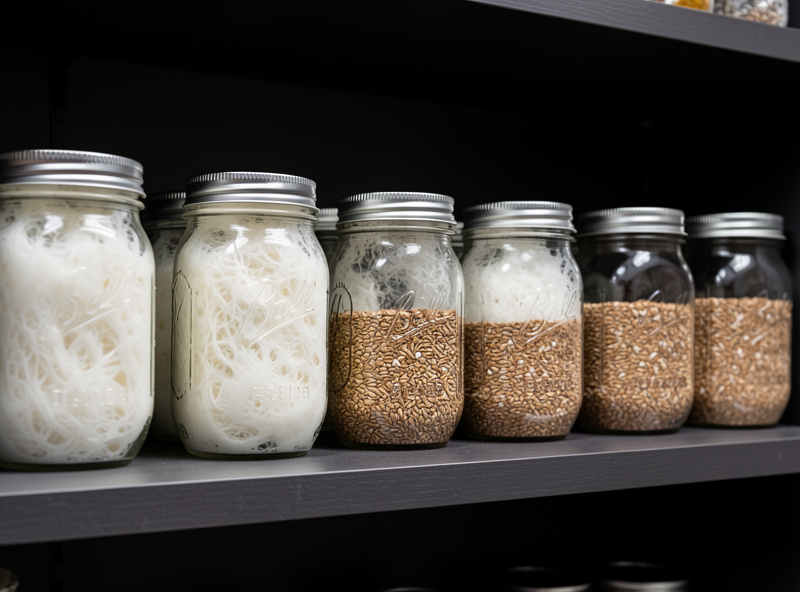
Only ever transfer from a jar that is fully colonized, pure bright white, and free of any off-color, smell, or wet zone, because G2G copies the source faithfully and a marginal source jar becomes ten contaminated jars. The most painful contamination losses I have had were not from sloppy technique but from transferring out of a jar that looked fine and was quietly harboring bacteria.
Give a candidate source jar a hard look before you commit it: even white throughout, no sectoring or weird colored zones, no sour smell when you crack it. If a jar shows green, that is Trichoderma and the jar plus anything near it is done — never transfer from it, and check my contamination guide if you are not sure what you are looking at. When in doubt, do not transfer; the cost of one wasted source jar is nothing next to a whole flat of contaminated grain. This is also where keeping a clean master culture upstream pays off — you always have a trustworthy place to restart.
After the transfer: incubation and tracking
Once the new jars are seeded and shaken, they go to a clean, dark, temperature-stable incubation space — most gourmet species run happily around 21-24°C — and you simply leave them alone. The biggest post-transfer mistake is fussing: every time you pick up a jar to check it, you risk warming it, jostling the network, and reading contamination into normal early growth.
I label every jar with the strain and the transfer date so I can track how each generation performs, and I resist shaking again until a jar is clearly taking off. Watch for the first signs of growth within a few days — healthy mycelium fuzzing out from each seed point — and full colonization typically inside one to two weeks at a good ratio. If a jar still shows no growth after several days while its siblings are running, set it aside and watch it rather than shaking it, because a slow jar is often an early contaminated one. Keeping the incubation shelf clean is part of the same discipline; the sterile technique guide covers the surrounding habits.
When to use G2G versus liquid culture
G2G is the right tool when you already have a clean colonized jar and want maximum volume fast and cheap; liquid culture is better when you want to store and distribute genetics in syringe form or inoculate many jars from a sealed, lower-risk source. Many growers, myself included, run both — LC to start clean jars from a sealed syringe, then G2G to multiply the best of those once they prove out.
If you are deciding how to expand a strain you like, the honest answer is they complement each other rather than compete. Use a liquid culture for the safer first inoculation from a sealed port, then once a jar colonizes clean, use G2G to turn it into the volume you actually need to spawn bulk. For a side-by-side on starting methods, liquid culture vs spore syringe covers the upstream choice.
Frequently Asked Questions
How many jars can one colonized jar of grain spawn make?
At a typical 10-20 percent seeding rate, one fully colonized quart expands into roughly five to ten new quarts. A heavier seed rate of 25-30 percent colonizes faster but multiplies less. The conservative middle gives fast, even colonization without wasting source spawn.
How many times can I keep doing grain-to-grain transfers?
Limit it to two or three generations from a given source. Each G2G round carries forward accumulated contamination risk and a little genetic drift or senescence. After a few rounds, return to a stored culture library slant or fresh agar to restart from clean, vigorous genetics.
Do I need a flow hood for grain-to-grain transfer?
A flow hood is ideal because open grain on both sides of the pour is the most exposed moment in the lab, but a still-air box works well for home-scale transfers. Whichever you use, surface-sterilize both jars, work fast, and re-cap each jar before opening the next.
Can I transfer from a jar that is only partly colonized?
It is better to wait for full colonization. A fully colonized source has the vigor to seed new jars aggressively, and it has had time to reveal hidden contamination. Transferring from a partly colonized jar both slows the new jars and increases the chance you are copying a problem you cannot see yet.
Why did all my transferred jars contaminate at once?
Almost always because the source jar was contaminated but looked clean. G2G copies the source faithfully, so one marginal jar becomes a whole flat of bad ones. Inspect source jars hard for even white color, no off-smells, and no wet zones before committing them, and when in doubt do not transfer.