
To brew reishi mushroom tea, simmer 5 to 10 grams of sliced dried reishi per litre of water at a bare simmer for at least one hour — never a quick steep. Reishi is a dense, woody polypore; only sustained heat pulls its earthy body out of the tissue. Rush it and you get raw bitterness with no depth behind it.
I learned that the expensive way. My first attempt at reishi tea was a green-tea-style steep — a few slices in a mug of just-off-boil water, three minutes, done. What I drank was so punishingly bitter I tipped it out and assumed the conk was bad. It wasn’t. I was extracting a shelf fungus like it was a delicate leaf, and the two could not be more different. Reishi (Ganoderma) is packed with resinous triterpenes — the compounds behind that intense bitterness — and they, along with the mild earthy backbone that makes a good cup, only migrate out under a long, patient decoction.
This is the culinary tea method, part of my broader functional mushrooms in the kitchen guide. I grow reishi on supplemented hardwood in my own space and dry the conks hard before they ever hit the pot, so everything here comes from actually brewing it, not reading about it. If you’re after the concentrated potency route instead, that’s a different technique entirely — I keep the tincture method separate in my write-up on reishi double extraction. This page is purely about a tea you’ll enjoy drinking.
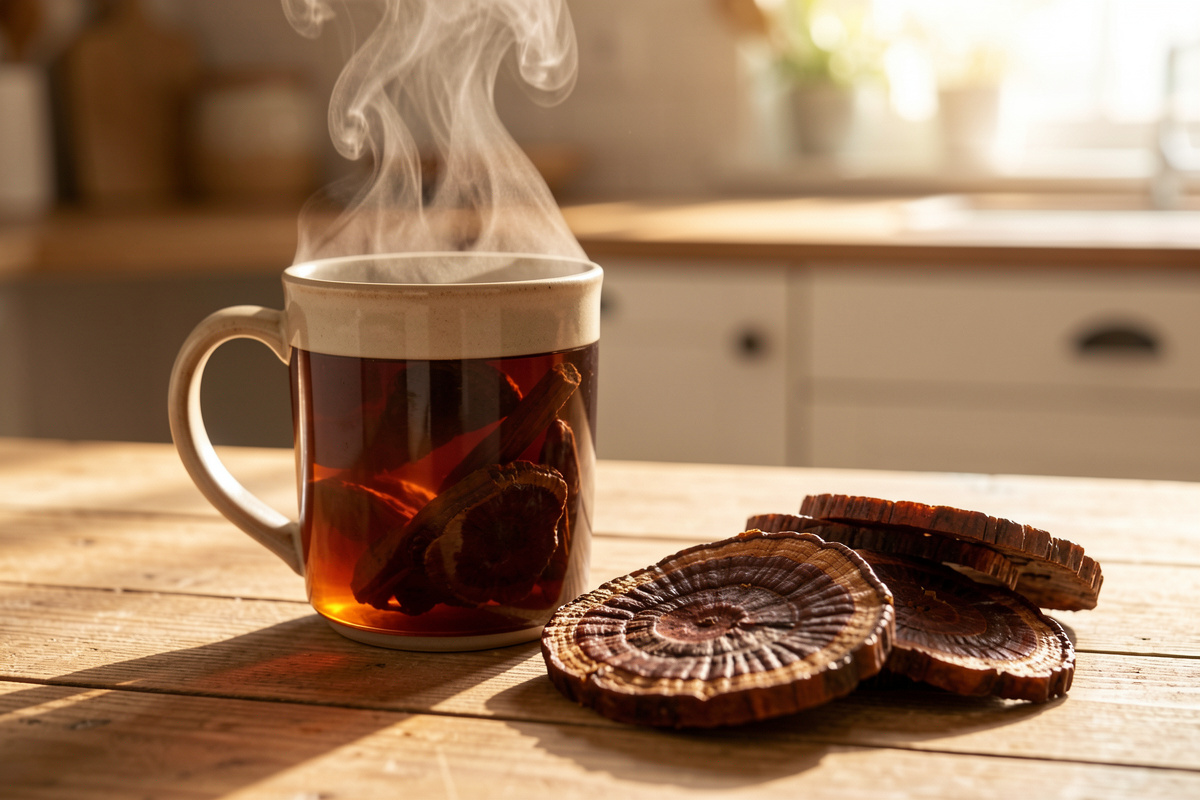
How Long Do You Simmer Reishi Tea?
Simmer reishi for a minimum of one hour, and up to two, at a bare simmer in a covered pot — small bubbles, never a hard rolling boil. Reishi’s dense flesh releases its compounds slowly, so time and gentle heat do the work. I taste at the 45-minute mark and almost always give it another 30, because the tea is usually still thin then.
The covered pot matters more than people expect. An open pot loses volume fast over a 90-minute simmer, so you either end up concentrating the tea past where you wanted it or topping up with water and diluting the extraction you just built. A lid keeps the volume stable and the temperature even. I run mine barely bubbling — if the surface is churning, the heat’s too high and you’re driving off aromatics without gaining anything in extraction.
There’s a real reason the long simmer works where a steep fails, and it’s the same logic I use at the pressure canner sterilizing supplemented sawdust: dense material needs sustained conditions, not a quick pass. Reishi tissue is chitin-rich and structurally tough — a three-minute contact only touches the surface. Ninety minutes lets the water penetrate, and the tea shifts from a thin, sharp bitterness to a rounder, deeper cup with an actual earthy body underneath the bitter note.
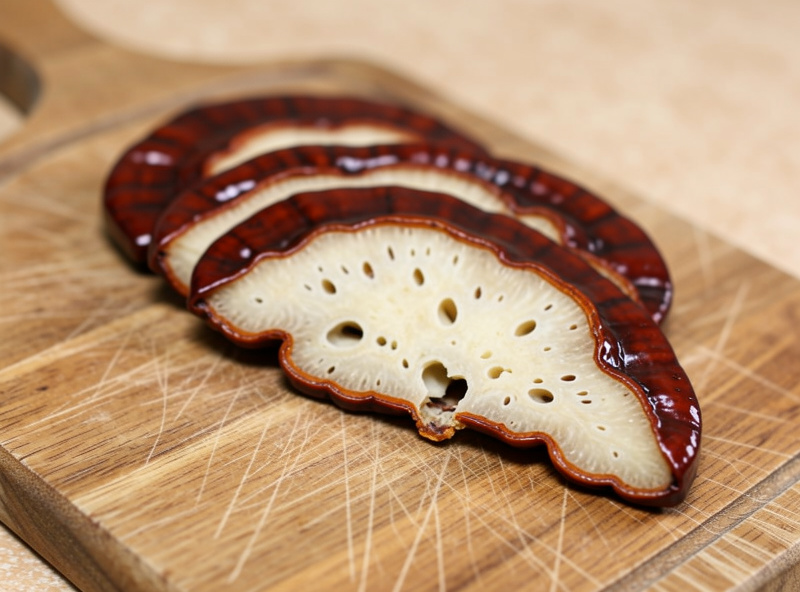
Why Is My Reishi Tea So Bitter?
Reishi tea is bitter because the mushroom is genuinely, chemically bitter — its triterpenes are the source, and there is no brewing trick that removes them entirely. The goal isn’t to eliminate the bitterness but to balance it with body and complementary flavors so it reads as a pleasant bitter tea rather than a harsh one. Dose and additions do the balancing.
The single biggest lever is how much reishi you use. This is the one species where more is decisively worse — double the reishi and you don’t get a richer tea, you get an undrinkable one. I stay conservative: 5 grams per litre for a mild cup, 10 for a robust one, and I’d rather run a longer simmer on less mushroom than crank the amount. My kitchen scale earns its place here; I weigh the reishi rather than eyeballing slices, because slice size varies enormously and a “handful” of a dense conk can be far more than you think.
The second lever is what you brew it with. Reishi takes beautifully to warm, sweet, and spiced companions that give the bitterness something to lean against. Here’s how I think about the common additions:
| Addition | What it does | When to add |
| Fresh ginger | Warm heat that cuts through the bitter edge | Simmer along with the reishi |
| Cinnamon stick | Sweet aroma that rounds the finish | Last 10 minutes only |
| Honey | Sweetness to balance bitterness | Off heat, in the cup |
| Dried orange peel | Bright citrus lift | Last 10 minutes |
| Milk or oat milk | Fat that mellows and softens | Off heat, in the cup |
Notice the timing column, because I ruined a batch getting it wrong. Early on I dropped a cinnamon stick in at the start of a 90-minute simmer and cooked all its aroma flat — by the time the reishi was done, the cinnamon was a ghost. Aromatics are volatile; they go in for the last 10 minutes, not the first. The only thing I simmer the whole way is ginger, which is tough enough to give slowly like the reishi itself.
How Much Dried Reishi Per Cup?
Use roughly 5 to 10 grams of dried reishi per litre of water, which makes about four cups — so a single mug takes only a gram or two. Reishi is potent in flavor and you are extracting over a long simmer, so a little goes a long way. I brew by the litre rather than the cup because the long simmer makes single-serving batches impractical.
Because I brew big, I treat the pot as a base I return to. A litre of finished reishi decoction keeps a few days refrigerated, and I’ll reheat a mug over two or three mornings, blending it with ginger or a splash of oat milk depending on the day. What I don’t do is push a stored brew past three days — like any liquid, it’s a spoilage risk, and reishi loses its fresher edge fast. If you want tea more often than a big batch supports, brew smaller and more frequently rather than storing longer.
The reishi you brew with is worth choosing well. Home-grown and hard-dried is best because you control the drying, but good dried reishi slices are widely available if you’re not growing your own — look for pieces that snap cleanly and smell earthy, not musty. You can find dried reishi through an online search for dried reishi slices, and a simple stainless mesh strainer makes decanting the finished tea off the slices painless. A proper fine-mesh tea strainer catches the fine sediment a long simmer throws.
As an Amazon Associate I earn from qualifying purchases.
Should You Grind Reishi or Simmer It Sliced?
Simmer reishi sliced, not ground, for a tea you plan to strain and drink. Slices give up their flavor fully over a long simmer and strain out cleanly, while a fine powder makes a cloudy, sediment-heavy cup that’s a chore to filter. Grinding is for powder blends and capsules, not for a clear decoction.
I keep my reishi as brittle dried slices specifically for tea. Once a conk is snapped into simmer-ready pieces, an hour and a half of gentle heat pulls everything a grind would, without the murk. When I do want reishi in powdered form — for a coffee blend or a stirred drink — I grind a separate small batch, because a powder suspends the whole mushroom in the cup rather than extracting from it. Those are two different products with two different textures, and mixing the methods gets you the worst of both.
One practical note on drying, since it’s upstream of everything: reishi must go into storage cracker-dry. A properly dried slice snaps; a bendy one still holds moisture and will, in a sealed jar, grow the same molds I spend my grow-room life fighting. I dry mine hard on a rack with airflow, and for bulk drying a dedicated unit is worth it — my thinking on that is in the best dehydrator for mushrooms. If you’re starting from purchased dried reishi that’s gone a little soft, a short session in a low dehydrator crisps it back up before you brew.
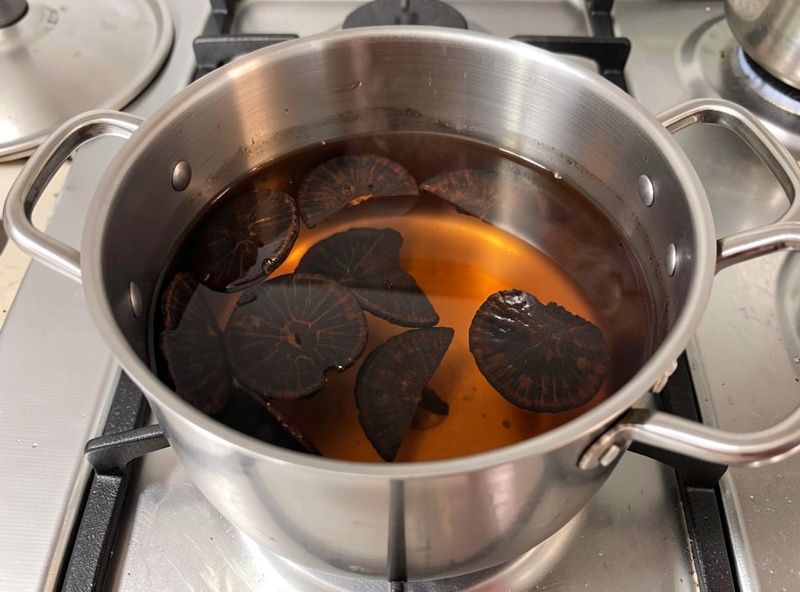
What Does Properly Brewed Reishi Tea Taste Like?
Well-brewed reishi tea is deeply earthy and pleasantly bitter, with a woody, faintly resinous aroma and a long, drying finish — think a very bitter, savory herbal tea rather than anything sweet. Done right the bitterness is a feature, framed by body and aroma. Done wrong it’s just harsh, thin, and one-note.
The sensory tells of a good pot are specific. As it simmers, the kitchen fills with a low, woody, almost forest-floor smell — the same clean earthiness I know from a healthy fruiting block, not anything sour or off. The finished tea pours a clear dark amber, and the first sip hits bitter, then opens into a rounder earthy middle, then dries the tongue on the finish. If your cup is bitter from front to back with no middle, you either under-simmered or over-dosed. If it smells sour rather than earthy, your reishi wasn’t stored dry enough — that’s a storage failure, not a brewing one.
Reishi and turkey tail are the two woody tea species I brew most, and they’re close enough in method that people lump them together — but their bitterness lives on completely different scales, and the tricks that rescue reishi will flatten a gentle turkey tail. I get into which to grow and brew first in turkey tail vs reishi. If reishi’s bitterness is more than you want to manage, turkey tail is the far milder entry point into woody functional teas.
Can You Reuse Reishi Slices for a Second Batch?
Yes — reishi slices are dense enough to decoct two or even three times, which is one of the reasons the mushroom is such good value. The first simmer pulls the most, but a second 60-to-90-minute run still yields a lighter, gentler cup, and the third is milder still. I keep the strained slices in the fridge between brews and get several days of tea from one small handful.
The technique that squeezes the most out of a batch is to concentrate rather than dilute. Instead of adding fresh water to the same slices each time, I’ll sometimes run the first decoction, strain it off, then simmer the spent slices in fresh water and combine the two brews — a stronger first extraction blended with a lighter second gives a fuller, rounder pot than either alone. This is the same “get everything out of the material” instinct that makes double extraction worthwhile for tinctures, just applied to a drinkable tea. The flavor plateaus, though: by the third simmer the slices are giving up mostly pale, thin water, and that’s your signal to compost them.
How do you know a slice is spent? Feel it. A fresh dried slice is hard and brittle; after two or three long simmers it’s waterlogged, soft, and slightly spongy, and it smells washed-out rather than earthy. That tactile check is more reliable than counting brews, because slice thickness and reishi density vary. When the slices go soft and the tea runs pale, you’ve extracted everything worth drinking — anything past that is just hot water with a hint of bitterness, and not worth the burner time.
Keep Building
- Functional Mushrooms in the Kitchen: A Cooking Guide
- Turkey Tail vs Reishi: Which to Grow First
- Reishi Double Extraction: The Tincture Method
- Rehydrating Dried Mushrooms: Soak Times and Liquor
How long should reishi tea simmer?
At least one hour, up to two, at a bare simmer in a covered pot. Reishi is a dense woody polypore and releases its earthy body slowly. Taste at 45 minutes and extend if the tea is still thin.
How much dried reishi do I use per litre of water?
About 5 grams for a mild tea and up to 10 grams for a robust one, per litre of water, which makes roughly four cups. Reishi is the one species where using more makes the tea worse, not better, so stay conservative.
Why is reishi tea so bitter and can I fix it?
Reishi is chemically bitter because of its triterpenes, and no brewing trick removes that entirely. Balance it instead by keeping the dose modest and adding ginger, a cinnamon stick in the last ten minutes, honey, or a splash of milk off the heat.
Should I grind reishi or simmer it in slices?
Simmer it sliced. Slices give up their flavor fully over a long simmer and strain out cleanly, while ground reishi makes a cloudy, sediment-heavy cup. Grinding is for powder blends, not for a clear decoction you strain and drink.
How long does brewed reishi tea keep?
A finished decoction keeps a few days refrigerated and reheats fine over two or three mornings. Do not push it past about three days, since like any brewed liquid it is a spoilage risk and reishi loses its fresher edge quickly.