
Pinning is the moment a colonized substrate stops growing mycelium and starts forming tiny primordia — the pins that become mushrooms. It is triggered by a deliberate shift in conditions: a drop in CO2 through fresh-air exchange, the introduction of indirect light, high humidity, and usually a few degrees of temperature drop. Get those four conditions right at the right moment and a fully colonized tub pins within days.
Pinning is where a lot of growers stall — the substrate goes white and then just sits there, overlaying into a tough mat instead of fruiting. Almost always the cause is that one or more pinning triggers never arrived. This guide breaks down each condition that flips a tub from colonization to fruiting, how they interact, and how to read whether your tub is ready to pin.
What Pinning Is and Why It Matters
Pinning is the formation of primordia, the dense knots of hyphae that develop into mushrooms. It happens when fully colonized mycelium receives the environmental cues that it has reached an open, fruiting-friendly surface: lower CO2, light, moisture, and a temperature shift. Until those cues arrive, the mycelium stays in vegetative growth, spreading and thickening but never fruiting — which is exactly the state a sealed, warm, dark colonization environment maintains on purpose.
The transition is a switch, not a slow fade. Once the conditions cross the threshold, the surface develops tiny knots within a few days, then those primordia swell into recognizable pins. Getting the timing right — waiting for full colonization, then changing conditions decisively — is the difference between an even, heavy flush and a patchy, frustrating one. This pinning step sits right after colonization in the bulk growing sequence.
The Four Pinning Triggers
Four conditions together trigger pinning, and missing any one can stall a tub. First, low CO2 — achieved through fresh-air exchange — signals the surface is open. Second, indirect light on roughly a 12-hour cycle tells the mycelium where “up” and “out” are; mushrooms do not photosynthesize, but they use light as a directional and timing cue. Third, high humidity, typically 85–95%, keeps the forming pins from drying out. Fourth, a temperature drop of a few degrees from colonization temperature mimics the seasonal shift many species use as a fruiting signal.
These work as a set. You can have perfect humidity and light, but if CO2 stays high the tub overlays instead of pinning — which is why fresh-air exchange is the trigger growers most often get wrong. The full mechanics of dropping CO2 are covered in the FAE and CO2 guide. Change all four conditions together when the substrate is fully colonized, and the tub responds within days.
It helps to think of the four triggers as one combined message: “you have reached the surface, and the season is right to fruit.” High CO2 plus darkness plus warmth says “keep colonizing, you are still buried.” Drop the CO2, add light, raise humidity, and cool things slightly, and the message flips. This is also why half-measures fail — a tub given more fresh air but left in warm darkness gets a mixed signal and pins poorly. Decisiveness matters: make the full environmental change at once rather than easing into it over a week, and the mycelium commits to fruiting cleanly. The exact temperature drop is less important than the contrast; even a few degrees below colonization temperature, combined with the other three triggers, is enough to flip the switch for most gourmet species.
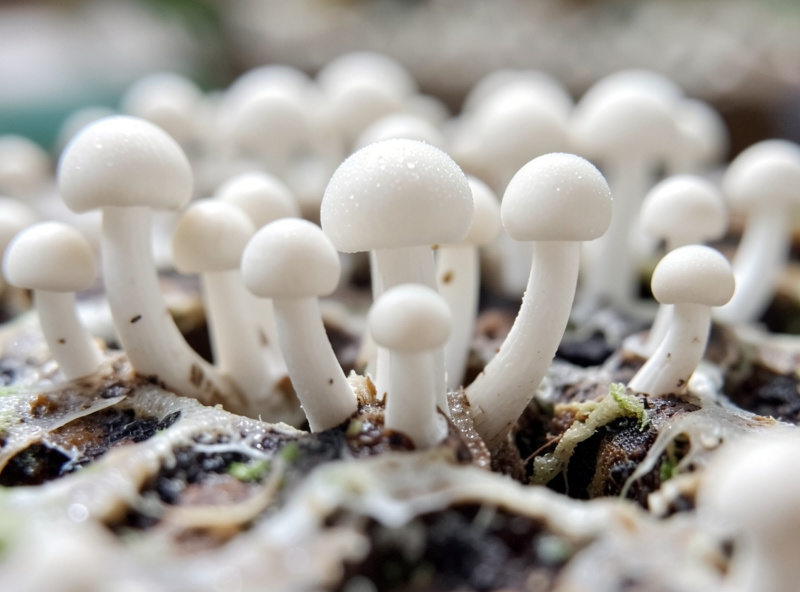
Pinning Conditions by Species
The four triggers apply to all species, but the specifics vary. Oyster is the eager pinner — it wants strong fresh air and pins readily across a wide temperature range, which is why it is the gateway species. Lion’s mane pins without much light fuss but is sensitive to fresh air and humidity, forming its characteristic toothed clusters when conditions are steady. Shiitake on a block needs the block fully colonized and browned, then often a cold-water soak shock to trigger pinning — a species-specific trick.
Wine cap and Agaricus pin off cased or bedded surfaces and want gentler exchange. The table below summarizes the general pinning windows, but every strain and setup behaves slightly differently, so treat these as starting points and adjust by observation. Matching each species to its conditions is part of the broader species-substrate logic in the substrates guide.
| Species | Pinning Temp | FAE Demand | Special Trigger |
|---|---|---|---|
| Oyster | 13–18°C | High | Strong FAE + light |
| Lion’s mane | 15–21°C | Medium | Steady humidity |
| Shiitake (block) | 13–18°C | Medium | Cold-water soak shock |
| Wine cap | 15–25°C | Low-medium | Outdoor seasonal shift |
| Button (Agaricus) | 16–18°C | Low-medium | Casing layer |
The Light Question: How Much and Why
One of the most misunderstood pinning triggers is light. Mushrooms do not photosynthesize, so light is not feeding them — it is a directional and timing signal. The mycelium uses light to orient pins toward the open surface and to sense day length as a fruiting cue. This means you need far less light than people assume: ordinary indirect room light, or a cheap LED on a timer, is plenty. Direct sun is unnecessary and will overheat and dry a tub.
A rough 12-hour on, 12-hour off cycle works for nearly every gourmet species. The intensity that matters is “enough to read a book by,” not grow-light brightness, because you are signaling, not powering growth. Skipping light entirely is one of the quieter reasons a tub pins unevenly or only along the sides — without a directional cue, pins form wherever they catch stray light, often on the walls rather than the top surface. Give the tub a consistent, gentle light cycle from the moment you start fresh-air exchange.
How to Tell a Tub Is Ready to Pin
A tub is ready to pin when the substrate is fully colonized — the entire top surface and visible sides knit solidly white — and ideally just beginning to consolidate into a slightly fuzzy overlay. That is the window: colonized enough to have the energy reserves to fruit, not so overlaid that a tough hydrophobic skin has formed. Switching to pinning conditions too early, before full colonization, gives weak patchy pins; waiting too long lets overlay set in and resist pinning.
Watch for the first hint of side-pinning or surface knots even before you change conditions — that is the mycelium telling you it is ready. When you see full white colonization, make the switch: start fresh-air exchange, turn on indirect light, ensure humidity is high, and let the temperature ease down. Within a few days you should see the first primordia. The same field-capacity moisture that carried colonization, covered in the moisture guide, must hold through pinning — a drying surface aborts pins.
Why a Tub Won’t Pin
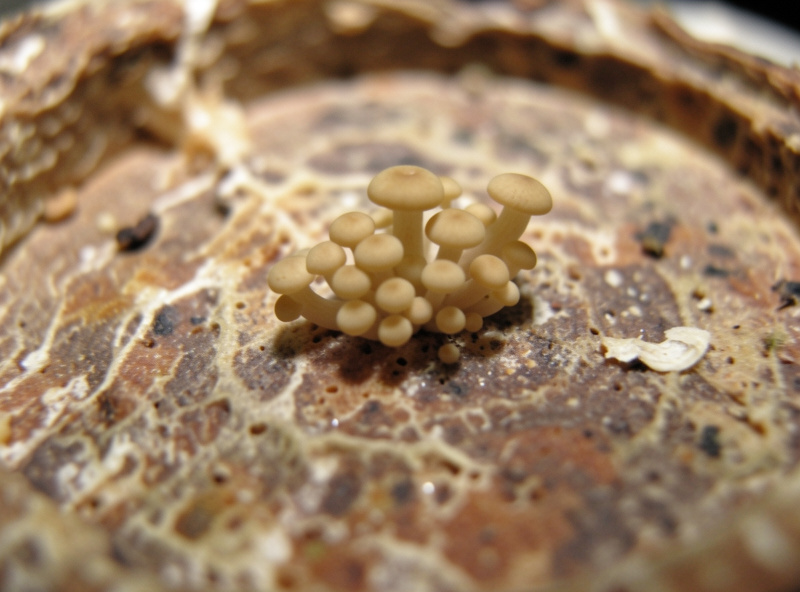
The most common reason a colonized tub will not pin is insufficient fresh-air exchange — CO2 stays high, the mycelium keeps reading “still inside the substrate,” and it overlays instead of fruiting. The fix is more FAE plus light. The second is overlay that set in because conditions were changed too late; scratching the surface lightly to break the overlay can sometimes trigger pinning, or a light misting and patience may coax pins through.
Other causes include a surface that dried out, halting pin formation, or a temperature that never dropped to the fruiting range. Run through the four triggers like a checklist whenever a tub stalls: is CO2 actually dropping, is there light, is humidity high, did the temperature ease down? One missing trigger explains almost every non-pinning tub. Correct it and a healthy colonized substrate will pin — the energy is there, it just needs the right signals to release it. From pins, the tub moves into fruiting and the harvest and flush cycle.
From Primordia to Pins to Mushrooms
Once the conditions are right, development moves fast and is worth watching closely. The first sign is hyphal knots — tiny dense white bumps on the surface where mycelium is gathering into primordia. Within a day or two these swell into recognizable pins: miniature mushrooms with a discernible cap and stem. From pin to harvestable mushroom is often just a few more days, especially for oyster, which can go from pin to full cluster in under a week under good conditions.
The critical thing during this window is stability. Pins are fragile and abort easily if conditions swing — a humidity crash, a dry-out from over-fanning, or a temperature spike can kill a whole flush of pins before they mature. This is the phase to resist the urge to fiddle: keep humidity high, keep fresh air steady, keep light consistent, and let them develop. Many growers lose pins not by neglect but by over-intervening, opening the tub repeatedly to check and drying the delicate primordia each time. Late-stage tub failures that look like pinning problems are sometimes contamination breaking through — the bulk mushroom contamination guide covers how to identify green mold, wet rot, and bacterial blotch and when a tub can be saved versus discarded.
It is also normal for more pins to form than will mature. The mushroom hedges its bets by forming many primordia, then aborting the weaker ones to channel energy into the strongest — a small amount of aborting in a flush is natural, not a failure. What you want to avoid is wholesale abortion, which signals an environmental problem rather than the mushroom’s normal self-thinning. Once a cluster matures, you are into harvest timing and the flush cycle that repeats two or three times per tub.