
The first time I saw little dark flies drifting up out of a fruiting tub, I made the classic mistake: I reached for a spray. Wrong move. Fungus gnats and springtails in a mushroom grow are not a garden pest problem you can chemical your way out of — your crop is a living fungus, and most insecticides that kill the bugs will also damage or contaminate the mycelium and make the mushrooms inedible. Control here is about exclusion, drying, and trapping, not poison. Done right, you can clear an infestation without sacrificing the flush.
Here is what these two pests actually are, why they show up, how to tell the genuinely-harmful one from the mostly-harmless one, and the control methods that work in a grow you intend to eat from.
Know your bug: gnats vs. springtails
They get mentioned together but they are very different in how much they matter.
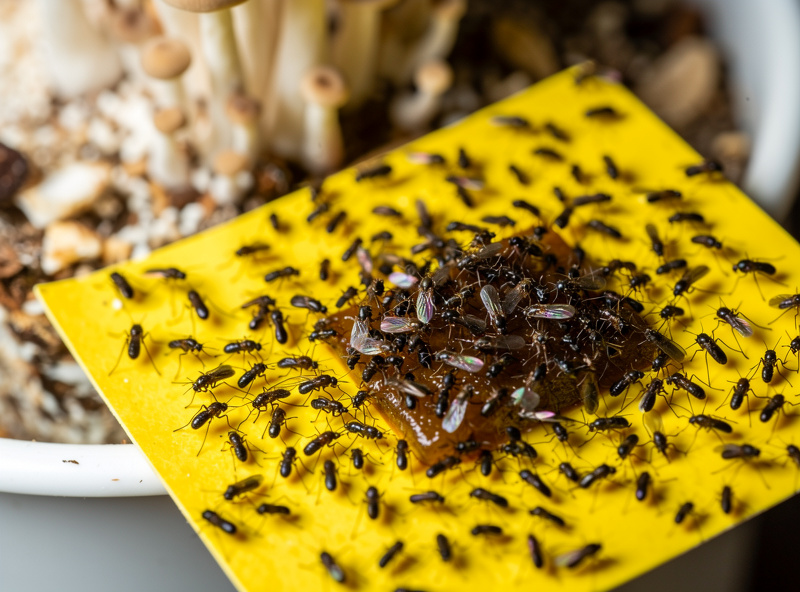
Fungus gnats are the real threat. They are tiny dark flies, like miniature mosquitoes, attracted to moist, fungus-rich substrate. The adults are mostly a nuisance, but their larvae are the problem: they tunnel through substrate and mycelium, they damage developing pins, and — the part that actually wrecks grows — they carry contamination on their bodies and in their gut, introducing bacteria and mold spores straight into your sterile-ish substrate. A gnat infestation is often the delivery mechanism for the green mold that finishes a tub off.
Springtails are tiny wingless arthropods that hop, thrive in damp conditions, and feed on mold, decaying matter, and bacteria. In small numbers they are often harmless or even mildly beneficial (they graze on competing mold). A heavy population, though, can stress a grow and graze on mycelium, and like any traffic across the substrate they can ferry contamination. Mostly, springtails are a sign your conditions are too wet — they are a symptom as much as a pest.
The control methods that don’t ruin the crop
Because you cannot spray your dinner, control leans on physical and biological methods. Here is the toolkit, roughly in the order I deploy it:
| Method | How it helps | Notes |
|---|---|---|
| Fine mesh / exclusion | Stops adults reaching the substrate to lay eggs | The #1 prevention — screen every air hole; breaks the life cycle |
| Yellow sticky traps | Catch and monitor adult gnats | Knocks down adults and tells you the population trend |
| Reduce surface moisture | Removes the damp both pests need to breed | Improve FAE, avoid standing water — hits the root cause |
| BTI (mosquito bits) | Bacterial larvicide that kills gnat larvae | Mushroom-safe; targets larvae, the damaging stage |
| Let the surface dry between mistings | Interrupts the breeding cycle | Especially effective against springtails |
Exclusion first: screen everything
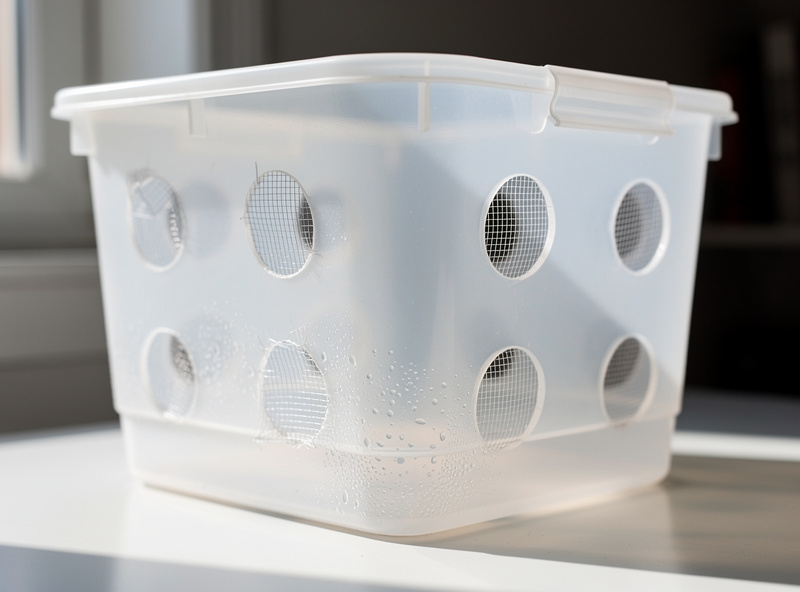
The most effective thing you can do is never let the adults in. Fungus gnats breed explosively because the cycle is fast: adults lay eggs in moist substrate, larvae feed and pupate, new adults emerge in a couple of weeks, and the population compounds. Break it at the front by covering every intake and exhaust hole on your fruiting chamber with fine insect mesh or polyfill so adults cannot get to the substrate to lay. This one habit prevents far more gnat trouble than any treatment cures. I build mesh into my tubs and tents from the start now, the same way I build in fresh air exchange — it is cheaper to exclude the pest than to evict it.
If they’re already in: knock down adults, kill larvae, dry the surface
An active infestation gets a three-pronged response. Sticky traps go in immediately to catch adults and show me whether the population is climbing or falling. BTI — the same Bacillus thuringiensis israelensis in mosquito bits — goes onto or into the moist surface to kill the gnat larvae; it is a targeted bacterial larvicide that is safe around the mushrooms and breaks the cycle at the larval stage where the real damage happens. And critically, I dry the surface out as much as the species will tolerate: improve FAE, stop over-misting, and eliminate any standing water, because both gnats and springtails depend on that constant damp to breed. Take away the wet and you take away the nursery.
For springtails specifically, the drying step usually does most of the work on its own. Because they are a wet-conditions symptom, tightening up moisture management — letting the surface dry between mistings, improving air exchange — brings the population back down without any treatment at all. If springtails keep returning, read it as a message that the chamber is running too wet, which is worth fixing anyway since saturated, stagnant conditions also drive overlay and stroma.
Why timing the response matters
The reason I move fast on gnats is the math of their life cycle. A female lays dozens of eggs in moist substrate, the larvae feed for a week or two, pupate, and emerge as adults that immediately lay again — so a handful of gnats you ignore becomes a cloud in two short generations. That compounding is why a sticky-trap count that is merely holding steady is actually a warning, not an all-clear: steady means the new adults are replacing the ones you caught. What you want to see is the trap count falling day over day, which tells you the BTI and the surface-drying are winning at the larval stage faster than new adults emerge. I check the traps daily during an active infestation for exactly that trend, and I do not relax until the count has dropped to near zero and stayed there through what would be another emergence cycle.
One more practical distinction worth making: do not confuse fungus gnats with the larger flies or fruit flies that show up around harvested mushrooms left out or around spent, rotting substrate. Those are a hygiene issue around your harvest and your bin, solved by cleaning up and sealing waste, not a substrate-breeding problem in the living tub. Fungus gnats are small, dark, and specifically drawn to the moist colonized surface; if your flies are bigger and hanging around the kitchen scraps rather than the grow chamber, you are chasing the wrong pest.
The real reason to take gnats seriously
It is worth saying plainly: the bugs themselves are rarely what kills a grow — the contamination they import is. A gnat that walked across a moldy surface and then laid eggs in your tub has just inoculated your substrate with that mold. So I treat a gnat sighting as a contamination-risk event, not just an annoyance, and I respond fast and on every front. This is the same clean-process instinct that runs through the whole grow room: keep foreign traffic off the substrate, keep conditions out of the damp-and-stagnant zone pests and molds both love, and you protect the crop from two problems with one habit. If a tub does pick up mold off the back of a gnat problem, the contamination guide covers identifying and triaging it, and the bacterial wet-spot guide covers the bacterial side they can also ferry in.
Frequently Asked Questions
Are fungus gnats bad for mushroom grows?
Yes. The adults are a nuisance, but the larvae tunnel through substrate and mycelium, damage developing pins, and carry bacteria and mold spores into the grow. A gnat infestation is often how green mold or bacterial contamination gets delivered into an otherwise clean tub, so it is worth treating as a contamination risk, not just a pest.
Can I use insecticide spray on fungus gnats in a mushroom grow?
No. Your crop is a living fungus, and most insecticides that kill the bugs also damage or contaminate the mycelium and make the mushrooms inedible. Control relies on exclusion with fine mesh, yellow sticky traps for adults, BTI for larvae, and drying out the surface, not chemical sprays.
What is the best way to prevent fungus gnats?
Exclusion. Cover every air hole on the fruiting chamber with fine insect mesh so adults cannot reach the moist substrate to lay eggs. Because the breeding cycle is fast and compounds, stopping the adults at the front prevents far more trouble than any treatment cures. Build the mesh in from the start.
Are springtails harmful to mushrooms?
Usually not in small numbers; they graze on mold and decaying matter and can be mildly beneficial. A heavy population can stress a grow and ferry contamination, but springtails are mostly a symptom that conditions are too wet. Drying the surface and improving air exchange typically brings them back down on its own.
What is BTI and is it safe around mushrooms?
BTI is Bacillus thuringiensis israelensis, the bacterial larvicide in mosquito bits. It targets fungus gnat larvae, the damaging stage, and is safe to use around mushrooms because it acts on insect larvae rather than the fungus. Apply it to the moist surface to break the breeding cycle.
How do I get rid of fungus gnats already in my tub?
Use three approaches at once: put in yellow sticky traps to knock down and monitor adults, apply BTI to kill the larvae, and dry the surface as much as the species tolerates by improving fresh air exchange and stopping over-misting. Removing the constant damp removes the nursery the pests depend on.