
Most mushrooms should be par-cooked before freezing, not frozen raw. Raw mushroom cell walls rupture as the water inside them crystallises and expands, so they thaw into grey mush. Par-cooking first — a 4-6 minute sauté — drives off that structural water and sets the texture, so par-cooked frozen mushrooms thaw back to roughly 90 percent of fresh and keep for a full 12 months.
Freezing is the method I reach for when a flush outpaces both the dehydrator and the dinner table, especially for the watery species that dry poorly. After freezing every species I grow and forage, the rule is simple: par-cook almost everything, freeze a couple of forgiving species raw, and vacuum-seal whatever you can. Here is the full method.
Why You Par-Cook Before Freezing
Par-cooking before freezing protects texture by removing the free water that would otherwise turn to sharp ice crystals inside the mushroom. A fresh mushroom is 80-90 percent water held in cell walls; freeze it raw and that water expands, ruptures the walls, and leaks out on thaw, leaving a soft grey collapse. Cooking off the water first means there is far less to crystallise.
The method is a sauté: slice mushrooms, cook in butter or olive oil over medium heat for 4-6 minutes until they have released their water and it has mostly boiled off, then cool to room temperature before freezing. Do not season heavily at this stage — salt and aromatics are better added when you cook the thawed mushrooms into the final dish. The goal is to set texture, not to finish them.
The formal extension method is steam-blanching rather than sautéing — the National Center for Home Food Preservation recommends 5 minutes of steam for sliced mushrooms (9 for whole buttons or quarters) before packing and freezing, mainly to stop the enzyme activity that dulls flavour and colour in storage. I use the sauté instead because it does the same enzyme-stopping job while also driving off more free water and building actual flavour in the pan — for mushrooms specifically, plain steam doesn’t remove nearly as much of the water that causes the mushy thaw. Either method beats freezing raw; sautéing is just the better fit for how these get cooked afterward.
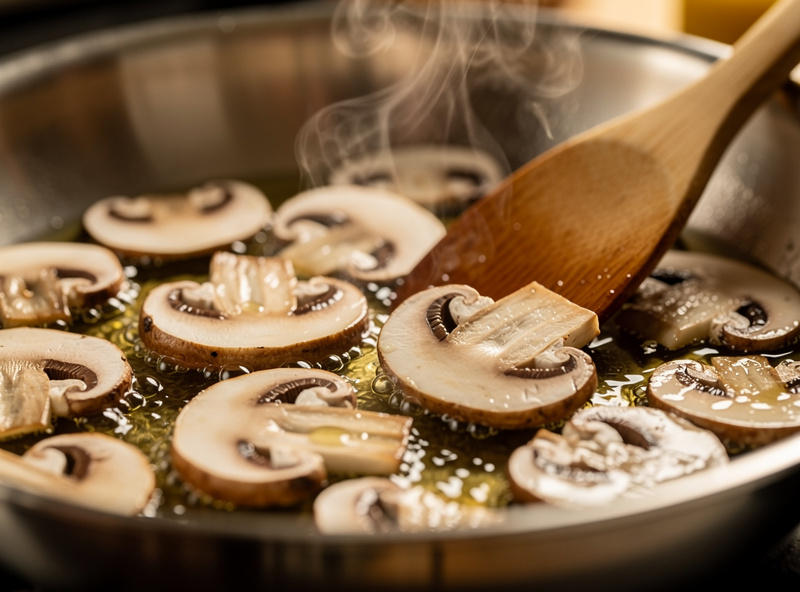
An alternative to the butter sauté is the dry-sauté: cook the slices in a hot dry pan with no fat until they release and then re-absorb their water. This is the best method for chanterelles, whose delicate aroma is preserved and concentrated by dry-sautéing while the destructive water is removed. A bag of dry-sautéed, then frozen, chanterelles thaws into something almost indistinguishable from fresh.
The Species You Can Freeze Raw
A few species tolerate raw freezing because their cell walls are sparse enough that ice damage stays minor. Oyster mushrooms freeze acceptably raw — their open, layered structure holds less free water than a dense bolete. Lion’s mane also freezes raw if you bag it within about 6 hours of harvest, before the fruiting body starts to break down. For everything else, par-cook.
Even for the forgiving species, a quick par-cook still gives a better thaw, so I only freeze oyster raw when I am short on time. The dense, water-heavy species — hen of the woods (maitake), king bolete (porcini), and chanterelle — must never go in raw; they are the ones that turn to mush. If you are freezing oyster you have just cooked too much of, see how to cook oyster mushrooms for getting the sear right before they go in the bag.
Freezing Method by Species
Each species has a freezing route that protects its texture best. The table below is my working reference, built from freezing my own harvests over several seasons.
| Species | Raw or Par-Cook | Best Method | Texture After Thaw | Storage Life |
|---|---|---|---|---|
| Oyster | Raw OK (par-cook better) | Vacuum-pack | Good | 10-12 months |
| Lion’s mane | Raw if under 6h, else par-cook | Flash-freeze then bag | Good | 10-12 months |
| Shiitake | Par-cook | Sauté then vacuum-pack | Good | 12 months |
| Hen of the woods | Par-cook (essential) | Sauté in brown butter | Very good | 12 months |
| King bolete (porcini) | Par-cook (essential) | Sauté then vacuum-pack | Good | 12 months |
| Chanterelle | Dry-sauté (essential) | Dry-sauté then bag | Excellent | 12 months |
Notice that the watery, prized wild species (porcini, chanterelle, hen of the woods) are exactly the ones drying handles poorly and freezing handles well — which is why freezing earns its place alongside the dehydrator. For the species that dry well instead, the comparison is in how to dry mushrooms for storage.
Vacuum-Packing and Portioning
The single piece of equipment that elevates frozen mushrooms from edible to indistinguishable-from-fresh is a vacuum sealer. Removing air prevents freezer burn — the oxidation and ice-crystal damage that makes ordinary freezer-bag mushrooms taste stale after a couple of months. A vacuum-packed portion holds quality for the full 12 months; a loosely-bagged one starts declining at 8 weeks.
Portion in amounts you will actually use in one dish — I pack 250-gram bags, the right size for a risotto or a pasta sauce for four. Flash-freeze cooled par-cooked mushrooms in a single layer on a tray for an hour first, then vacuum-pack; this stops them clumping into one frozen brick and lets you pour out exactly what you need. Label every bag with species and freeze date.
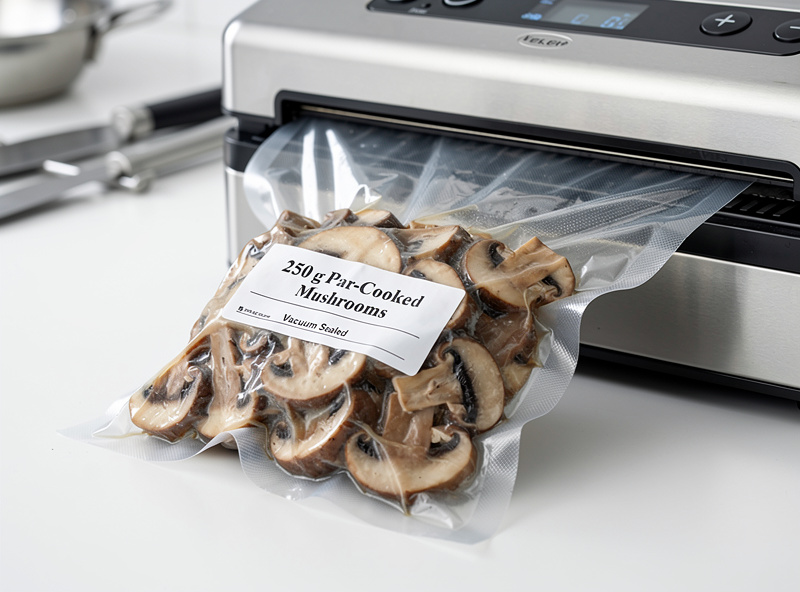
If you do not own a vacuum sealer, the workaround is to press the air out of a zip bag by hand and freeze the mushrooms flat, then double-bag. It is noticeably worse than vacuum-sealing past a few months, but workable for short-term storage. For batch builders, freezing also pairs well with making a concentrated mushroom stock from the trimmings the same day.
Freezing Cooked Mushroom Dishes
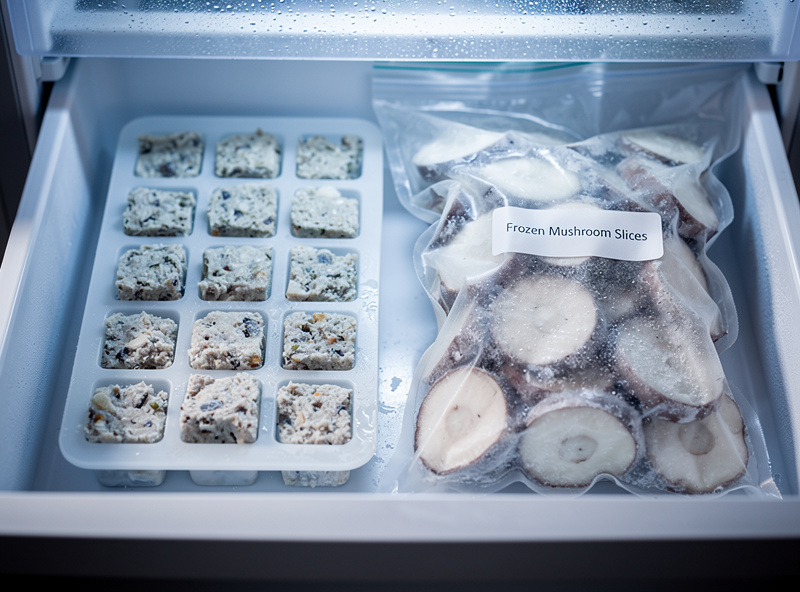
One of the best things to freeze is not plain mushrooms but duxelles — finely chopped mushrooms cooked down with shallot until they form a dense, spreadable paste. Frozen in an ice-cube tray then bagged, duxelles cubes drop straight into sauces, omelettes, and risottos with no thawing, and a single big cook-down preserves a whole flush in the most space-efficient form there is.
The same goes for mushroom-heavy sauces and soups — they freeze beautifully because the texture question is already resolved by the long cook. Whenever I have more fresh mushrooms than I can dry, par-cook, or eat, I make either duxelles or a big batch of mushroom broth and freeze that instead of plain caps. The broader pantry strategy that ties drying, freezing, and fermenting together is in the cooking and preservation hub.
Thawing and Cooking from Frozen
Do not thaw frozen mushrooms at room temperature — cook them straight from frozen. Par-cooked frozen mushrooms go directly into the hot pan, sauce, or soup; the residual surface water flashes off in a minute and they finish cooking as normal. Thawing them on the counter first just lets the water leak out and softens them further, undoing the texture you protected by par-cooking.
The exception is a dish where the mushrooms are a garnish that must hold shape — there, thaw in the fridge overnight and drain before a final quick sear. But for 90 percent of uses, frozen-to-pan is the right move. Once thawed, never refreeze: the second freeze-thaw cycle wrecks whatever texture survived the first. This is also the point where the cook-it-thoroughly rule still applies, which for wild species like morels is a genuine safety matter covered in how to cook morels safely.
Gear I reach for: a vacuum sealer that ends freezer burn, heavy freezer bags for the no-sealer workaround, and a silicone ice-cube tray for portioning duxelles.
Disclosure: MycoMansion is reader-supported. As an Amazon Associate I earn from qualifying purchases made through links in this article, at no extra cost to you. I only point to gear I actually use or would buy for my own kitchen.
Frequently Asked Questions
Can you freeze mushrooms raw?
Only a few species. Oyster mushrooms freeze acceptably raw, and lion’s mane does if bagged within about 6 hours of harvest. Every other species should be par-cooked first, because raw freezing ruptures the cell walls and they thaw into grey mush. Dense species like porcini and chanterelle must never be frozen raw.
Why do my frozen mushrooms turn to mush?
You froze them raw. The water inside raw mushroom cell walls expands into ice crystals that rupture the structure, so it collapses and leaks on thaw. Par-cook the slices for 4-6 minutes first to drive off that water and set the texture, and they will thaw back to about 90 percent of fresh.
How long do frozen mushrooms last?
Vacuum-packed par-cooked mushrooms keep their quality for a full 12 months. Loosely bagged mushrooms start declining from freezer burn at about 8 weeks. Removing the air with a vacuum sealer is the single biggest factor in how long frozen mushrooms stay good.
Do you thaw frozen mushrooms before cooking?
No, cook them straight from frozen. Drop par-cooked frozen mushrooms directly into the hot pan, sauce, or soup; the surface water flashes off in a minute. Thawing on the counter first lets water leak out and softens them further. Never refreeze thawed mushrooms.
What is the best way to freeze chanterelles?
Dry-sauté them first. Cook chanterelles in a hot dry pan with no oil until they release and re-absorb their water, which preserves and concentrates their delicate aroma while removing the water that would crystallise. Cool, bag, and freeze; they thaw almost indistinguishable from fresh and keep 12 months.
Can you freeze cooked mushroom dishes?
Yes, and it is often the best option. Duxelles (finely chopped mushrooms cooked to a paste) freeze brilliantly in ice-cube trays, as do mushroom sauces and soups, because the texture question is already resolved by the long cook. They drop straight into dishes from frozen.