
Stump inoculation turns a freshly cut tree stump into a mushroom patch that can fruit for 3 to 6 years: you drill the cut face and sides, pack the holes with sawdust or plug spawn, shade the top, and let the mycelium colonize the whole root-anchored mass. A stump holds far more wood than any log, so once it runs through it becomes the lowest-maintenance outdoor mushroom you own — provided you inoculate a fresh stump before wild fungi claim it.
I have converted birch and maple stumps in the garden this way, and it is deeply satisfying work: you are getting gourmet mushrooms and rotting out an unwanted stump in one move. The catch is timing. A stump is a race, and if the cut has been sitting more than a few weeks the wild molds and yeasts have already moved in and your spawn will lose. This guide is about winning that race.
This is a spoke off my mushroom spawn types and inoculation methods hub, and it is close kin to the totem method — both inoculate end grain without a finished log.
What Is Stump Inoculation and When Does It Work?
Stump inoculation is the outdoor technique of colonizing a standing cut stump with mushroom mycelium by loading its cut face and drilled holes with spawn. It works when the stump is freshly cut hardwood — ideally within two weeks — because at that point the wood is dead enough to colonize but not yet claimed by the wild fungi and bacteria that arrive within a month.
The stump’s advantage over a log is sheer mass and moisture. Anchored in the ground with its root system intact, a stump wicks soil moisture and resists drying far better than a cut log lying in a stack, which is why a colonized stump can flush after rain for years with zero watering from you. The trade-off is that you inoculate it where it stands — no bagging, no controlled colonization, just spawn against wood out in the weather. That makes species choice and freshness even more decisive than they are for logs. The broader siting logic for any outdoor fungal project is in my outdoor mushroom bed design guide, and the whole-backyard picture is in the outdoor mushroom growing guide.
Which Mushrooms Grow Best on a Stump?
Aggressive colonizers own the stump. Oyster mushrooms are the standard choice because they colonize fast, tolerate the uncontrolled outdoor environment, and fruit reliably from a stump’s face and sides. Wine cap (king stropharia) works around the base where the stump meets soil and mulch. Slow, fussy species that need bark and controlled moisture, like shiitake, are a poor fit for a ground-anchored stump.
Match the species to the wood too. Oyster is famously unfussy and takes to most hardwoods — birch, maple, poplar, beech — which is exactly why it is the beginner’s stump species; my best wood for mushroom logs breakdown applies here as well. For the ground-contact zone, wine cap thrives on the wood chips and mulch you pile around the base, and I cover its care fully in growing wine cap mushrooms. Avoid conifer stumps entirely — the resins in pine and spruce inhibit the gourmet wood-lovers, and no amount of spawn overcomes that.
How Do You Inoculate a Stump Step by Step?
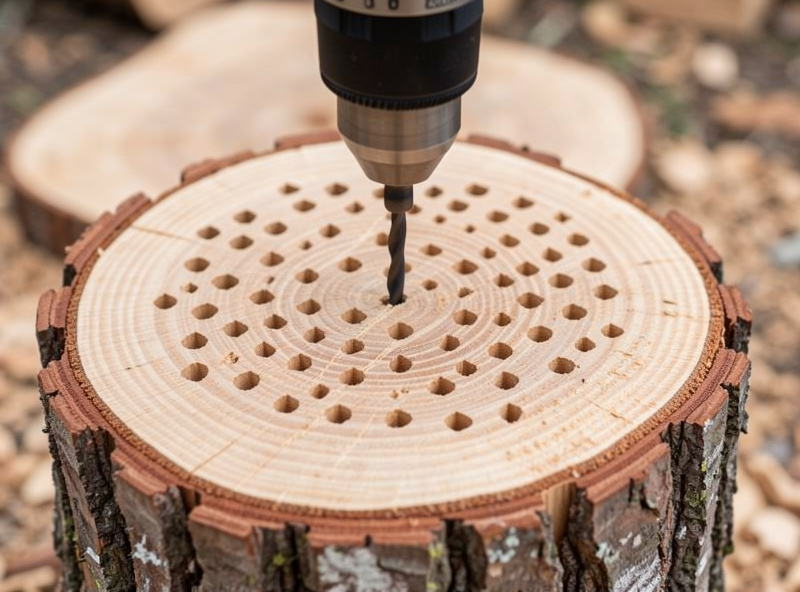
Drill the top face and upper sides in a diamond pattern of 5/16-inch holes about an inch deep, pack each hole with sawdust or plug spawn, and cover the inoculated face to hold moisture and shade. Then mound wood chips and spawn around the base to colonize the soil-contact zone. The drilled holes seed the stump’s interior; the collar of chips extends the patch outward.
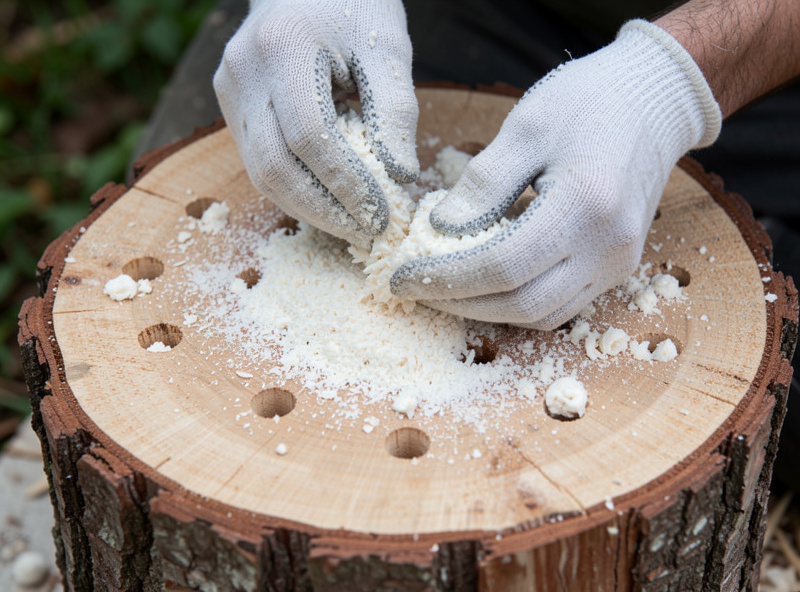
Work the face heavily. Because a stump’s cut top is its biggest exposed surface and its most contested one, I drill it denser than I would a log — holes 3 to 4 inches apart across the whole face and continuing down the sides. I pack sawdust spawn in firm with a gloved thumb until each hole is full and slightly proud, and on a wide face I also trowel a half-inch spawn collar across the top before capping it. The wet sawdust goes in cool and earthy-smelling, and pressing it into fresh birch you can feel how open and thirsty the grain is. Cap the face with a board, a slab of bark, or cardboard weighed down with a stone, then mulch heavily. Timing matters as much as technique; cut and inoculate in the cool, damp shoulder seasons rather than high summer, following the same climate logic as when to inoculate mushroom logs.
Why Do You Have to Shade and Mulch the Stump?
You shade and mulch a stump because its exposed cut face dries out fast, and dry wood stops a spawn run cold. A shade board over the face and a thick mulch collar around the base hold the stump near field capacity, keeping the colonizing mycelium alive through summer heat and giving it soil moisture to draw on.
I learned this the dry way. My first stump, a fresh birch cut in early summer, I inoculated properly but left the cut face bare and exposed to the sky, figuring an outdoor stump could fend for itself. Two weeks of sun baked the top face bone-dry, the spawn in the upper holes desiccated before it ran, and only the shaded lower-side holes ever colonized. Now the shade board goes on the same day as the spawn, every time, and I bank wood chips a hand-deep around the whole base. The stump that fruits for years is the one that never dried out in its first colonizing summer. A stump in deep, damp shade needs almost nothing from you after that.
How Long Until a Stump Fruits, and for How Long?
Expect roughly 1 to 2 years for a stump to colonize fully before its first flush, then productive fruiting for 3 to 6 years as the mycelium works through the stump and its roots. The long runway reflects the stump’s mass — there is simply a lot of wood to colonize — but that same mass is why the patch lasts so much longer than a log.
The payoff is worth the wait. Once colonized, an oyster stump flushes after warm rains, often in bursts of clustered shelves around the face and sides, and it does so year after year with no intervention beyond keeping the mulch topped up. Cornell Small Farms Program and Penn State Extension both put outdoor hardwood colonization in this multi-year range for larger-diameter wood, and a stump is about as large-diameter as home cultivation gets. Reading when it is finally ready is the same skill you use everywhere else — bright white mycelium in the face, bark loosening, the first primordia at the junctions — and I break the signals down in reading the spawn run. If you want to inoculate a stump with plug spawn instead of sawdust, the drilling and dowel technique is identical to my plug spawn guide.
Does Inoculating a Stump Help It Rot Away?
Yes — colonizing a stump with an aggressive wood-decomposer speeds its natural breakdown as a genuine side benefit. The mycelium digests the lignin and cellulose that make the stump hard, and over the several years it fruits, the wood softens and crumbles far faster than an uninoculated stump would. You get gourmet mushrooms and a disappearing stump from the same effort.
Set expectations honestly, though: this is decomposition on nature’s clock, not stump-grinder speed. A colonized stump softens over years, not weeks, and a large hardwood stump may still take much of a decade to fully return to soil. What you are really buying is a productive, self-tending patch that happens to consume the stump as it goes — the same patient microbial trade I make with every fermentation on the property, whether it is mycelium eating a stump, koji working a tray of rice, or a salami slowly losing weight in the curing chamber. Clean, slow, and worth the wait.
How fresh does a stump need to be to inoculate it?
Ideally within two weeks of cutting. A fresh stump is dead enough to colonize but not yet claimed by wild fungi and bacteria, which move in within about a month. Inoculating a stale or weathered stump usually fails because competitors already own the wood.
What is the best mushroom to grow on a stump?
Oyster mushrooms are the best choice for most home growers because they colonize fast, tolerate the uncontrolled outdoor environment, and fruit reliably from a stump. Wine cap works well around the base in the wood-chip and mulch zone. Avoid slow species like shiitake and never use conifer stumps.
How long before an inoculated stump produces mushrooms?
Expect roughly 1 to 2 years to fully colonize before the first flush, then productive fruiting for 3 to 6 years. The long runway reflects the stump’s large mass, but that same mass is why the patch lasts far longer than a cut log.
Will growing mushrooms rot the stump away faster?
Yes, as a side benefit. An aggressive wood-decomposer digests the lignin and cellulose, softening the stump faster than natural decay over the years it fruits. It is still a multi-year process, not a stump-grinder substitute, but you get mushrooms while the stump slowly breaks down.
Further Reading
- Mushroom Spawn Types and Inoculation Methods (the hub)
- The Totem Method: Stacking Logs to Inoculate Without Drilling
- Working With Plug Spawn: Dowels, Drilling, and Sealing
- Growing Wine Cap Mushrooms: The Complete Outdoor Guide
- Outdoor Mushroom Bed Design: Siting, Layers, and Framing
Authority references: Cornell Small Farms Program (outdoor hardwood colonization timelines) and Penn State Extension (log and stump inoculation guidance).