
Spent mushroom substrate is the colonized block left after your mushrooms finish fruiting, and it is far from waste. The best uses are garden compost, soil amendment, mulch, worm-bin feed, and restarting outdoor mushroom beds. What it is not good for is a second indoor crop — the nutrients are depleted and the contamination load is high.
Every block I fruit indoors eventually stops producing, and that crumbly, root-bound mass of spent substrate is one of the most useful byproducts in the whole hobby. It is loaded with organic matter, residual mycelium, and the microbial life that the garden craves. The trick is matching the right spent substrate to the right second life, and knowing the one caveat that applies to commercial manure-based spent compost. This guide covers every practical use, which spent substrates suit which job, and how to handle them so you get real value instead of just a compost-pile dump.
Why You Cannot Reuse It Indoors
A spent block will not support a worthwhile second indoor flush. The mushroom has already consumed most of the accessible nutrients across its first two flushes, and the block now carries a heavy load of competing mold and bacteria that will overtake any attempt to re-spawn it. The economics and the contamination risk both say compost it instead.
This surprises new growers who see a still-white block and assume there is more in it. There usually is not. The first flush takes the lion’s share of the substrate’s energy, and in my own logs the second flush usually lands somewhere around 60 to 70 percent of the first — published research on the same declining-flush pattern (Sardar et al. 2015) confirms the trend without pinning one universal number, since it varies by species and substrate. By the third flush the food is largely gone either way. More importantly, an open block that has fruited in a humid environment has been exposed to airborne contaminants for weeks — it is no longer the clean, sealed substrate it started as. Trying to sterilize and re-spawn it almost always loses to mold. So the honest move is to retire the block and redirect its remaining value outdoors, where competition is normal and the residual organic matter is an asset rather than a liability. The full picture of yields and flush counts is in the parent mushroom substrate guide.
Garden Compost and Soil Amendment
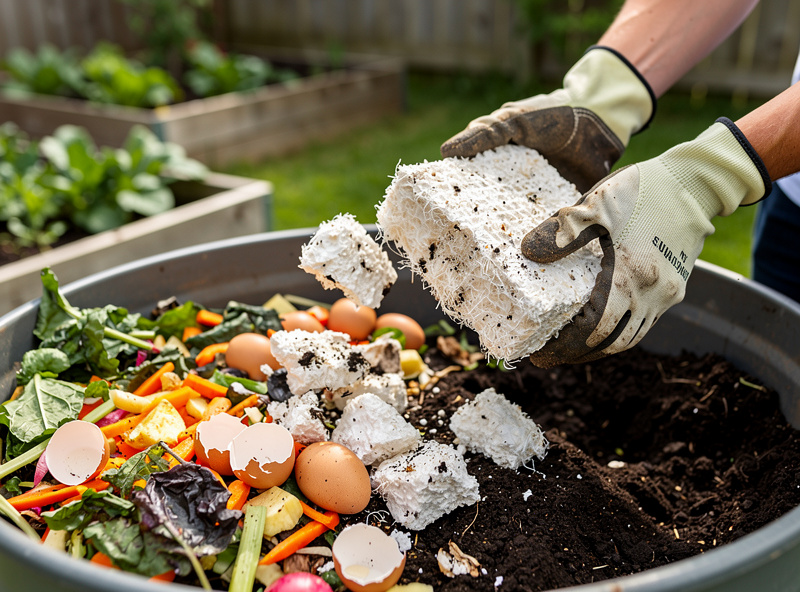
Spent substrate is excellent compost and a soil amendment. Spent sawdust and straw blocks are rich, carbon-heavy “brown” material that balances nitrogen-rich kitchen scraps in a compost pile, and the residual mycelium and microbes accelerate the whole heap. Crumbled into garden beds, it improves structure and water retention.
This is where most of my spent blocks go. I crumble them into the compost bin as a carbon source — spent hardwood-sawdust blocks in particular are slow-release “browns” that offset a green-heavy kitchen pile and keep it from going slimy. The mycelium threaded through the block is itself a soil conditioner: it is rich in chitin and feeds the soil food web as it breaks down. Dug straight into a vegetable bed, crumbled spent substrate behaves like a light compost, improving tilth and holding moisture. It is not a strong fertilizer — the mushroom ate most of the readily available nutrients — so I treat it as an organic-matter and structure amendment rather than a feed. The crossover with garden composting is real, and the same waste-to-soil thinking runs through urban-homestead growing at CityRooted.
Restarting Outdoor Mushroom Beds
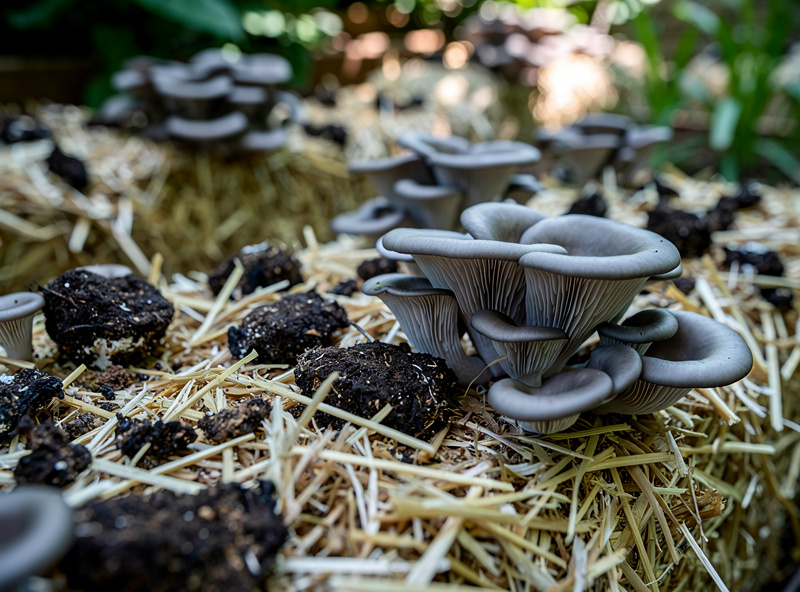
Colonized spent blocks can seed outdoor mushroom beds. Crumbled spent oyster substrate mixed into fresh pasteurized straw or wood chips in a shaded outdoor spot often throws bonus flushes, and spent wood-loving substrate is ideal starter inoculum for an outdoor wine-cap bed.
This is my favorite second life for a spent block because you get more mushrooms for almost no effort. Oyster mycelium is aggressive and forgiving, so when I crumble a spent oyster block over a shaded bed of fresh straw or yard waste and keep it damp, it frequently colonizes the new material and fruits again outdoors where I am not fighting for sterility. Spent wood-chip and sawdust substrate is also a natural starter for a king stropharia (wine cap) bed — the spent block carries living mycelium straight into the new wood-chip pathway. The outdoor approach is laid out in my outdoor growing guide and the dedicated wine-cap bed guide, and the yard-waste version is in my notes on oyster mushrooms on garden waste.
Worm-Bin Feed and Mulch
Spent substrate makes good worm-bin bedding and feed, and a coarse mulch for ornamental beds. Composting worms readily process the softened, partly-digested organic matter, and a layer of crumbled spent block works as a moisture-holding mulch around shrubs and perennials.
Red wigglers take to spent substrate well because the mushroom has already begun breaking it down — it is pre-digested compared to raw bedding, so the worms process it faster. I add it to the bin in thin layers rather than dumping a whole block, mixing it with their usual bedding so it does not mat. As mulch, crumbled spent substrate is more decorative-functional than nutritional: spread a few centimetres thick around established plants, it holds soil moisture and suppresses weeds while slowly breaking down into the bed. Keep it as mulch away from seedlings, since any spent block can still host molds that, while harmless to mature plants, look unsightly on the surface.
Which Spent Substrate Suits Which Use
Not every spent substrate is interchangeable. Spent straw and sawdust go everywhere; spent CVG is a fine soil conditioner; and commercial manure-based spent compost carries a salt caveat that the home substrates do not. Here is how I match each one to its best second life.
| Spent substrate | Best reuse | Notes |
|---|---|---|
| Spent oyster on straw | Outdoor bed restart, compost | Aggressive mycelium often re-flushes outdoors |
| Spent sawdust / Masters Mix block | Compost “brown”, wine-cap starter | Carbon-rich; balances a green-heavy pile |
| Spent CVG (coir/verm) | Soil conditioner, mulch | Coir improves structure and water-holding |
| Spent coffee-ground block | Compost, worm-bin feed | Nitrogen-rich; great worm food, mix thin |
| Commercial manure-based (SMS) | Soil amendment after leaching | Can be salty/alkaline; age or rinse before heavy use |
The last row is the one caveat worth knowing. Bagged “spent mushroom substrate” or “mushroom compost” sold at garden centres is the manure-based, cased compost left from commercial button farms. It is excellent for improving soil structure, but Penn State Extension’s own testing of commercial SMS products confirms soluble salts run higher in it than in most other organic amendments, alongside a pH nudged up by the casing lime and gypsum (Penn State Extension) — worth noting honestly, their own research also found good-quality SMS products rarely carry enough salt to actually injure plants, so this is a caution rather than an alarm. I still age or leach it with water before using it heavily, especially around salt-sensitive plants, since product quality varies by supplier. Your own spent gourmet blocks carry none of that baggage. The manure-compost background is in my manure substrate guide.
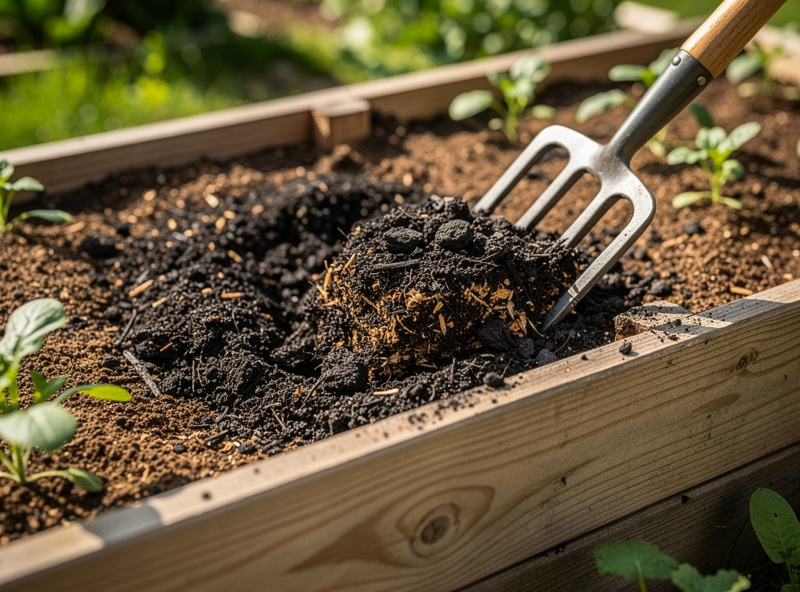
What I use to recycle spent blocks. A few links below go to Amazon. As an Amazon Associate I earn from qualifying purchases, at no extra cost to you — see my disclaimer. The gear that turns spent substrate into garden gold: a compost tumbler or bin to break it down, a worm composter for the worm-bin route, a garden fork to work it into beds, and a soil test kit if you are using salty commercial spent compost and want to check before spreading.
Handling Spent Blocks Safely
Crumble spent blocks outdoors, not over your clean indoor workspace, because a fruited block has matured molds you do not want sporing near fresh grows. Beyond that, spent gourmet substrate is benign garden material — just keep it physically away from your sterile lab and incubating blocks.
The single hygiene rule that matters is separation. A spent block that has been open and humid for weeks can carry Trichoderma, cobweb mold, and other contaminants at high spore counts, and the last place you want to crumble that is next to colonizing jars or a flow hood. I process spent blocks in the garden or compost area and keep them entirely out of the grow room. People with mold sensitivities should wear a dust mask while crumbling dry spent substrate, simply because breaking it up releases spores. Handled outdoors and kept away from fresh grows, spent substrate poses no problem and quietly improves the garden. If you are unsure what is growing on an old block, my contamination guide helps you identify it.
Frequently Asked Questions
What can you do with spent mushroom substrate?
Use it as garden compost, a soil amendment, mulch, worm-bin feed, or to restart outdoor mushroom beds. Spent gourmet blocks are rich in organic matter and residual mycelium. What it is not good for is a second indoor crop, since the nutrients are depleted and the contamination load is high.
Can you get a second flush from a spent block indoors?
Not a worthwhile one. The mushroom consumes most accessible nutrients in its first two flushes, and after weeks open in a humid chamber the block carries heavy mold and bacteria. Re-spawning almost always loses to contamination, so spent blocks are better retired to the garden or an outdoor bed.
Is spent mushroom substrate good for the garden?
Yes. It is excellent compost and a soil amendment, rich in organic matter and beneficial microbes. Spent sawdust and straw are carbon-heavy browns that balance a compost pile, and crumbled into beds they improve structure and water retention. It is a structure amendment more than a strong fertilizer.
Can spent substrate grow more mushrooms outdoors?
Often, yes. Crumbled spent oyster substrate mixed into fresh straw or wood chips in a shaded outdoor spot frequently re-colonizes and throws bonus flushes. Spent wood-loving substrate is also ideal starter inoculum for an outdoor wine-cap bed, carrying living mycelium straight into fresh wood chips.
Is commercial spent mushroom substrate salty?
It can run higher in soluble salts than most other organic amendments, per Penn State Extension’s own testing of commercial SMS (see Penn State Extension), with pH nudged up by the casing lime and gypsum. Their research also found good-quality product rarely carries enough salt to injure plants, but aging or leaching before heavy use is still the safer habit, especially around salt-sensitive plants. Your own spent gourmet blocks do not carry this issue.
Can you put spent mushroom substrate in a worm bin?
Yes. Composting worms readily process spent substrate because the mushroom has already partly broken it down. Add it in thin layers mixed with normal bedding so it does not mat, and the worms will turn it into rich castings. Spent coffee-ground blocks are especially good worm food.