
Masters Mix is a 50/50 blend of hardwood sawdust and soybean hulls by dry weight, sterilised and hydrated to field capacity. It is the highest-yielding indoor substrate I run for lion’s mane and king oyster, pushing biological efficiency well past plain supplemented sawdust.
I have fruited every gourmet species worth a home grower’s time, and when I want maximum yield off a sterilised block, Masters Mix is what goes in the bag. The reason is simple chemistry: hardwood gives the lignin and cellulose wood-lovers want, and soybean hulls layer on available nitrogen and a light, water-holding structure that plain sawdust cannot match. Get the ratio and the sterilisation right and, on my own bench, a 2.3-kilogram block regularly returns 400 to 700 grams across two flushes — that is my own log range, not a lab-verified number, and published academic biological-efficiency figures for these species run lower and vary a lot by strain and technique (more on that below). This guide is the exact recipe, hydration, and sterilisation routine I use on my own bench, plus where Masters Mix earns its keep and where a cheaper substrate makes more sense.
What Masters Mix Actually Is
Masters Mix is equal parts hardwood sawdust and soybean hulls by dry weight, hydrated to 60 to 65 percent moisture and sterilised at 15 PSI. The soy hulls are the difference-maker — they add the nitrogen and protein that turn an adequate substrate into a high-performer.
The formula gets its reputation from one thing: consistency. Plain hardwood sawdust supplemented with bran works, but bran is fiddly — too little and yields sag, too much and you feed mould before you feed mycelium. Soybean hulls give you a wider safe window. At a flat 50/50 you land in the right carbon-to-nitrogen range almost every time, which is why it has become the default block substrate for serious home growers of lion’s mane, king oyster, and most wood-loving gourmets. The trade-off is that all that nitrogen makes the mix a contamination magnet unless it is fully sterilised — this is never a pasteurise-and-go substrate.
Why Soybean Hulls Beat Bran
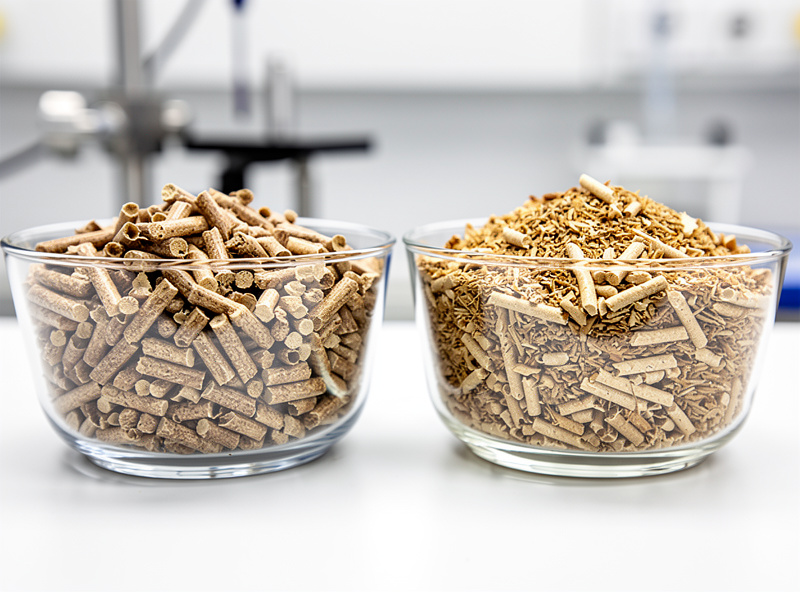
Soybean hulls deliver nitrogen in a slow-release, mould-resistant form while adding bulk structure that keeps the block aerated. Where bran above 25 to 30 percent tips a block into bacterial blotch and Trichoderma, soy hulls hold their ground at a full 50 percent inclusion.
I learned the bran ceiling the hard way — I have personally fed green Trichoderma three reishi blocks by chasing yield with too much wheat bran. Soybean hulls changed that math. The hull is mostly fibre wrapped around a modest protein load, so the nitrogen releases as the mycelium digests it rather than sitting on the surface as a free sugar buffet for contaminants. Just as important, hydrated soy hulls stay light and fluffy. They do not pack into the dense, airless mat that fine sawdust forms on its own, and that pore space is where rhizomorphic mycelium runs fastest. The result on my bench is visibly more aggressive colonisation and a noticeably bigger first flush, especially on king oyster, which is the species that rewards a rich substrate the most.
My Masters Mix Recipe and Hydration
My standard home batch is 1 kilogram hardwood pellets plus 1 kilogram soybean hull pellets, hydrated with roughly 5 litres of water to hit field capacity. That yields about 7 kilograms of finished substrate — enough for three 2.3-kilogram blocks in 5-litre filter-patch bags.
The method matters as much as the ratio. I use heat-pressed hardwood smoker pellets because they are pre-dried, uniform, and break down to a clean sawdust texture the moment hot water hits them — loose furniture-shop sawdust is inconsistent and often carries finishing dust. Soybean hull pellets behave the same way. I weigh both dry, combine them in a clean tub, and pour in just-off-boil water in stages, stirring between pours. The pellets swell to roughly three times their volume within ten minutes. I let the mix stand covered for an hour so the hulls fully absorb, then run the field-capacity squeeze test: a hard squeeze should release two or three drops, not a stream and not nothing. If it streams, I mix in dry pellets; if it crumbles, a splash more water. A pinch of gypsum at 1 to 2 percent keeps the block from compacting, though it matters less here than in a coir mix because the hulls already supply structure. Full moisture-tuning detail lives in my substrate moisture and field-capacity guide.
Sterilising Masters Mix Correctly
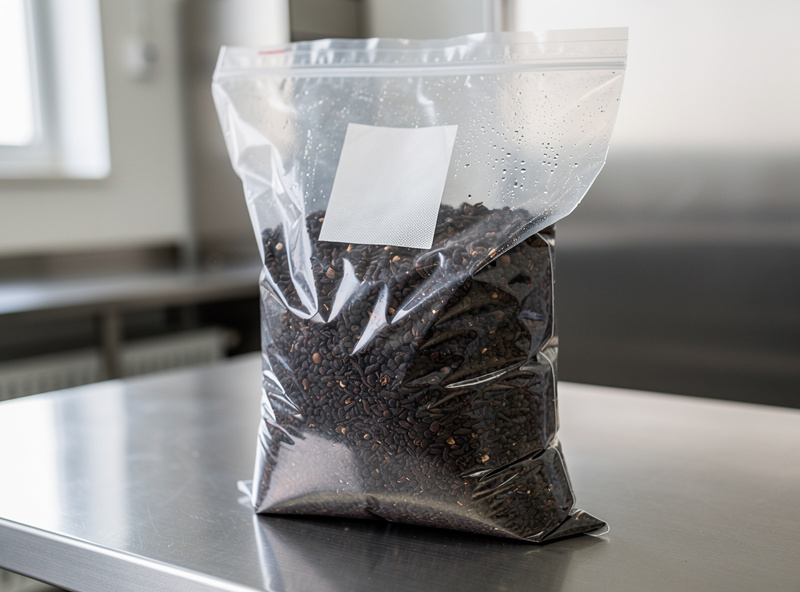
Masters Mix must be sterilised, never pasteurised. I run filled blocks at 15 PSI (121 C) for 2.5 hours in a stovetop pressure canner. The high nitrogen load means anything short of full sterilisation invites bacterial and mould contamination within days.
This is the single point where home growers lose Masters Mix blocks. The soy hulls that boost yield are exactly what make the substrate dangerous if undercooked — pasteurisation at 65 to 75 C, which is fine for straw and coir, leaves endospores and bacteria alive in a high-protein block, and they bloom faster than your spawn can colonise. So I fill the bags, fold the filter patch loosely, load them upright in the canner with a rack underneath so nothing sits in standing water, and hold a steady 15 PSI for two and a half hours once the gauge comes up to pressure. Dense blocks need that full time for heat to penetrate the centre. I let the canner cool naturally overnight, then inoculate the next morning at 15 to 20 percent grain spawn in front of my flow hood — or in the still-air box for a single block. If you are weighing the gear, my notes on when each tool is genuinely needed are in the still air box versus flow hood comparison.
Which Species Want Masters Mix
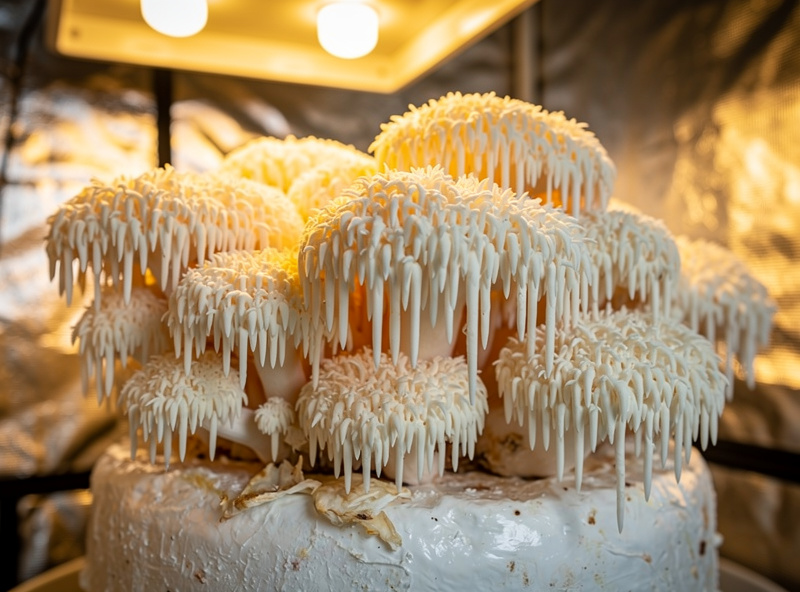
Lion’s mane and king oyster are the headline performers on Masters Mix, both repaying the rich substrate with the best biological efficiency I get off any sterilised block on my bench. Shiitake, reishi, and most wood-loving gourmets also fruit well on it, though oysters do nearly as well on far cheaper straw. Published academic BE data for these two species runs well below the numbers home-grower forums throw around — a Bangladesh sawdust trial on king oyster (Pleurotus eryngii) strains measured 46.75 to 73.5 percent BE depending on strain (Moonmoon et al. 2010, Saudi Journal of Biological Sciences), and a sawdust/rice-bran study on lion’s mane (Hericium erinaceus) topped out around 42.6 percent BE (Chutimanukul et al. 2023, Scientific Reports) — both directional, not exact Masters Mix matches, since neither trial used a 50/50 soy-hull mix specifically. My own numbers run higher than the published academic figures, likely because a home-scale block gets more individual attention than a research trial batch, but I would not promise a first-timer the top of my own range.
The decision is about return on effort. King oyster in particular is a substrate snob — it sulks on straw and explodes on Masters Mix, so that is the one species where I never compromise. Lion’s mane is similar: the dense, supplemented block gives the long, heavy fruits this species is prized for. Reishi and shiitake will both take Masters Mix happily, but they are slow colonisers that brown and harden over weeks, so the yield premium matters less against the longer tie-up of bench space. Oysters are the species to grow on something cheaper — they fruit on almost anything cellulose-based, and burning a sterilised soy-hull block on them is overkill. For the per-species substrate logic across the board, the parent mushroom substrate guide maps every species to its ideal feed, and the dialled-in parameters for the species I run most are in the lion’s mane growing parameters.
Masters Mix vs Other Block Substrates
Against supplemented sawdust, CVG, and straw, Masters Mix trades higher cost and a mandatory sterilisation step for the best yields on demanding species. Here is how the common home substrates stack up on the metrics that actually decide which one I reach for.
| Substrate | Best species | BE on my bench (own log) | Process | Relative cost | Difficulty |
|---|---|---|---|---|---|
| Masters Mix (50/50 sawdust + soy hull) | Lion’s mane, king oyster | Highest I get off a block | Sterilise 15 PSI, 2.5 h | Highest of the five | Moderate (needs PC) |
| Supplemented sawdust + bran | Lion’s mane, reishi, shiitake | Solid, a step behind Masters Mix | Sterilise 15 PSI, 1.5-2.5 h | Moderate-high | Moderate |
| CVG (coir, vermiculite, gypsum) | Oyster, king stropharia | Strong for the low effort | Pasteurise 65-75 C | Moderate | Easy |
| Pasteurised straw | Oysters (all colours) | Very strong on oyster specifically | Pasteurise 65-75 C, 90 min | Lowest | Easy |
| Plain hardwood sawdust | Shiitake (long colonise) | Lowest of the five, slow but reliable | Sterilise 15 PSI | Low-moderate | Moderate |
The pattern is clear: if a species fruits happily on straw or coir, those win on cost and simplicity. Masters Mix earns its premium only where the species genuinely repays it — and on king oyster and lion’s mane, it absolutely does. These are my own bench rankings rather than a lab-graded scorecard; treat any single hard percentage you see quoted for “typical BE” on a home-scale block, mine included, as a personal log number rather than a guarantee. For the bran-based alternative in full, see my supplemented sawdust recipe; for the easy monotub option, the CVG substrate recipe.
Where I Buy the Two Ingredients
Hardwood pellets come from a farm-and-ranch store as 20-kilogram bags of smoker-grade pellets, roughly the price of a bag of livestock feed and generally cheaper by weight than any bagged sawdust marketed specifically for mushroom growing; soybean hull pellets come from an animal-feed supplier. Buying feed-grade in bulk is far cheaper than mycology-branded substrate kits — I have not tried to pin an exact dollar figure here since feed prices swing regionally and with the season.
For pellets, avoid the grilling pellets marked up at hardware stores — it is the same heat-pressed oak or beech at double the price. Make sure they are 100 percent hardwood with no binders, flavour oils, or charcoal added. Soybean hulls are sold pelleted as a livestock feed ingredient and are the harder of the two to source locally; a feed store that supplies cattle or horse operations almost always carries them, and they keep for months in a sealed bin. If a local feed store is not an option, both ingredients ship nationally.
Gear I use for Masters Mix. A few links below go to Amazon. As an Amazon Associate I earn from qualifying purchases, at no extra cost to you — see my disclaimer. I only point to gear I actually run on my own bench: hardwood smoker pellets for the sawdust half, soybean hull pellets for the nitrogen half, filter-patch grow bags to hold the blocks, and a stovetop pressure canner big enough to sterilise several at once.
Three Masters Mix Mistakes I See Most
The three failures that kill home Masters Mix blocks are undercooking, over-hydrating, and inoculating too cold. Each is avoidable once you know the signature, and all three trace back to respecting the high nitrogen load this substrate carries.
Undercooking is the most common — growers borrow straw timings and pasteurise, then watch the block sour within a week. Two and a half hours at full pressure is not negotiable on a dense block. Over-hydration is next: at 70-plus percent moisture, water pools at the bottom of the bag and the mycelium drowns there, leaving an uncolonised, smelly base. Trust the squeeze test, not a printed recipe — every batch of pellets absorbs slightly differently. The third is inoculating before the block has cooled to room temperature; residual heat in the centre of a freshly canned block will kill grain spawn on contact, so I wait a full overnight cool. If a block does turn, my contamination guide walks through reading exactly what went wrong, and the beginner mistakes guide covers the wider pattern.
Frequently Asked Questions
What is the Masters Mix substrate ratio?
Masters Mix is 50 percent hardwood sawdust and 50 percent soybean hulls by dry weight, hydrated to 60-65 percent moisture and sterilised at 15 PSI. The equal ratio lands the carbon-to-nitrogen balance in the ideal range for gourmet wood-lovers.
Do you sterilise or pasteurise Masters Mix?
You must sterilise it. The soybean hulls add nitrogen and protein that make the block a contamination magnet, so it needs a full 2.5 hours at 15 PSI (121 C) in a pressure canner. Pasteurisation at 65-75 C is not enough and the block will sour.
Which mushrooms grow best on Masters Mix?
Lion’s mane and king oyster perform best; on my own bench they return the highest biological efficiency I get off any sterilised block. Published academic BE data for these species on comparable sawdust/bran substrates runs lower and varies a lot by strain, roughly 40-75 percent (Moonmoon et al. 2010; Chutimanukul et al. 2023), so treat any single flat percentage, mine included, as a personal-log figure rather than a guarantee. Shiitake and reishi also fruit well. Oysters grow fine on it too, but they fruit nearly as well on far cheaper pasteurised straw, so the rich block is overkill for them.
Can I make Masters Mix without soybean hulls?
Yes, but it is no longer Masters Mix. Substituting wheat or oat bran gives a supplemented sawdust block, which yields a bit less and has a narrower safe window for supplementation. In my experience soy hulls tolerate a full 50 percent inclusion where bran starts raising contamination risk once you push much past 20-25 percent.
How much does a Masters Mix block cost to make?
Feed-grade hardwood pellets and soybean hull pellets bought in bulk from a farm-and-ranch or feed store keep it modest compared to any mycology-branded substrate kit, though I do not have a reliable current dollar figure since feed prices vary by region and season. On my bench a 2.3-kilogram block returns 400 to 700 grams of fresh gourmet mushrooms over two flushes, which is what makes the ingredient cost worth it to me.
How long does Masters Mix take to colonise?
Most gourmet species fully colonise a 2.3-kilogram Masters Mix block in two to four weeks at 21-24 C, kept dark. King oyster and lion’s mane run fast; shiitake and reishi are slower and then need extra browning time before they will pin.