
The single biggest mistake home cooks make with oyster mushrooms is crowding the pan. Oyster mushrooms are roughly 85 percent water, and a packed pan steams instead of sears — you end up with grey, rubbery, watery mushrooms. Cook them in a single layer in a hot pan and they turn meaty, golden, and savoury in about 6 minutes.
I grow pearl, blue, pink, golden, and phoenix oysters on the weekly rotation, and oyster is the species I cook more than any other — it is the workhorse that goes in stir-fries, pasta, tacos, and a fried “calamari” my kids ask for by name. After cooking several hundred batches off my own blocks, the technique below is what consistently delivers restaurant-grade results from a home stovetop.
The Core Method: Hot Pan, Single Layer, Don’t Touch
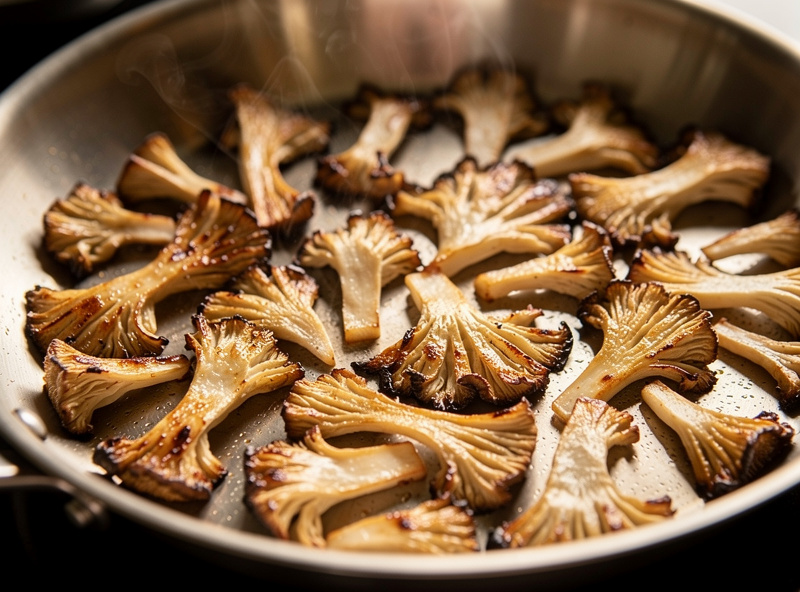
The reliable default for any oyster mushroom is a hot dry-then-fatted sear: tear the cluster into individual fronds, lay them in a single layer in a hot pan with no oil, let them release and re-absorb their water for 3-4 minutes, then add fat and sear until golden. This concentrates flavour and gives you a meaty bite instead of a soggy one.
Tear, do not chop. Oyster mushrooms have a natural grain that pulls apart into bite-sized fronds, and torn edges catch more surface area for browning than knife-cut faces. Pull large clusters into pieces roughly the width of two fingers. Leave the tender cap edges intact; trim only the woody base where the fronds joined the block.
Do not wash oyster mushrooms under running water. They drink it up like a sponge and you will fight that extra moisture in the pan for the next ten minutes. If yours came from a clean cultivation block they need nothing; if they picked up substrate debris, brush it off with a dry pastry brush or wipe with a barely-damp cloth. The cleaner harvest is one more reason I prefer cooking from my own blocks over store mushrooms, the same way the oyster mushrooms on garden waste and coffee grounds grow keeps surface contamination low.
Why the Dry-Sauté Step Matters
Starting in a dry pan before adding fat is the technique that separates excellent oyster mushrooms from greasy ones. Oil added to wet mushrooms creates a barrier that traps released water against the surface, so the mushroom poaches in its own liquid and never browns. Drive the water off first, then the fat coats a dry surface and caramelises it.
Set a stainless or cast-iron pan over medium-high until a flicked drop of water skitters and evaporates in two seconds. Add the torn fronds dry. For the first minute they squeak; by minute two they sweat out a pool of water; by minute four that water has boiled off and the fronds shrink to about a third of their raw volume. That is the moment to add a tablespoon of butter or neutral oil, a pinch of salt, and let them sear undisturbed for another 2 minutes per side. Salt at the start pulls water out too early and slows the sear — salt at the end.
Resist stirring. Every time you move the mushrooms you drop the pan temperature and interrupt browning. I flip the whole layer once, sear the second face, and only then toss in garlic or thyme for the final 30 seconds so the aromatics bloom without burning.
Oyster Cooking Methods Compared
Oyster mushrooms take to almost every cooking method, but each one suits a different dish and texture goal. The table below is my working reference for which technique to reach for, drawn from cooking every variety I fruit.
| Method | Heat | Time | Best For | Texture Result |
|---|---|---|---|---|
| Dry-sauté then sear | Medium-high | 6-8 min | Everyday side, pasta, tacos | Meaty, golden, concentrated |
| Oven roast (220 C / 425 F) | High | 18-22 min | Batch cooking, crisp edges | Crisp outside, chewy centre |
| Deep-fry (battered) | 180 C / 350 F oil | 3-4 min | “Fried calamari,” nuggets | Crunchy shell, juicy inside |
| Stir-fry (high wok) | Very high | 4-5 min | Asian dishes, noodles | Tender-crisp, slight char |
| Braise / soup | Low simmer | 20-30 min | Stews, ramen, broth | Silky, absorbs liquid |
| Pink oyster “bacon” | Medium | 10-12 min | Crisped strips, garnish | Chewy-crisp, savoury |
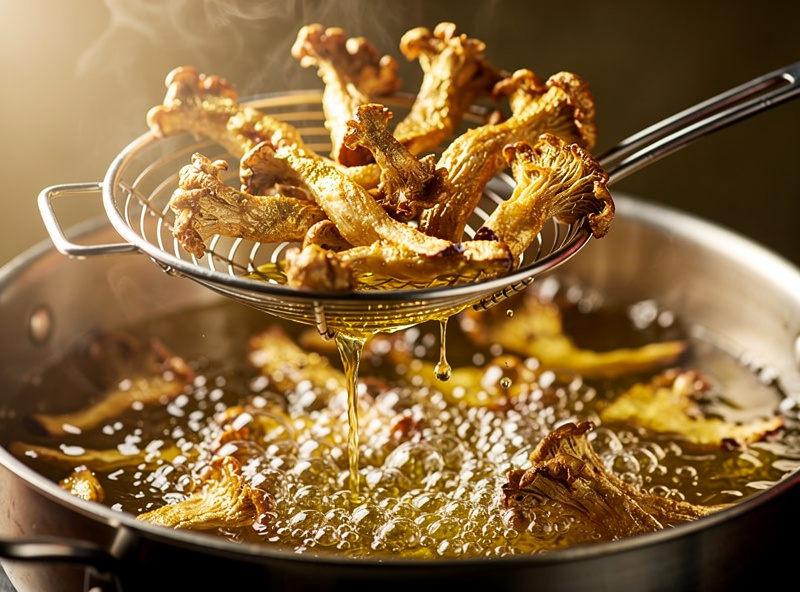
The stand-out for entertaining is the battered fry. Tear the fronds, dredge in seasoned flour, dip in a thin cornstarch-and-sparkling-water batter, and fry at 180 C until the shell is golden. The result has the pull-apart texture people swear is squid. For a fast weeknight, the oven roast wins: spread fronds on a tray, toss with oil and salt, roast at 220 C, and they crisp hands-off while you cook everything else.
Variety-Specific Notes
The oyster family looks similar on the block but cooks differently by colour. Pink and golden oysters carry more water and a faintly bitter or fishy note when undercooked, so they need a longer, harder sear than the pearl and blue varieties to drive that off and develop their savoury side. Pink oyster crisped slowly in a little oil makes the closest thing to vegetarian bacon I have cooked.
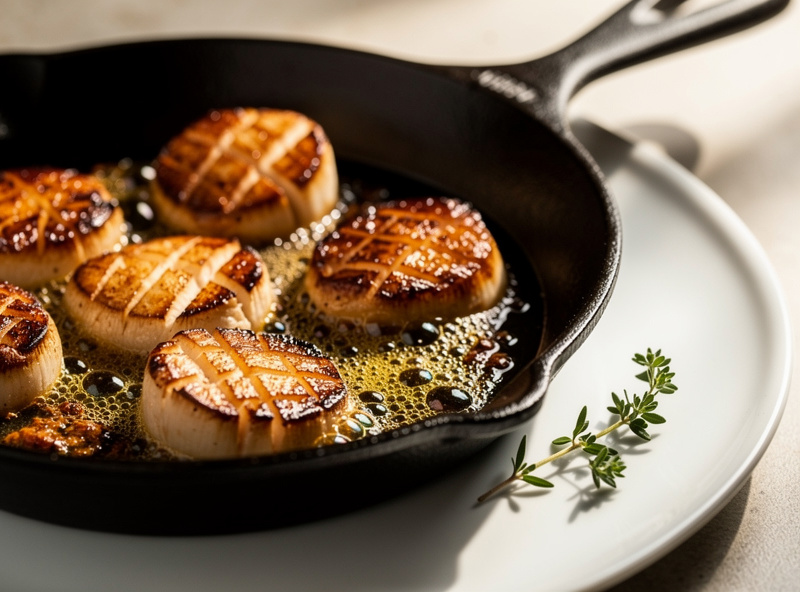
King oyster (king trumpet) is a different animal — it is the dense stem, not a frond cluster, and it wants to be sliced into 1.5 cm rounds, cross-hatch scored, and seared in butter like a scallop. Two minutes per side over medium-high gives you a genuinely scallop-like texture and sweetness. Phoenix and pearl are the all-rounders that take any method. Blue oyster sits between pearl and king in density and is my pick for stir-fries because it holds its bite under high heat. The growing differences behind these varieties are covered in the mushroom substrate guide, since substrate choice subtly changes the density you cook with.
Always Cook Oyster Mushrooms Thoroughly
Oyster mushrooms should never be eaten raw. Like most cultivated gourmet species their cell walls are largely built from chitin — a tough polysaccharide human digestive enzymes can’t actually break down, cooked or not (a 2018 clinical study on mushroom digestion found visible undigested mushroom fragments in a third of participants’ stool even after normal cooked meals). What a real sear does is rupture and soften that rigid cell-wall structure so the nutrients inside become accessible and the texture stops being tough and squeaky, and it also denatures the handful of heat-sensitive compounds raw mushrooms carry — which is the actual reason raw consumption commonly causes bloating and mild stomach upset. Cooking to a full sear — until the fronds have shrunk and browned — both makes them properly digestible and develops the savoury flavour, so undercooking costs you on both fronts.
Give every batch at least 6 minutes of real heat. This is a culinary-digestibility point, not a toxicity one for cultivated oysters, but it is also why the same “cook it properly” rule is non-negotiable for wild species — see how to cook morels safely, where the cooking step is a genuine safety requirement rather than just a texture upgrade. For oyster mushrooms, a thorough cook is simply the difference between a meaty, savoury result and a watery, hard-to-digest one.
Cooking Ahead and Preserving
Cooked oyster mushrooms keep 3-4 days refrigerated and reheat well, which makes them ideal for batch-cooking. If you have a glut from a big flush, oysters are also one of the few species that freeze acceptably raw because their cell walls are sparse — though par-cooking first still gives a better thaw texture. The full method, including the vacuum-pack step, is in how to freeze mushrooms, and the broader pantry strategy lives in the mushroom cooking and preservation hub.
Oyster is also the species I most often turn into a lacto-pickle or fold into a mushroom stock when there is more than the week can eat. For the cooking gear itself, a heavy stainless or carbon-steel pan that holds heat through the water-release stage is the one tool that most improves results — a thin pan drops temperature the moment the mushrooms sweat and you never recover the sear.
Gear I reach for: a heavy carbon-steel skillet that holds heat through the water-release stage, a spider strainer for lifting battered fronds out of the fry oil, and a dry pastry brush for cleaning caps without water.
Disclosure: MycoMansion is reader-supported. As an Amazon Associate I earn from qualifying purchases made through links in this article, at no extra cost to you. I only point to gear I actually use or would buy for my own kitchen.
Frequently Asked Questions
Why are my oyster mushrooms always rubbery and watery?
You are crowding the pan. Oyster mushrooms are about 85 percent water, and a packed pan steams instead of sears. Cook them in a single layer in a hot pan, start dry to drive off the water, then add fat. Cook in batches if you have a lot rather than piling them in.
Should I wash oyster mushrooms before cooking?
No. Oyster mushrooms absorb water like a sponge and washing adds moisture you then have to cook off. Brush off any debris with a dry pastry brush or wipe with a barely-damp cloth. Mushrooms from a clean cultivation block usually need nothing at all.
Can you eat oyster mushrooms raw?
No, always cook oyster mushrooms thoroughly. Their cell walls are largely chitin, which human digestion can’t actually break down whether it’s cooked or raw – what cooking does is rupture the rigid cell-wall structure and denature the heat-sensitive compounds raw mushrooms carry, which is why raw consumption commonly causes bloating and mild stomach upset. Cook to a full sear of at least 6 minutes until the fronds shrink and brown.
How long do you cook oyster mushrooms?
About 6 to 8 minutes for a pan-sear: 3-4 minutes dry to release and re-absorb their water, then 2-3 minutes per side with fat to brown. Roasting takes 18-22 minutes at 220 C, deep-frying battered fronds takes 3-4 minutes, and a stir-fry needs only 4-5 minutes over very high heat.
Should I cut or tear oyster mushrooms?
Tear them. Oyster mushrooms have a natural grain that pulls into bite-sized fronds, and torn edges brown better than knife-cut faces because they expose more surface area. Only use a knife on king oyster stems, which slice into rounds for scallop-style searing.
Do pink and golden oyster mushrooms taste different?
Yes. Pink and golden oysters hold more water and have a faintly bitter or fishy note when undercooked, so they need a longer, harder sear than pearl or blue. Once fully cooked, pink oyster crisped slowly in oil makes a convincing vegetarian bacon.
Related Articles
- Mushroom Cooking and Preservation: The Complete Kitchen Guide
- How to Cook Lion’s Mane Mushroom: Crab-Cake Texture in Three Methods
- How to Freeze Mushrooms: Par-Cook, Vacuum-Pack, and Store
- Growing Oyster Mushrooms on Garden Waste and Coffee Grounds
- Mushroom Substrates: The Complete Home Cultivation Guide