
To rehydrate dried mushrooms properly, soak them in warm water for 20 to 30 minutes until they’re pliable and plump, then — and this is the part most people skip — save the dark soaking liquid, because that liquor is concentrated mushroom stock and the single best-flavored thing to come out of the whole process. Strain it through a coffee filter to catch grit, and you’ve turned one dried batch into both an ingredient and a broth.
I dry most of what I grow, so rehydrating is a near-daily move in my kitchen, and it’s where good storage pays off: a properly dried, well-sealed cap comes back with its aroma intact, while a badly-stored one comes back flat no matter how you soak it. Get the soak right and dried shiitake or king oyster rehydrate into something genuinely close to fresh, with an even deeper savory punch. This is the payoff end of the preservation chain that starts at the dehydrator.
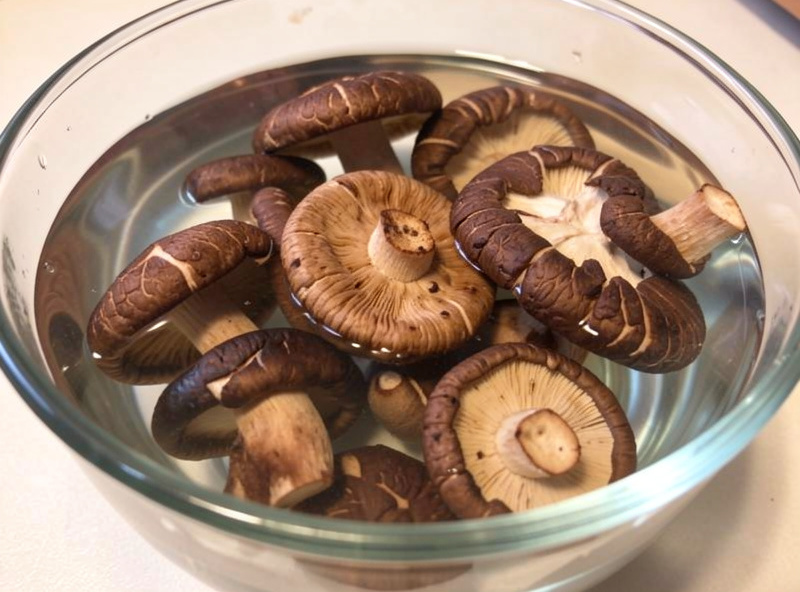
How Long Should You Soak Dried Mushrooms?
Twenty to thirty minutes in warm water for most species. Thin, delicate mushrooms like oyster rehydrate in as little as 10 minutes; dense caps like shiitake and thick king oyster slices need the full half hour or a little more. You’re done when the mushroom is fully pliable with no hard, brittle core left.
The test is texture, not the clock. Pull one out and pinch the thickest part — if there’s still a stiff, dry center, give it more time. Dense species take longer because water has to migrate all the way into the middle of a thick piece, the same reason those pieces took longest to dry in the first place. I usually set a bowl going while I prep everything else for a dish, and by the time I’m ready the mushrooms are too. Rushing this is a common mistake: undersoaked mushrooms cook up chewy and tough in the center. If you’re in a genuine hurry, slice or tear the dried pieces smaller before soaking to cut the time, since smaller pieces rehydrate faster. I’ve rushed this myself — undersoaked a batch of king oyster slices before a dinner deadline and served them chewy in the center, a mistake that taught me to start the bowl going the moment I start prepping, not when I need the mushrooms. FoodSafety.gov recommends the same warm, not hot, water default for rehydrating dried foods generally, and the National Center for Home Food Preservation notes dried foods regain moisture most evenly in gentle warm soaks rather than a hard boil. Patience here mirrors the patience that dried them; the whole preservation loop rewards not rushing.
Hot, Warm, or Cold Water: What’s Best for Rehydrating?
Warm water (not boiling) is the everyday best choice — it rehydrates in 20 to 30 minutes while preserving flavor and aroma. Cold water is gentler and extracts the cleanest, most nuanced liquor but takes hours; boiling water is fastest but can muddy delicate aromas and make caps mushy. Match the water to your timeline and your priority.
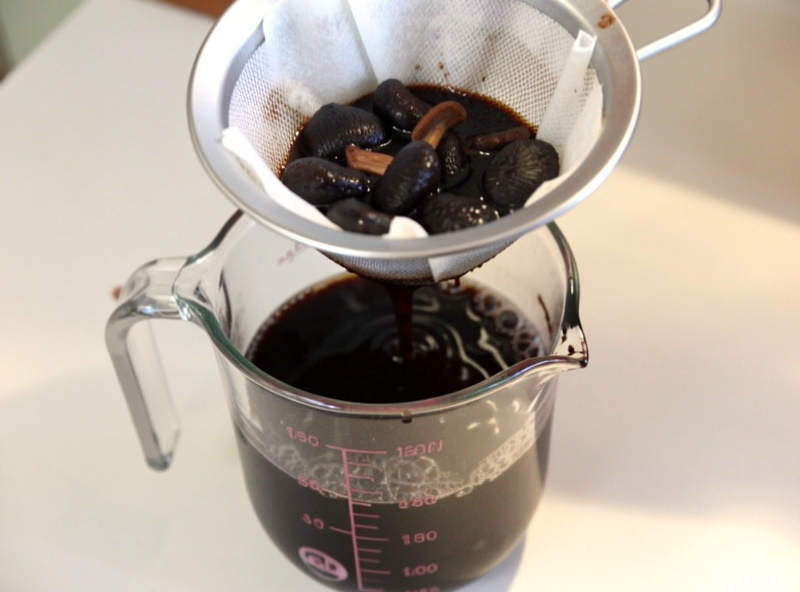
My default is water hot from the tap or barely-warmed on the stove — comfortable to touch, never simmering. That temperature pulls the mushrooms back to plump in half an hour and draws a rich, clean liquor. When I want the absolute best broth — for a clear soup where the stock is the star — I’ll soak dried shiitake in cold water in the fridge overnight, which extracts a remarkably clean, deep umami without any of the harshness fast-hot soaking can pull. Boiling water I save for emergencies when I need mushrooms rehydrated in ten minutes and don’t mind a slightly softer texture. One thing I never do is soak in hot water for hours; past the point of full rehydration, the mushrooms just leach flavor into water you might waste and turn slippery. Warm and watched beats hot and forgotten.
Why Should You Always Save the Soaking Liquid?
Because the soaking liquid is liquid gold — a concentrated mushroom stock full of the umami compounds that leached out of the caps. Throwing it down the drain wastes the most flavorful thing you made. Reduce it into risotto, ramen broth, gravy, or a pan sauce and it does more for a dish than the mushrooms themselves.
Dried mushrooms, shiitake especially, are loaded with naturally occurring glutamate and guanylate — the same savory compounds that make aged parmesan and cured meat taste deep — and drying concentrates them. A lot of that dissolves into the soak. I keep the liquor from every batch: it goes into the risotto I’m cooking, or gets reduced and frozen in an ice-cube tray for later. This is exactly the polymath crossover I love — the same umami chemistry that makes a long-fermented koji or a dry-cured salami taste profound is at work in a bowl of shiitake soaking water. One firm rule though: because dried mushrooms carry a little grit and spore dust, the liquor at the bottom of the bowl holds sediment, so never pour the last inch straight into your pot. Strain it first.
How Do You Get the Grit Out of Rehydrated Mushrooms?
Lift the mushrooms out rather than pouring, then strain the liquid through a coffee filter, a paper towel, or a fine cloth to catch the grit and sediment that settle to the bottom. Dried mushrooms — even clean cultivated ones — shed a fine dust and any residual grit sinks during the soak. Two quick steps and both the mushrooms and the broth come out clean.
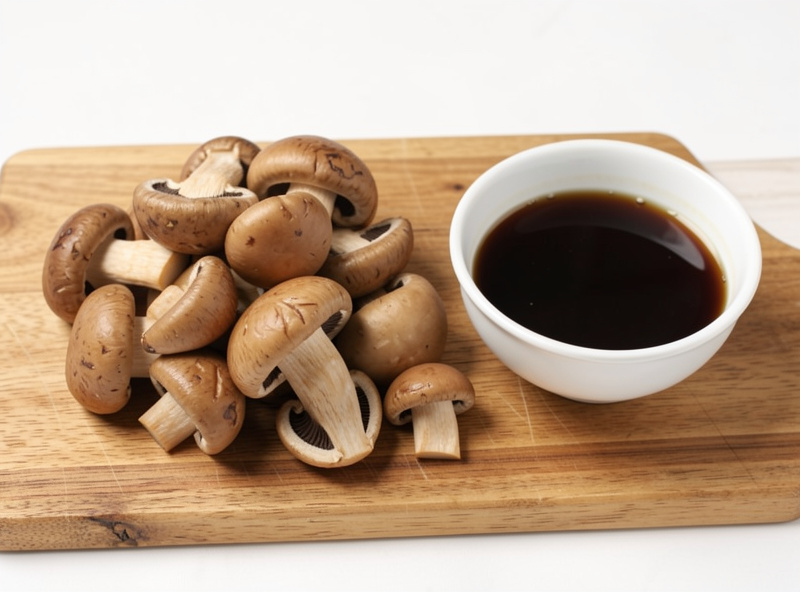
My routine: I scoop the rehydrated mushrooms out of the bowl with my fingers or a slotted spoon, give them a quick squeeze back into the bowl to release trapped liquor, and set them aside. Then I pour the liquid slowly through a Chemex-style paper filter set in an OXO fine-mesh strainer over a Pyrex bowl, stopping before the last half-inch where the sediment pools. That last bit goes in the compost. It takes thirty seconds and it’s the difference between a silky mushroom broth and one with a gritty finish. Cultivated mushrooms I grow on clean substrate are far less gritty than foraged ones, but I still filter every time because dried tissue always sheds some fine particulate. It’s the same instinct that makes me strain and filter across all my ferments — a clean process end to end.
How Long Does Each Species Take to Rehydrate?
Soak time tracks with how dense and thick the dried piece is. Here’s a quick reference for the species I dry and rehydrate most.
| Dried species | Warm-water soak time | Best use after soaking |
|---|---|---|
| Oyster (any color) | 10–15 min | Quick saute, stir-fry |
| Shiitake | 25–35 min | Braises, broth, the liquor is prized |
| King oyster slices | 30–40 min | Meaty saute, roasting |
| Porcini | 20–30 min | Risotto, pasta, sauce |
| Lion’s mane | 15–25 min | Crab-cake style, sauteed |
| Wine cap / chestnut | 20–30 min | Soups, stews |
These come from my own kitchen, drying and rehydrating the flushes I pull off my blocks and beds. Dense shiitake and king oyster sit at the long end; thin oyster is quick. Storage quality feeds directly into all of this — a cap that was dried and sealed well rehydrates full and aromatic, which is why the dehydrator setup and vacuum sealing upstream matter so much.
Can a Badly-Stored Mushroom Be Rehydrated Back to Good?
Only partway. Rehydration restores texture and water but it can’t put back aroma that oxidized away in storage. A cap that went flat and cardboardy in a poorly-sealed jar will plump up fine but taste muted — proof that no soak fixes bad storage. Store well and rehydration is where all that care shows up.
I’ve rehydrated the occasional forgotten jar that lost its seal, and the mushrooms come back to the eye but not the nose — they’re safe and edible, just a shadow of a well-stored batch. That’s the lesson that ties this whole preservation cluster together: rehydration and storage are two ends of one skill. If a rehydrated mushroom smells genuinely off, sour, or musty rather than merely faint, that’s spoilage, not fading, and it goes in the compost. But a properly dried, oxygen-sealed cap, soaked in warm water and strained clean, comes back so close to fresh that it’s the backbone of half of what I cook in winter. Start with good storage — the full chain is in my storage and preservation gear guide — and rehydration becomes the easy, rewarding last step it should be.
Do You Always Have to Rehydrate Before Cooking?
Not always. For any dish with plenty of simmering liquid — soups, stews, braises, ramen, slow sauces — you can drop dried mushrooms in whole and let them rehydrate in the pot, where they release their flavor directly into the dish. Reserve the separate soak for when you want the mushrooms and the liquor handled independently, like a saute or a risotto.
This is a shortcut I use constantly in winter cooking. A handful of dried shiitake or wine cap goes straight into a pot of broth or a long-simmered stew; over the cooking time they plump up and their umami leaches into the liquid, no pre-soak needed. The one caveat is grit — without a separate strain, any sediment ends up in the dish, so I only do this with my own cultivated dried mushrooms, which are far cleaner than foraged ones. For anything with a short cook time, or where I want to squeeze and chop the rehydrated caps first, I do the standard soak-and-strain. And powder skips the question entirely: ground dried mushroom dissolves instantly into any liquid, which is why I keep a jar of shiitake powder for stirring straight into broths and sauces.
What do the rehydrated mushrooms themselves become? Soaked oyster goes into a fast, hot saute; rehydrated king oyster takes on a meaty chew that roasts or sears beautifully; lion’s mane pulls into shreds for a crab-cake-style patty; porcini and shiitake fold into risotto, pasta, and pan gravies with the reduced liquor doubling the depth. The dried harvest I put up in autumn — oyster, shiitake, king oyster off my blocks and the wine cap from the garden bed — carries my kitchen through the whole cold season, and rehydration is the quiet daily step that unlocks it. Store it right, soak it right, save the liquor, and a jar of dried caps is one of the most useful things on the shelf.
How long do you soak dried mushrooms to rehydrate them?
Twenty to thirty minutes in warm water for most species. Thin oyster rehydrates in about 10 to 15 minutes; dense shiitake and thick king oyster slices need the full half hour or a little more. They are ready when fully pliable with no hard, brittle center remaining.
Should I use hot or cold water to rehydrate mushrooms?
Warm water is the everyday best choice, rehydrating in 20 to 30 minutes while preserving flavor. Cold water in the fridge overnight extracts the cleanest, deepest broth but is slow. Boiling water is fastest but can muddy delicate aromas and soften caps too much.
Should I save the water from soaking dried mushrooms?
Yes, always. The soaking liquid is a concentrated mushroom stock full of umami compounds that leached from the caps. Strain it through a coffee filter to remove grit, then use it in risotto, ramen broth, gravy, or pan sauces. Discard only the sediment-heavy last half-inch.
How do you get grit out of rehydrated dried mushrooms?
Lift the mushrooms out of the bowl rather than pouring, then strain the soaking liquid through a coffee filter, paper towel, or fine cloth. Grit and fine spore dust settle to the bottom during soaking, so stop pouring before the last half-inch where sediment pools.
Can you rehydrate mushrooms that were stored badly?
Partly. Rehydration restores texture and moisture but cannot replace aroma that oxidized away during poor storage, so a flat, cardboardy cap will plump up but taste muted. If a rehydrated mushroom smells sour or musty rather than merely faint, that is spoilage and it should be discarded.