
The fastest reliable way to dry mushrooms for storage is a food dehydrator. I run mine lower and slower than the textbook number — 110-125°F for 6-10 hours — because it protects flavor, but Colorado State University Extension’s official guidance is 140°F for 8-10 hours, and that’s the safer default if you’re new to drying or working in a humid kitchen. Properly dried mushrooms keep well for a year or more in a sealed jar with a silica desiccant. Oven drying works at 150-170°F for 4-6 hours. Air drying takes 5-10 days but only works in environments under 50% humidity. Once dried, try cooking lion’s mane mushroom three ways. Skip drying mushrooms above 170°F — high heat destroys flavor and case-hardens the outside before the inside is dry.
Drying is one of five preservation methods worth knowing — freezing, lacto-fermentation, powdering, and tincturing are the others, all compared in my mushroom preservation guide.
Dried mushrooms concentrate flavor noticeably compared to fresh — removing the water concentrates everything else, umami included — and they store for a long time if dried correctly. The catch is “correctly” — half-dried mushrooms grow mold inside their sealed storage jar within two weeks, and over-heated mushrooms taste like cardboard with none of the umami that makes drying worthwhile. The methods below cover all three home options with specific temperature, time, and finish-test parameters. Written by Kenny Nyhus Fadil.
Method 1: Food Dehydrator (Best Method)
A food dehydrator is the right tool for the job. I run mine at 110-125°F for 6-10 hours depending on mushroom species and slice thickness — low and slow protects flavor and the constant airflow pulls moisture out evenly. If you want the food-safety-first number instead of my flavor-first one, Colorado State University Extension’s tested guidance is 140°F for 8-10 hours; either works, but the higher setting is the more conservative choice, especially on a humid day or a thick batch. A standard multi-tray home dehydrator handles a few pounds of fresh mushrooms per cycle without needing to run multiple loads.
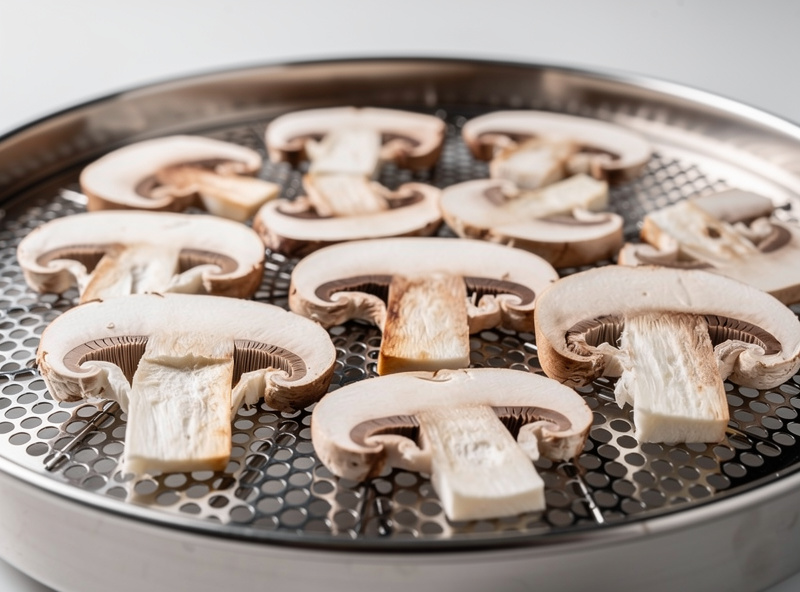
The slice thickness rule is uniform 1/4 inch (6mm) for caps and 1/8 inch (3mm) for stems. Thinner slices dry faster but break easily; thicker slices hold up better but need 2-3 extra hours. Lay slices in a single layer with at least a slice-width gap between pieces — overlapping slices create damp spots that mold during storage. Browse the growing equipment guides for specific dehydrator recommendations that hold consistent low temperatures.
Method 2: Oven Drying (Faster, Slightly Riskier)
Oven drying works when you do not own a dehydrator. Set the oven to its lowest temperature (typically 150-170°F on most home ovens) and prop the door open with a wooden spoon to let moisture escape. Lay sliced mushrooms in a single layer on a wire cooling rack placed over a baking sheet — this gives airflow under the slices, which is essential. Total drying time is 4-6 hours, with stirring every 90 minutes.
Oven drying is faster than dehydrator drying but trades flavor for speed. The higher heat (above 130°F) starts breaking down the volatile flavor compounds in shiitake and morels — the umami feels diminished compared to a 115°F dehydrator run. For oysters and lion’s mane the difference is smaller and oven drying is acceptable for everyday use. For shiitake and morels, the dehydrator is meaningfully better and worth the upfront cost.
Method 3: Air Drying (Free But Slow)
Air drying works in dry climates and requires no equipment. Thread sliced mushrooms onto cotton string with a blunt needle and hang the strings in a warm, airy, dry location — over a refrigerator, in a screened porch, or in a south-facing window. Drying takes 5-10 days depending on ambient humidity. The method only works when ambient humidity stays under 50% for the entire drying period; humid weather causes the mushrooms to spoil before they finish drying. A genuine bonus of drying in direct sun rather than shade: UV exposure converts ergosterol in the mushroom to vitamin D2, a real and well-studied effect — sliced mushrooms laid cap-up in sun for even a few hours pick up a meaningful vitamin D2 bump on top of whatever drying method finishes the job.
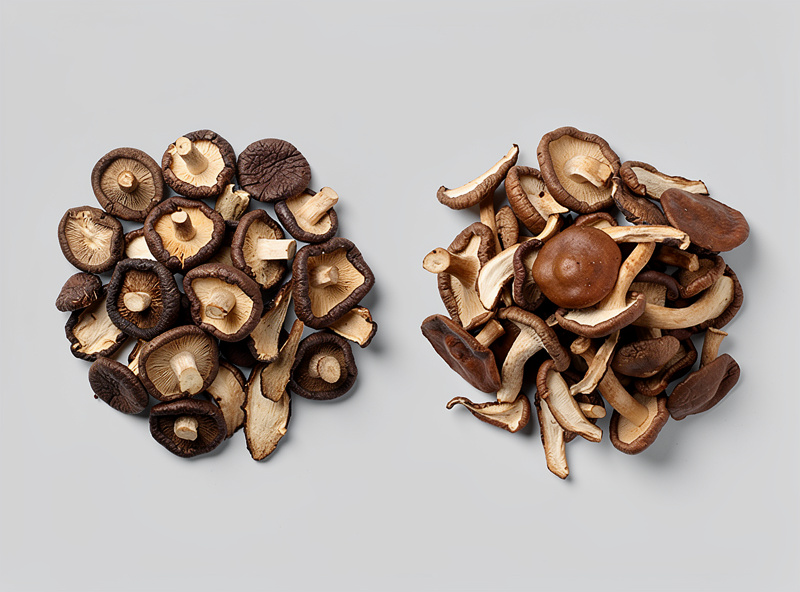
Whole-cap air drying with the cap uncut works for some species (particularly shiitake) but takes 10-14 days and is more vulnerable to ambient humidity spikes. Air-dried mushrooms tend to have the most concentrated flavor of any drying method — the long slow process preserves volatiles best — but the failure mode is severe: mold during a wet week ruins the entire batch. Most home cooks should default to dehydrator and treat air drying as an optional method for ideal weather periods. Avoid the common humidity-related mistakes — the same logic applies to drying as to growing.
How to Tell When Mushrooms Are Fully Dry
The single best test is the bend-and-snap. Take a slice from the center of the tray (the slowest-drying spot) and bend it sharply. Properly dried mushrooms snap cleanly with an audible crack. Underdried mushrooms bend without breaking, or break with a soft tear rather than a snap. Any flexibility means more drying time is needed — return to the dehydrator for another 60-90 minutes and retest.
Visual signs help too: properly dried slices darken noticeably (oysters go tan-to-light-brown; shiitake go medium-to-dark-brown) and feel feather-light. The slice should weigh roughly 10-15% of its original fresh weight — a 100-gram fresh slice ends up at 10-15 grams dry. If a sample feels cool to the touch (which means it still has internal moisture), it is not done. Dry mushrooms feel ambient-temperature.
Storing Dried Mushrooms
Store fully dried mushrooms in airtight glass mason jars with one food-grade silica gel desiccant packet per jar. Glass beats plastic — plastic is vapor-permeable over long timescales and dried mushrooms are aggressive at re-absorbing moisture. Extension guidance on dried vegetables generally puts quality shelf life at 6-12 months at room temperature; on my own jars, sealed well with a fresh desiccant, flavor has held up noticeably longer than that. Beyond that window flavor starts to flatten, but a fully dried, properly sealed jar doesn’t become unsafe overnight — moisture getting in is what actually causes a problem, not the calendar.
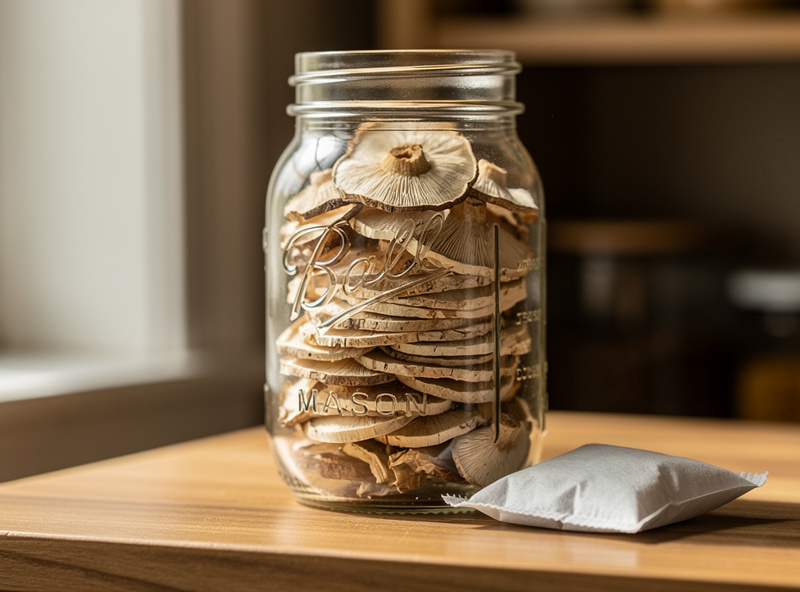
Vacuum sealing extends shelf life meaningfully further but is not necessary for typical home use — the mushroom usually gets used long before storage life becomes the limiting factor. Store jars in a dark cupboard, not a clear-glass shelf, since light degrades color and some flavor compounds. Label every jar with the species, drying date, and source — by month four you will not remember which jar is which. Browse substrate guides if you grow your own and want to predict yields for batch drying.
How to Rehydrate Dried Mushrooms for Cooking
Soak dried mushrooms in just-boiled water for 20-30 minutes — most species rehydrate to roughly 5-7x their dry weight. The soaking liquid is concentrated mushroom stock and should be reserved for risotto, soup, sauce, or pasta water. Strain the soaking liquid through a coffee filter or fine cloth to remove any grit (especially from morels and forest-foraged species).
For shiitake specifically, the soaking liquid carries most of the umami — pour it down the drain and you’re throwing away the best part of what you just rehydrated. Cold-water soak for 8-12 hours produces a milder, more delicate flavor than hot-water soak — useful for chawanmushi and raw-style preparations. Avoid microwaving dried mushrooms with water; the uneven heating creates rubbery patches. See more cooking and preservation guides for species-specific recipes.
Comparison Table: Dehydrator vs Oven vs Air Drying
| Method | Temp | Time | Flavor result | Equipment cost |
|---|---|---|---|---|
| Food dehydrator (flavor-first) | 110-125°F | 6-10 hours | Best — preserves volatiles | Dehydrator cost only |
| Food dehydrator (CSU Extension setting) | 140°F | 8-10 hours | Good, more conservative on food safety | Dehydrator cost only |
| Oven drying | 150-170°F | 4-6 hours | Acceptable, slight flavor loss | None (already own) |
| Air drying (string) | Room temp | 5-10 days | Best when conditions allow | String + needle only |
| Air drying (whole) | Room temp | 10-14 days | Best for shiitake | None |
| Sun drying | 80-100°F outdoor | 2-4 days | UV exposure boosts vitamin D2 content | Mesh screen only |
Frequently Asked Questions
What temperature should mushrooms be dried at?
On my own bench I run 110-125°F for the best flavor preservation. If you want the food-safety-first number, Colorado State University Extension’s tested guidance is 140°F for 8-10 hours — that’s the more conservative choice, especially for a beginner or a humid kitchen. Oven drying works at 150-170°F but reduces flavor compounds in delicate species like shiitake and morels. Either range works; higher heat trades some flavor for a shorter, safer drying window.
How long do dried mushrooms last in storage?
Extension guidance on dried vegetables generally puts quality shelf life at 6-12 months at room temperature in an airtight container with a desiccant. On my own jars, sealed well, flavor has held up noticeably past that window. What actually ends shelf life is moisture getting back in, not a fixed calendar date — check jars periodically and discard anything that shows mold or off odor.
How do you know when mushrooms are completely dry?
Use the bend-and-snap test: take a slice from the center of the drying surface, bend it sharply, and listen for a clean snap. Properly dried mushrooms break with an audible crack. Any flexibility or soft tearing means more drying time is needed. The slice should also weigh 10-15% of its original fresh weight.
Can you dry mushrooms in a regular oven?
Yes — set the oven to its lowest temperature (typically 150-170°F), prop the door open with a wooden spoon for moisture release, and arrange sliced mushrooms in a single layer on a wire cooling rack over a baking sheet. Drying takes 4-6 hours with stirring every 90 minutes. The flavor is slightly less concentrated than dehydrator-dried but acceptable for everyday cooking.
Should you wash mushrooms before drying them?
Wipe first, then a quick rinse is fine — Colorado State University Extension’s guidance is to wipe mushrooms with a damp paper towel or mushroom brush and follow with a quick rinse under cold running water, then dry the surface well before slicing. What you want to avoid is a long soak, which waterlogs the flesh and adds real time to the dry. If a mushroom is too dirty to clean up quickly, use it fresh in cooking instead and reserve cleaner specimens for drying.
Do dried mushrooms need to be refrigerated?
No — properly dried mushrooms do not require refrigeration. Room temperature in a dark cupboard works fine. Refrigeration actually risks introducing condensation each time the jar comes out of the cold and warms up. The exception is if you live in a humid climate without air conditioning — refrigeration becomes useful when ambient humidity stays above 65% year-round.