
There are two ways to pasteurize mushroom substrate: hot methods that heat it to 65-75 C and cold methods that use high-pH lime or anaerobic fermentation instead of heat. Both selectively kill mold while sparing beneficial microbes. Hot is faster and more controllable; cold is cheaper, scalable, and energy-free.
Pasteurization is the right treatment for low-nitrogen bulk substrates — straw, coir, CVG, and the like — where you want to knock back competitors without wiping out the protective microbial community. The question is never whether to pasteurize those substrates, but which method fits your batch size, climate, and patience. This guide compares every practical hot and cold method side by side, explains the science that makes each one work, and tells you exactly when pasteurization is enough and when you have to step up to full sterilization instead.
Pasteurization vs Sterilization First
Pasteurization heats substrate to 65-75 C (or raises it to pH 12-13) to kill molds while preserving beneficial bacteria; sterilization pressure-cooks at 15 PSI (121 C) to kill everything. Pasteurization suits low-nitrogen bulk substrates; sterilization is mandatory for grain spawn and supplemented blocks.
This distinction decides which path you are even on. A pasteurized substrate keeps a living community of heat-tolerant bacteria that competes against any contaminant landing later — a built-in defense. A sterilized substrate is a blank slate with no defenders, wonderful for the mushroom if nothing else gets in, but indefensible the moment one mold spore lands. Low-nitrogen substrates like straw and coir do not feed contaminants aggressively, so the selective approach works and the microbial buffer is an asset. High-nitrogen substrates — supplemented sawdust, Masters Mix, grain — are contamination magnets where any survivor explodes, so they demand total sterilization. The full logic for the high-nitrogen side lives in my supplemented sawdust guide and Masters Mix recipe.
Hot Pasteurization Methods
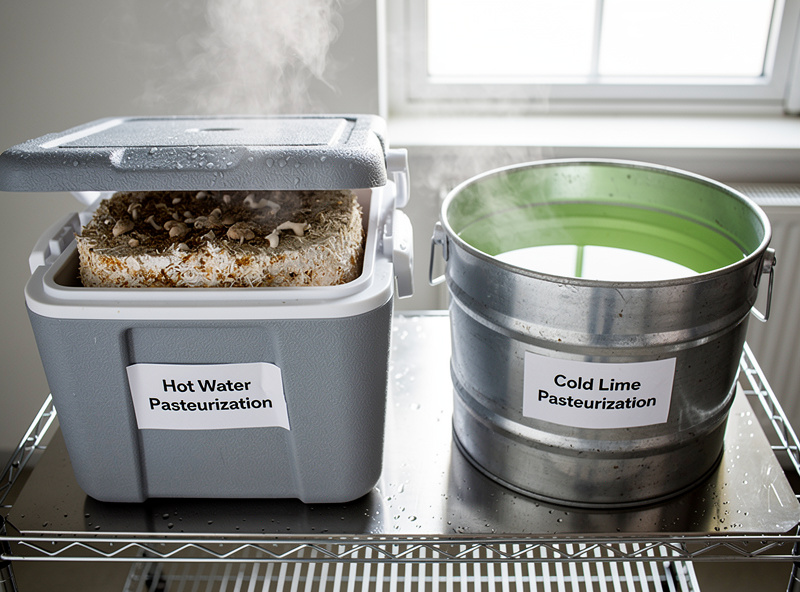
Hot pasteurization heats the substrate into the 65-75 C band and holds it there long enough to kill molds and weed fungi — typically 60 to 90 minutes. The two practical home methods are the hot-water bath in an insulated cooler and steam pasteurization in a covered chamber.
The hot-water cooler method is my everyday default: pack chopped substrate into a 60-litre insulated cooler, pour in 70 C water, weight it down, lid it, and hold 90 minutes. The cooler’s insulation maintains the band with no heat source running. Steam pasteurization instead stands pre-hydrated substrate in bags or trays over simmering water until the core reaches 65 C, then holds — it uses far less water and lets you treat the exact bags you will inoculate. Both live or die by the temperature window: GroCycle’s own hot-water-bath guidance lands on the identical 65-75 C (149-167 F) for one to two hours, and flags that letting the water run too hot risks cooking off the beneficial heat-tolerant bacteria along with the contaminants (GroCycle) — my own rule of thumb is to cut the heat the moment it creeps toward 80 C, and below roughly 60 C the molds you are trying to kill simply survive. A probe thermometer in the substrate core is the difference between hitting that window and guessing. The straw-specific routine for both is detailed in my straw pasteurization guide.
Cold Pasteurization Methods
Cold pasteurization skips heat entirely. Lime pasteurization soaks substrate in water dosed to pH 12-13 with hydrated lime for 12 to 24 hours; cold-water fermentation submerges it anaerobically for 5 to 7 days. Both create conditions hostile to mold without any energy input.
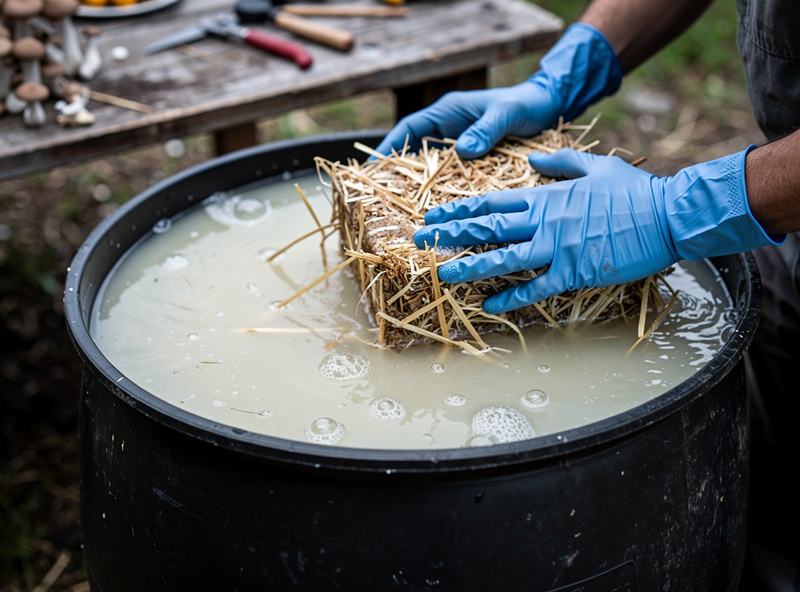
Lime pasteurization is the cold method I reach for in summer or for batches too big to heat. On my own bench I dose heavier than the published starting point — published grower guidance from GroCycle puts the working range at roughly 1.75 to 2 grams of hydrated lime (calcium hydroxide) per litre of water for a pH of 11 to 13-14 (GroCycle), and I have settled closer to 5 grams per litre on my own batches to land reliably in the 12-13 band with my local water’s buffering — but the number that actually matters is the pH reading, not the gram count, since tap water alkalinity varies enough that a fixed dose can under- or overshoot. Dose to a pH strip or meter reading of 12-13, not to a recipe. Submerge the substrate, weight it under the surface, soak 12 to 24 hours, then drain. Wear gloves and eye protection, because lime water is genuinely caustic. Cold-water fermentation is even simpler and even cheaper: submerge the substrate under water in a sealed drum for 5 to 7 days while it goes anaerobic and sour, the falling pH and oxygen-starved environment suppressing mold. It costs nothing but time and a barrel, which is why off-grid and large-scale growers favor it — the trade is a strong silage smell and a wider, less forgiving window. Both cold methods shine for big volumes where heating hundreds of litres of water is impractical.
Cold vs Hot: Side by Side
Each method lands the substrate in a safe-to-inoculate state, but they trade speed, energy, gear, and handling very differently. Here is how the practical methods compare on the factors that actually decide which one I run.
| Method | Type | Mechanism | Time | Best when |
|---|---|---|---|---|
| Hot-water cooler | Hot | 65-75 C soak | 90 min | Everyday small-to-mid batches |
| Steam | Hot | 65-75 C core | 60-90 min | Bag-based growing, low water use |
| Cold lime | Cold | pH 12-13 soak | 12-24 h | Big batches, hot weather, no fuel |
| Cold fermentation | Cold | Anaerobic submersion | 5-7 days | Off-grid, maximum volume, zero cost |
| Pressure sterilization | Neither | 121 C, kills all | 1.5-2.5 h | Grain and high-nitrogen blocks only |
The bottom row is the reminder that pasteurization is not always the answer. If your substrate is grain spawn or a bran-supplemented block, neither hot nor cold pasteurization is enough — you must sterilize. For everything low-nitrogen, the choice between hot and cold comes down to whether you would rather spend energy and 90 minutes (hot) or time and a caustic chemical (cold).
How I Choose Between Them
For most home batches I pick hot — it is fast, controllable, and done in an afternoon. I switch to cold lime or fermentation when the batch is too large to heat, when it is hot outside and boiling water is miserable, or when I want a zero-energy method for an outdoor bulk run.
Batch size is the biggest lever. Heating water for a single cooler of substrate is trivial; heating it for a 200-litre outdoor bed is not, and that is exactly where cold lime earns its keep. Climate matters too — in a Swedish winter the hot bath warms the workspace pleasantly, but in summer heat I would rather dose a barrel with lime and walk away. Time is the counterweight: hot methods finish in 90 minutes, cold lime needs overnight, and fermentation needs the better part of a week, so if I am inoculating tomorrow, hot wins by default. Finally, comfort with caustic chemicals is real — lime water demands gloves and care, and if that is a deterrent, the hot methods sidestep it entirely. Whatever method finishes the job, the substrate then has to cool and drain to the right moisture, which is its own make-or-break step covered in my field-capacity guide.
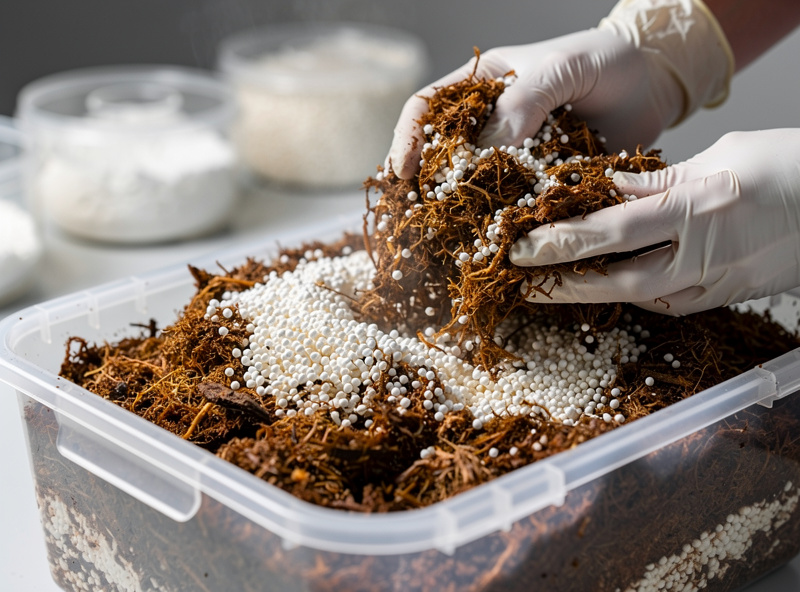
The pasteurization kit on my bench. A few links below go to Amazon. As an Amazon Associate I earn from qualifying purchases, at no extra cost to you — see my disclaimer. What I actually use: an insulated cooler for the hot-water bath, a probe thermometer to hold the 65-75 C band, hydrated pickling lime for the cold method, large mesh bags for draining, and a pressure canner for the high-nitrogen substrates that need true sterilization instead.
After Pasteurizing
Whatever method you use, the substrate must cool to room temperature and drain to field capacity before it meets spawn. Inoculating hot substrate kills your mycelium; inoculating waterlogged substrate drowns it. Then spawn at 10 to 20 percent and colonize in the dark.
Cold-method substrates skip the cooling step but still need thorough draining — lime-soaked substrate should also sit an hour so the surface pH equilibrates back toward neutral before spawning. Hot-method substrates need to come down below 30 C first. From there the workflow is identical: drain to a firm two-or-three-drop squeeze, mix in grain or sawdust spawn at 10 to 20 percent as cleanly as you can, and hold dark and humid while it colonizes over one to two weeks. If colonization stalls or off-colors appear, the diagnostic patterns are in my contamination guide, and the parent substrate guide ties every method back to the species that wants it.
Frequently Asked Questions
What are the methods to pasteurize mushroom substrate?
Two families: hot and cold. Hot methods heat the substrate to 65-75 C in an insulated cooler bath or with steam for 60-90 minutes. Cold methods use high-pH lime water (pH 12-13 for 12-24 hours) or anaerobic cold-water fermentation for 5-7 days. All selectively kill mold while sparing beneficial bacteria.
Is cold or hot pasteurization better for mushrooms?
Neither is universally better. Hot pasteurization is faster and more controllable, done in 90 minutes, and suits everyday small-to-mid batches. Cold lime or fermentation is cheaper, energy-free, and scales to large outdoor volumes, but takes 12 hours to a week and, for lime, handling a caustic chemical.
What temperature kills mold but not beneficial bacteria?
The 65-75 C band. Hold the substrate there for 60-90 minutes to kill molds and weed fungi while preserving the heat-tolerant beneficial bacteria that protect it. Above 80 C you kill the protective microbes too; below 60 C the contaminating molds survive.
Can you pasteurize substrate without heat?
Yes, with cold methods. Cold lime soaks the substrate at pH 12-13, using published grower guidance of roughly 1.75-2 grams of hydrated lime per litre as a starting dose (see GroCycle), though I run closer to 5 grams per litre on my own water to hit that pH reliably. Cold-water fermentation submerges it anaerobically in a sealed drum for 5-7 days. Both suppress mold without any energy input.
When do you sterilize instead of pasteurize?
Sterilize any high-nitrogen substrate: grain spawn, supplemented sawdust blocks, and Masters Mix. Their nitrogen feeds contaminants so aggressively that any survivor blooms, so they need full pressure sterilization at 15 PSI (121 C). Pasteurization is only for low-nitrogen bulk substrates like straw, coir, and CVG.
How long does lime pasteurization take?
Twelve to twenty-four hours of cold soaking at pH 12-13. Dose to that pH reading, not a fixed recipe – published guidance starts around 1.75-2 grams of hydrated lime per litre, though local water hardness can push the real number higher (I run closer to 5 grams per litre myself). Submerge and weight the substrate, then drain after the soak and let it sit an hour so the surface pH equilibrates before you spawn. Wear gloves and eye protection throughout.