
King oyster and pearl oyster share a genus and almost nothing else on the bench. Pearl oyster (Pleurotus ostreatus) fruits on pasteurized straw or CVG, wants heavy fresh-air exchange, and throws layered shelf clusters in two to three weeks. King oyster (Pleurotus eryngii) wants a sterilized Masters Mix block, elevated CO2 during early pinning, and careful staging to form its fat meaty stems. Treat a king oyster like a pearl and you’ll get a fruiting surface carpeted in tiny aborts and no dinner. Same name, opposite playbook.
I’ve fruited both for years, and the king oyster taught me the hardest lesson in oyster growing precisely because I assumed it would behave like its easygoing cousin. It doesn’t. This is the head-to-head for anyone who nailed pearl oyster, saw “king oyster” on a spawn list, and figured it was just a bigger version of the same mushroom. It isn’t — and knowing why is the difference between a scallop-like showpiece and a block full of failed pins.
King Oyster vs Pearl Oyster at a Glance
The two Pleurotus split on substrate, environment, form, and difficulty. Pearl is the forgiving workhorse; king is the disciplined showpiece. Here’s the shape of it before the detail.
| Factor | Pearl Oyster | King Oyster |
| Substrate | Straw, CVG (pasteurized) | Masters Mix (sterilized) |
| Gear | Pasteurization is enough | Pressure canner required |
| Early CO2 / FAE | High FAE from the start | Elevated CO2 first, then FAE |
| Form | Many light shelf clusters | Few heavy single stems |
| Difficulty | Easiest species there is | Moderate–hard |
| Best use | Versatile, stir-fry, stock | Meaty scallop-like sear |
The takeaway: pearl forgives, king demands. Both are worth growing, but they belong to different points on the skill curve — a curve I map across the whole cluster in my best mushrooms to grow at home comparison.
Same Genus, Opposite Playbook
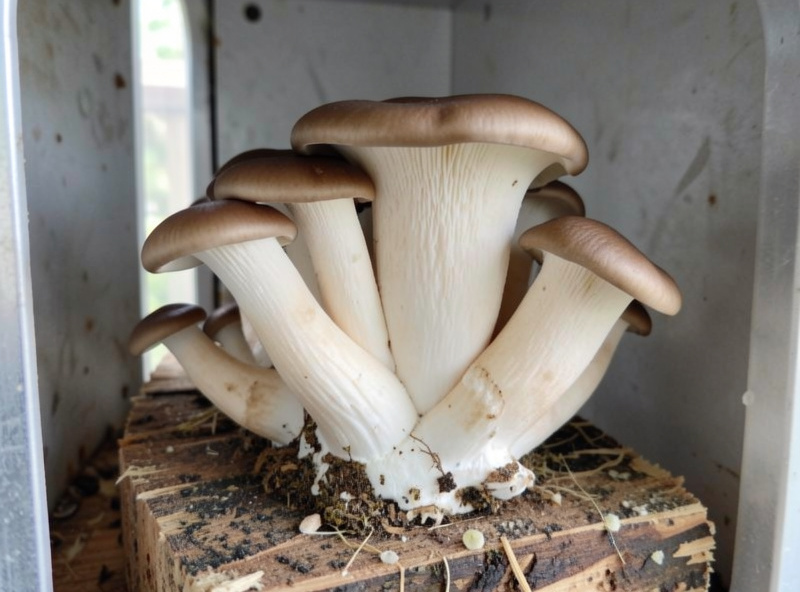
The confusing part is the shared name, so let’s kill it up front. “Oyster mushroom” usually means Pleurotus ostreatus and its color strains — pearl, blue, pink, golden — all fast, aggressive, forgiving primary decomposers. King oyster is Pleurotus eryngii, a related but distinct species that grows completely differently: instead of fanning into overlapping shelves off a single point, it pushes up fat, discrete, club-shaped stems with a small cap on top. The eating texture people love — dense, meaty, scallop-like when sliced and seared — comes entirely from that thick stem.
Because the growth habit is different, the whole management approach is different. Pearl is the species I recommend to anyone still learning, right alongside the picks in the most forgiving species guide. King oyster is a step up in discipline — closer to the sterile-block commitment I describe in oyster vs lion’s mane than to the easy straw grow that pearl allows.
Substrate: Sterilized Masters Mix vs Pasteurized Straw
Pearl oyster is a substrate omnivore. It fruits on pasteurized straw, CVG, coffee grounds, cardboard, or sawdust — pasteurization at 65 to 75°C is plenty, so you can grow it with no pressure canner at all. King oyster is fussier and nutrient-hungry: it wants a sterilized, supplemented hardwood substrate, and my go-to is Masters Mix — a 50/50 hardwood sawdust and soy hull blend, hydrated to field capacity and run through the pressure canner at 15 psi for a couple of hours. That richer substrate feeds the dense stems, and the sterilization is mandatory because a nutritious block is a mold buffet if a spore slips in.
So step one of growing king oyster is accepting that you’ve left the pasteurize-a-bag-of-straw world behind. You need the canner, you need clean grain-to-grain work, you need a still-air box or flow hood. Field & Forest Products publishes solid formulas and spawn guidance worth cross-checking as you dial in a Masters Mix (Field & Forest Products). Pearl lets you skip all of that; king does not.
The CO2 Trap: Why King Oyster Aborts
This is the mistake I made, and the single most important thing to understand about king oyster. Pearl oyster wants heavy fresh-air exchange from the moment it pins — starve it of FAE and you get leggy trumpets. So every instinct you built on pearl says “more fresh air.” Apply that to king oyster and you wreck it. King oyster actually wants slightly elevated CO2 during early pinning to suppress the formation of dozens of competing pins and encourage a few dominant primordia to take over. Give it too much fresh air too early and the block sets a carpet of tiny pinheads that all compete, none win, and the whole surface aborts.
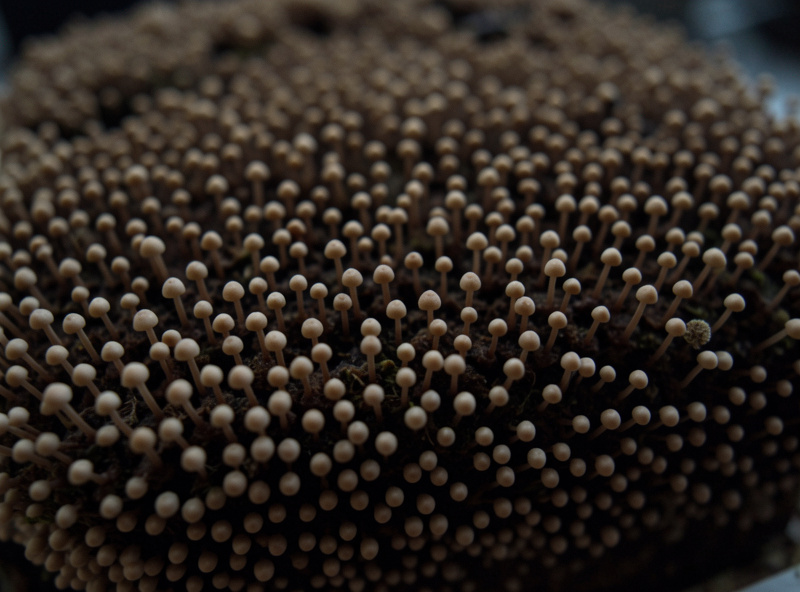
The correct sequence is staged: keep FAE lower while pins initiate and select, letting elevated CO2 push tall stem development, then increase fresh air as the stems bulk and the caps form so they don’t stay spindly. Get the order right and you get a handful of thick, heavy, gorgeous stems; get it backwards and you get the abort carpet. My first king oyster block was exactly that carpet — dozens of failed pins because I “helpfully” cracked the tent for fresh air the way I do for pearl. North American Mycological Association species notes are a good sanity-check on how differently related fungi fruit (North American Mycological Association). The lesson stuck: same genus, read the species, not the name.
Yield and Form: Few Heavy Stems vs Many Light Shelves
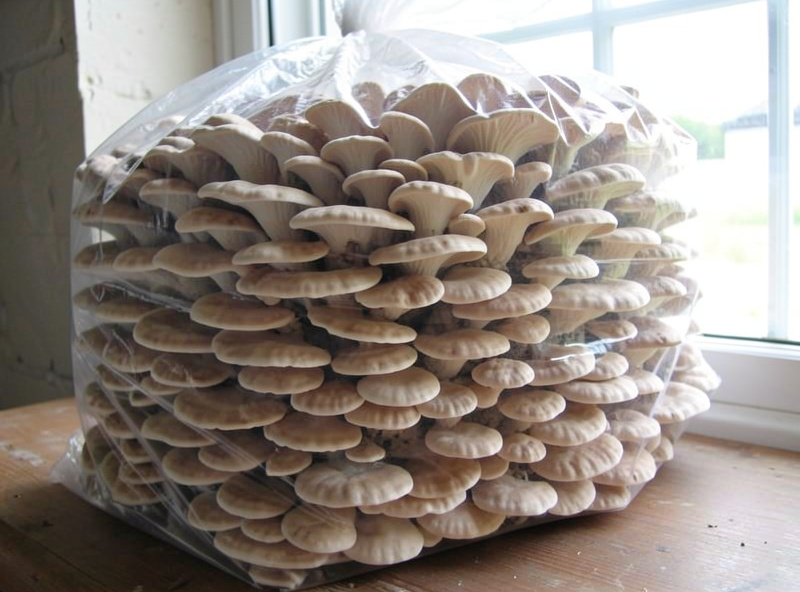
The yield comparison is really a form comparison. Pearl oyster produces high biological efficiency — often 75 to 150% or more — spread across many thin, light shelf clusters, so it feels enormously productive and the harvest piles up fast. King oyster produces fewer fruits, but each is a dense, heavy stem, so the weight can be respectable even though the count is low. Per block, pearl usually gives you more total mushroom and does it faster; king gives you a smaller number of premium, meaty fruits.
If your metric is sheer volume for the kitchen, pearl wins, which is why it anchors my highest-yielding mushrooms guide. If your metric is a specific culinary result — those thick cross-cut medallions that sear like scallops — king oyster is the only Pleurotus that delivers it. They’re optimizing for different things, and “more” isn’t the same as “better” here.
Harvest timing also differs and it matters for both yield and quality. Pearl oyster tells you it’s ready when the cap edges begin to flatten and turn up slightly; wait past that and it dumps spore, drops quality, and dusts the chamber. King oyster is more patient — you can let the stems keep bulking for days and the mushroom only improves in density, so the temptation to pick early actually costs you weight. I harvest pearl the moment the caps flatten, both for texture and to keep spore load down in a small room, but I let king oyster ride until the caps just start to broaden. Reading each species’ ripeness signal correctly is worth a surprising amount of your total harvest, and it’s another reminder that the same-name mushrooms want opposite instincts even at the finish line.
Flavor and Kitchen Use
Pearl oyster is mild, savory, and versatile — it disappears usefully into a stir-fry, a stock, or a quick sauté, and crisps nicely if you cook it hard in a dry-ish hot pan to drive off its water. King oyster is a different experience entirely. Slice the stem into thick coins, score them, and sear in butter and they go dense, chewy, and genuinely scallop- or pork-like, with a sweet, savory depth pearl can’t match. The whole reason to fight through king oyster’s fussier growth is that texture.
The feel in the pan tells the story: pearl softens and gives up moisture, going tender and slippery if crowded; king holds its shape, browns like meat, and stays toothsome. If you want a mushroom that eats like a main course rather than a side, king oyster is the payoff.
Which Should You Grow?
Grow pearl oyster if you’re still building skills, want speed and forgiveness, don’t want a pressure canner yet, or just want maximum mushroom for minimum fuss. Grow king oyster once you’re comfortable with sterilized blocks and you want that meaty, scallop-like texture badly enough to manage the CO2 staging. My real advice: master pearl first — it’s the correct gateway and it teaches you the fruiting environment cheaply — then treat king oyster as a deliberate next project, going in knowing the playbook is inverted. Don’t let the shared word fool you into expecting the same mushroom. The other place that “same name, different beast” lesson shows up is patience versus speed, which I lay out in shiitake vs oyster.
Is king oyster the same as regular oyster mushroom?
No. King oyster is Pleurotus eryngii and regular pearl oyster is Pleurotus ostreatus. They share a genus but grow completely differently. Pearl fans into layered shelf clusters and forgives beginners, while king oyster pushes up fat single stems and needs a sterilized block and careful CO2 staging.
Why does my king oyster grow lots of tiny aborting pins?
Almost always too much fresh air too early. King oyster wants slightly elevated CO2 during early pinning so a few dominant primordia take over. If you give it heavy fresh-air exchange the way pearl oyster wants, the block sets a carpet of competing pinheads that all abort. Stage FAE lower first, then raise it as stems bulk.
Can I grow king oyster on straw like pearl oyster?
Not well. Pearl oyster fruits on pasteurized straw or CVG, but king oyster is nutrient-hungry and wants a sterilized, supplemented hardwood substrate such as Masters Mix run through a pressure canner. Straw does not give it the nutrition it needs for its dense stems.
Which tastes better, king oyster or pearl oyster?
They serve different purposes. Pearl oyster is mild and versatile for stir-fries and stock. King oyster has a dense, meaty, scallop-like texture when the thick stem is sliced and seared, eating more like a main course. For meaty texture king oyster wins; for everyday versatility pearl is easier to use.