
If oyster was your first grow, lion’s mane is the natural second — but only once your grain work is clean. Oyster forgives; lion’s mane does not. Oyster fruits on pasteurized straw or CVG and colonizes in 10 to 14 days, while lion’s mane wants a sterilized Masters Mix block, a pressure canner, and 3 to 4 weeks of colonization with a soft mycelium that new growers routinely mistake for mold. Pick lion’s mane as your second grow if you’re ready for real sterile technique; stay on oyster if you’re still losing jars.
I run both on my bench every season — oyster on the weekly rotation, lion’s mane on Masters Mix a few blocks at a time — and the honest gap between them is bigger than the pretty side-by-side photos suggest. This is the head-to-head I give anyone who nailed a first oyster flush and asked “what next?” It’s the second grow that either builds your confidence or quietly teaches you why sterile technique matters.
Oyster vs Lion’s Mane at a Glance
The two species differ on almost every axis that matters to a home grower: substrate, gear, colonization speed, contamination risk, and what you do with the harvest. Here’s the quick version before I dig into each.
| Factor | Oyster | Lion’s Mane |
| Best substrate | Straw, CVG, sawdust | Masters Mix (sterilized) |
| Gear needed | Pasteurization is enough | Pressure canner required |
| Colonize time | 10–14 days | 3–4 weeks |
| Contamination risk | Low (outruns it) | Moderate (slower, fussier) |
| Typical BE / yield | 75–150%+ BE | 50–75% BE |
| Flavor / use | Savory, versatile | Crab-like; culinary + functional shelf |
Read that and the pattern is clear: oyster wins on ease and speed, lion’s mane wins on novelty and the functional angle. Neither is “better” — they answer different questions. If you haven’t yet, the broader field is mapped in my best mushrooms to grow at home comparison.
Which Is Easier to Grow, Oyster or Lion’s Mane?
Oyster is decisively easier, and the reason is speed plus tolerance. Oyster’s rhizomorphic mycelium colonizes a substrate in under two weeks and grows aggressively enough to physically outrun contamination; it also fruits on almost anything, from pasteurized straw to spent coffee grounds. Lion’s mane runs slower, colonizes with a soft cottony front, and insists on a clean, sterilized, supplemented hardwood substrate.
That difference decides whether lion’s mane should be your second grow at all. If your last few oyster runs went smoothly and you’ve never seen a green jar, you’re ready. If you’re still fighting Trichoderma, don’t jump — a slower, fussier species will just hand you more failures. I built the honest shortlist of what to grow while you’re still learning in the most forgiving species when you’re still killing jars, and oyster tops it for exactly these reasons. Lion’s mane is the graduation, not the tutorial.
Substrate: Why Lion’s Mane Wants Masters Mix and Oyster Doesn’t
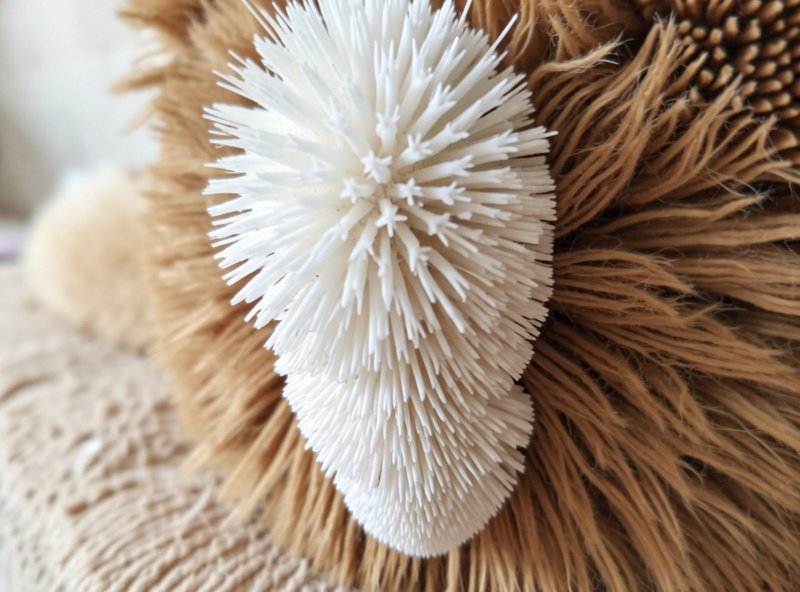
This is the crux. Oyster is a primary decomposer that thrives on cellulose-rich material with minimal processing — pasteurized straw at 65 to 75°C, or a CVG (coir/vermiculite/gypsum) bulk that needs no sterilization at all. Lion’s mane wants nutrition and cleanliness: my Masters Mix is a 50/50 hardwood sawdust and soy hull blend, hydrated to field capacity and sterilized in a pressure canner at 15 psi for a couple of hours. That soy-hull supplementation is what feeds the dense fruiting the species is capable of, and it’s exactly why the block has to be sterilized — a nutritious block is a buffet for mold if a single spore gets in.
So the second grow isn’t just a new species; it’s a new process. You’re stepping from “pasteurize a bag of straw in a cooler” to “run a pressure canner, work in a still-air box, keep grain-to-grain transfers clean.” That’s the real cost of moving to lion’s mane, and it’s the same investment that unlocks king oyster and the second-tier gourmets later. If you want to understand why two mushrooms that share the word “oyster” can demand completely different substrates, that’s the whole story of king oyster vs pearl oyster.
Contamination: The Cottony Mycelium That Fools Everyone
Here’s the failure that traps new lion’s mane growers, and I made it myself: healthy lion’s mane mycelium is soft, fuzzy, and cottony, and it looks alarmingly like cobweb mold. The first block I ran, I nearly tossed a perfectly healthy bag because the growth looked “too wispy.” The tell is behavior and color: healthy Hericium mycelium is uniformly bright white and advances as an even front, while cobweb mold is greyer, looser, grows visibly faster, and flips pinkish as it matures. When I’m genuinely unsure, I mist the suspect patch with a little 70% isopropyl — cobweb mold collapses, mycelium barely notices.
Oyster rarely puts you in that spot. Its rhizomorphic, cord-like growth is unmistakable, and its speed means it usually wins the race before you have to make a judgment call. This is the deeper skill the second grow builds: contamination forensics. Learning to call cottony-but-healthy apart from cobweb-and-doomed is the same diagnostic instinct that protects the salami curing chamber and the sourdough starter — clean process across every microbial hobby under one roof. If you can’t yet read your jars confidently, lean on the diagnostics in the forgiving-species guide before you commit to lion’s mane.
Yield and Flavor: What You Actually Get
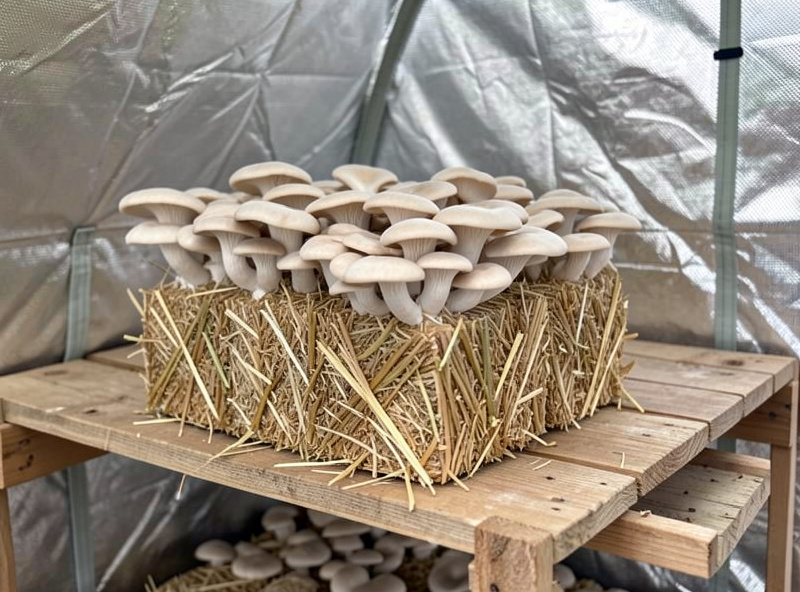
On raw productivity oyster wins. Its biological efficiency commonly runs 75 to 150% or more — a 5 lb block can return a pound or more on the first flush and flush again — while lion’s mane typically lands around 50 to 75% BE and fruits fewer, discrete pom-poms. If your goal is the most food per block, oyster is the answer, and I ranked the heavy hitters in the highest-yielding mushrooms guide.
But yield isn’t why you grow lion’s mane. You grow it for the plate and the shelf. Torn into chunks and pan-seared in butter until golden, lion’s mane goes genuinely crab- or lobster-like — a dense, sweet, seafood texture nothing else on the bench matches. Oyster is more of a savory workhorse: great in a stir-fry, a stock, or crisped hard in a hot pan, but it won’t fool anyone into thinking it’s crab. When people ask which tastes “better,” I tell them they’re not competing — one’s a reliable vegetable, the other’s a special-occasion showpiece.
The Functional Angle, Framed Honestly
Lion’s mane’s other draw is that it’s one of the functional mushrooms whose compounds are actively studied in the research literature — the hericenones and erinacines get a lot of attention. I’ll be careful here because a home grower has no business making health claims: I grow lion’s mane for the kitchen and the tea-and-tincture shelf, and I let the peer-reviewed work speak to any effects rather than asserting outcomes. If you want to read the actual studies rather than blog hype, start at the primary literature indexed on the National Library of Medicine’s PubMed and judge for yourself. Oyster has its own nutritional profile, but it’s grown for food, plain and simple.
That functional interest is a legitimate reason to make lion’s mane your second grow even though it’s harder — you’re growing something oyster can’t give you. Just keep the framing clean: studied and reported, never cured or treated.
So Which Should Be Your Second Grow?
Choose lion’s mane as your second grow if three things are true: your oyster runs are going clean, you’re ready to invest in a pressure canner and still-air-box workflow, and you want either the crab-like flavor or the functional shelf. Choose more oyster — a new strain, a bigger tub, a straw log — if you’re still seeing contamination, don’t want to spend on sterile gear yet, or simply want to bank more reps and more food first.
My real-world path: I tell people to run oyster three or four times until a clean grow feels boring, then jump to lion’s mane on Masters Mix as the first sterilized block, because it pins forgivingly even though its substrate is fussy — a gentle on-ramp to real sterile work. From there, shiitake and the second-tier gourmets open up. Field & Forest Products publishes solid spawn and substrate guidance if you want a supplier-side reference as you scale (Field & Forest Products). And if your honest answer is “I’m still killing jars,” the second grow should just be a better oyster — no shame in that; that’s how everyone builds the muscle memory. The next fork after this one, once both feel easy, is patience versus speed, which is the whole story of shiitake vs oyster.
Should my second mushroom grow be oyster or lion’s mane?
Lion’s mane, if your oyster runs are already going clean and you are ready to invest in a pressure canner and sterile technique. Stay on oyster if you are still fighting contamination. Lion’s mane wants a sterilized Masters Mix block and colonizes slower, so it rewards a grower who has the basics down.
Is lion’s mane harder to grow than oyster?
Yes. Oyster fruits on pasteurized straw or CVG and colonizes in 10 to 14 days, outrunning contamination. Lion’s mane needs a sterilized supplemented sawdust block, a pressure canner, and 3 to 4 weeks of colonization, and its cottony mycelium is easy to mistake for cobweb mold.
Why does lion’s mane mycelium look like mold?
Healthy lion’s mane grows a soft, fuzzy, cottony white mycelium that resembles cobweb mold. The difference is that healthy mycelium is uniformly bright white and advances as an even front, while cobweb mold is greyer, wispier, grows faster and turns pinkish. A light 70 percent isopropyl misting collapses cobweb mold but not mycelium.
Does oyster or lion’s mane yield more?
Oyster yields more. Its biological efficiency commonly runs 75 to 150 percent or higher, while lion’s mane typically lands around 50 to 75 percent and produces fewer discrete fruits. Grow oyster for volume and lion’s mane for its distinctive crab-like flavor and functional interest.