
The most forgiving mushroom species for a beginner still killing jars is blue or pearl oyster, followed by wine cap outdoors and pink oyster in warm rooms. Oyster forgives because its rhizomorphic mycelium colonizes a substrate in 10 to 14 days and grows aggressively enough to physically outrun the mold spores that would sink a slower species. When you’re losing batches, the fix is rarely a better technique first — it’s a species that survives your current one.
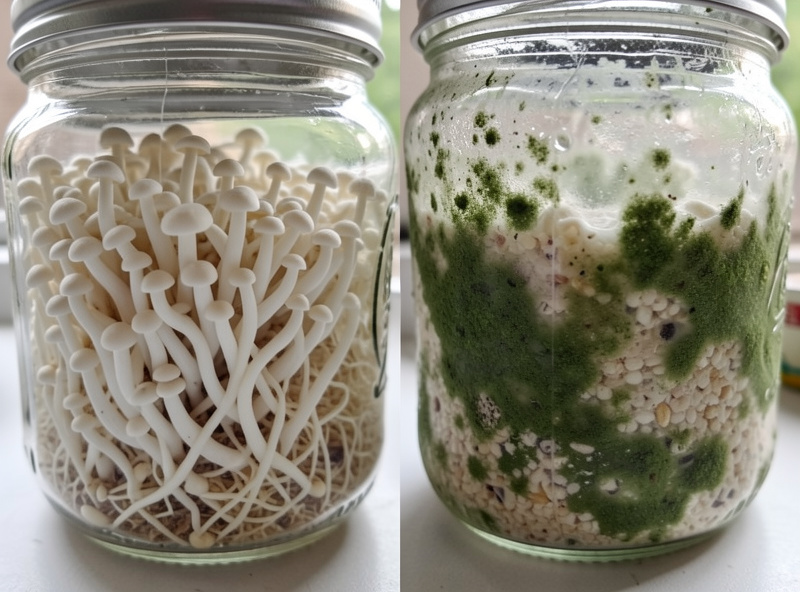
I’ve killed more grain jars than I like to admit, most of them early, most of them to green Trichoderma that flashed from innocent white fuzz to powdery forest-green overnight. What kept me in the hobby wasn’t getting perfect — it was picking species that let me be imperfect while I got better. That’s what this guide is: the shortlist of mushrooms that hide your mistakes, ranked by exactly how much abuse they absorb, so you can keep fruiting food while you fix the real problem.
What “Forgiving” Actually Means When You’re Losing Jars
A forgiving species has four traits: it colonizes fast, it tolerates a wide range of substrates and conditions, it resists or outruns common contaminants, and it pins without a perfectly dialed environment. Miss any one and the species starts punishing beginners. Oyster maxes all four; lion’s mane and the sterilized-block gourmets fail the contamination-resistance test badly, which is why they belong in season two.
Speed is the hidden variable. Every extra day a substrate sits partly colonized is another day a mold spore has an open lane. Oyster’s aggression closes that lane — I’ve watched a blue oyster front on CVG advance so fast it walled off a small contamination blob before it could establish. A slower species just hands the spore a bigger head start. Forgiveness, in practice, is mostly speed plus a wide tolerance band. Everything below flows from that. This same species-to-skill matching is the backbone of my broader best mushrooms to grow at home comparison — start here, graduate there.
Why Oyster Is the Most Forgiving Mushroom to Grow
Oyster is the correct answer for anyone still losing jars, and it isn’t close. It fruits on pasteurized straw, coffee grounds, cardboard, supplemented sawdust, or a plain CVG (coir/vermiculite/gypsum) bulk — pasteurization at 65 to 75°C is enough, so you don’t even need a pressure canner to start. It colonizes in 10 to 14 days. And it pins so eagerly that a bag with a few holes left near a window will often fruit whether you dialed the environment or not.
The one thing oyster asks for is fresh-air exchange. Starve it of FAE and you get long spindly stems and tiny caps — the “trumpet” look that means the fan isn’t keeping up. In my modified shotgun chamber I run a small circulation fan and crack the fruiting tent several times a day, and the difference between leggy trumpets and tight, layered shelf clusters is entirely that airflow. Even that failure mode is forgiving: undersized, leggy oyster is still edible. Compared with the two species most beginners eye next, oyster’s margin is enormous — I put the numbers side by side in oyster vs lion’s mane and shiitake vs oyster.
The Forgiving Shortlist, Ranked
Here’s how the beginner-safe species actually stack up. “Resists” is the failure mode each one shrugs off best — the reason it forgives.
| Species | Substrate | Colonize Speed | Resists | Why It Forgives |
| Blue Oyster | Straw, CVG, sawdust | Very fast (10–14 days) | Mold, cold snaps | Aggressive rhizomorphic growth, wide temp band |
| Pearl Oyster | Straw, CVG, sawdust | Very fast | Mold, dry air | Fruits across seasons, tolerant of FAE errors |
| Pink Oyster | Straw, sawdust | Fastest (warm) | Heat | Thrives in warm rooms that stall other species |
| Wine Cap | Outdoor wood chips/straw | Seasonal | Neglect | Grows outdoors with no sterile lab at all |
| Elm Oyster | Sawdust, straw | Fast | Warmth | Vigorous, though not a true Pleurotus |
Notice the pattern: every forgiving species is either an oyster or an outdoor bed. That’s not a coincidence — those are the two categories where speed or scale overwhelms contamination.
Blue vs Pearl vs Pink: Which Oyster Forgives Most?
All oysters forgive, but they specialize. Blue oyster is my default recommendation because it’s aggressive and handles a wide temperature band, fruiting happily in a cool Swedish grow space where warm-loving strains sulk. Pearl is the all-rounder — slightly more heat-tolerant than blue, forgiving of the FAE mistakes beginners make. Pink oyster is the sprinter: in a warm room it can colonize and fruit faster than anything else on this list, which makes it wonderfully forgiving of impatience, but it hates cold and its shelf life after harvest is short.
My honest steer: if your room runs cool, start blue. If it runs warm, start pink and enjoy the speed. If it’s somewhere in between, pearl won’t let you down. Any of the three will out-forgive a lion’s mane block ten times over. Where oyster stops being the automatic answer is when you want the highest total harvest per shelf — that’s a different optimization I work through in the highest-yielding mushrooms guide.
Wine Cap: The Outdoor Species You Almost Can’t Kill
If you have any outdoor space, wine cap (Stropharia rugosoannulata) might be the most forgiving edible mushroom there is — precisely because it sidesteps the whole indoor contamination problem. You inoculate a wood-chip and straw bed with sawdust spawn, keep it moist, and it colonizes on the garden’s schedule with essentially no sterile technique required. My outdoor bed sits in the garden shaded by taller plants; I water it in dry spells and otherwise leave it alone. It throws big burgundy-capped flushes when the weather cooperates.
The trade is control. You’re at the mercy of the season and the weather, and slugs will find it. But as a “I keep killing indoor jars and I need a win” project, an outdoor wine-cap bed is hard to beat — there’s no grain step to contaminate and no fruiting chamber to mismanage. It’s also the natural crossover for anyone already gardening; the same bed-building instinct that runs a small indoor grow scales straight into the yard.
The Species That Feel Forgiving But Aren’t
A few species get recommended to beginners that shouldn’t be. Reishi is nearly contamination-proof once it takes — Ganoderma mycelium is a bruiser — but it’s painfully slow, tying up a block for a month or two, so it forgives contamination while punishing impatience. Lion’s mane looks beginner-friendly in photos, but its soft, cottony mycelium is easy to mistake for cobweb mold, and it demands a sterilized Masters Mix block, which means a pressure canner and tighter technique than a jar-killer has yet. King oyster shares oyster’s name and almost none of its forgiveness — it needs precise CO2 staging to form good stems. Same genus, opposite temperament, which is exactly the trap I unpack in king oyster vs pearl oyster.
Where You’re Actually Killing Jars
Here’s the uncomfortable truth: if you’re losing batches, the species is probably not your problem — your grain and transfer step is. The sterile chain runs agar → liquid culture or grain-to-grain → grain spawn → bulk → fruiting, and the overwhelming majority of failures die at grain, because it’s nutrient-dense and a single spore has a feast waiting. Fruiting almost never kills a batch.
Two fixes save more grows than any species swap. First, sterilize grain — rye or wild bird seed hydrated to field capacity, plump but not weeping — in a pressure canner at 15 psi for 90 minutes; pasteurization is not enough for grain. Second, work clean: I wipe down with 70% isopropyl, flame my inoculation loop or spore-syringe needle with a torch until it glows, use micropore tape or self-healing injection ports, and either a still-air box for routine transfers or a laminar flow hood for agar work. Learn to read the failures by nose and eye, too — bacterial contamination smells sweet-then-sour and leaves the substrate wet and slimy; cobweb mold is grey and wispy and dies to an isopropyl misting; green Trichoderma means bag it and bin it. That contamination instinct is the same one that keeps my sourdough starter and salami curing chamber clean — clean process across every microbial hobby. Penn State Extension, in the heart of America’s mushroom country, publishes excellent public material on mushroom pathogens if you want to sharpen your diagnostics (Penn State Extension).
A Forgiving First-Grow Setup That Hides Mistakes
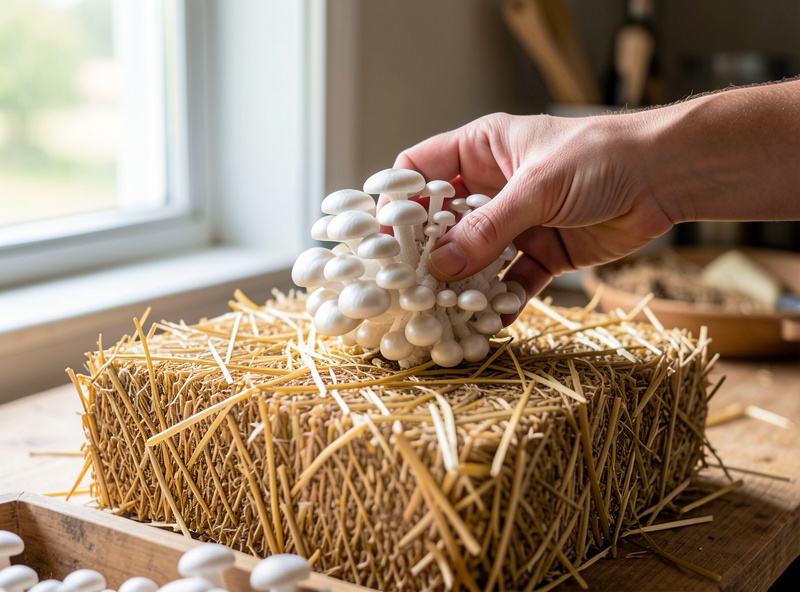
Put it together and the most beginner-proof grow is almost embarrassingly simple: a pre-made or self-mixed CVG tub or a pasteurized-straw bag, blue or pearl oyster grain spawn from a reputable supplier, a cheap hygrometer, a spray bottle, and a spot out of direct sun. Field & Forest Products and other established suppliers publish substrate and spawn guidance worth cross-checking as you build formulas (Field & Forest Products). Keep humidity high, give it real fresh-air exchange, and resist the urge to open the chamber to “check” — opening it repeatedly dries the delicate pins, which is the single most common way beginners abort a first flush. I did it constantly at the start, watched pins shrivel, and blamed the strain before I realized I was the problem.
Grow that twice. Build the muscle memory of a clean transfer and a well-run flush on a species that survives your mistakes. Then, and only then, graduate to lion’s mane and the sterilized block. Forgiveness buys you the reps; the reps buy you everything else.
What is the most forgiving mushroom for a total beginner?
Blue or pearl oyster. It colonizes in 10 to 14 days, fruits on straw, coffee grounds, cardboard or CVG with only pasteurization needed, and grows aggressively enough to outrun most contamination. Pink oyster is the most forgiving choice for a warm room.
Why do my grain jars keep getting contaminated?
Grain is nutrient-dense, so a single mold spore or bacterial cell has a feast waiting. Most failures happen at the grain or transfer step, not at fruiting. Sterilize grain in a pressure canner at 15 psi for 90 minutes rather than pasteurizing, and work clean with 70 percent isopropyl and a flamed loop.
Is lion’s mane a good first mushroom to grow?
Not really. Its soft cottony mycelium is easy to mistake for cobweb mold and it needs a sterilized supplemented sawdust block, which means a pressure canner and tighter technique. Grow oyster first, then move to lion’s mane once your grain work is clean.
Can I grow mushrooms without a pressure canner?
Yes, if you stick to oyster on pasteurized straw or CVG, or grow wine cap outdoors. Pasteurization at 65 to 75 degrees Celsius is enough for those. You only need a pressure canner once you move to sterilized blocks like lion’s mane or king oyster.
What does contaminated substrate smell and look like?
Bacterial contamination smells sweet turning sour and leaves the substrate wet, slimy and sometimes yellowish. Cobweb mold is grey and wispy and collapses under a light isopropyl misting. Green Trichoderma starts as white fuzz then flashes powdery forest-green; bag and bin that jar.